Summit to add new chapter to China-Africa ties









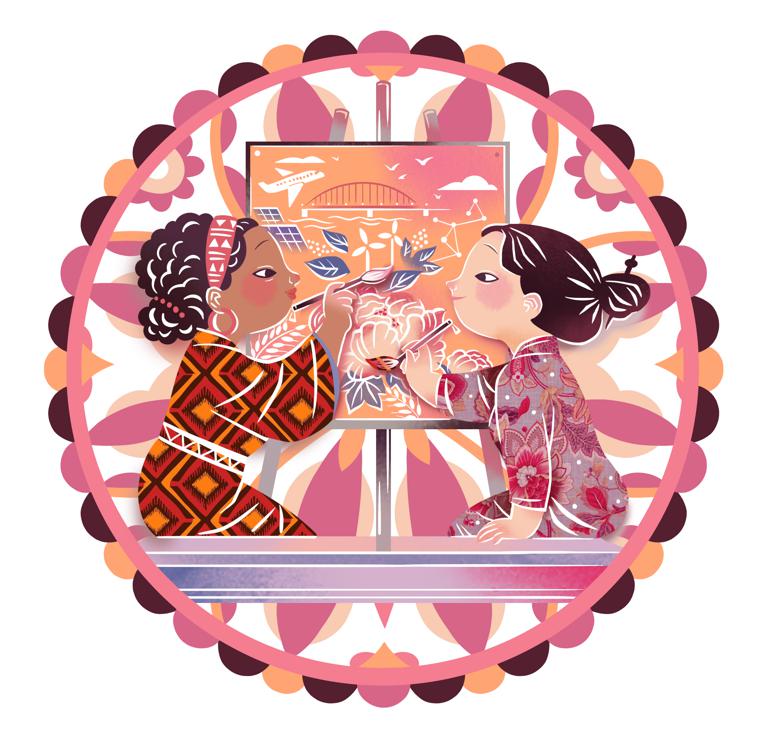
The Ninth Summit of the Forum on China-Africa Cooperation, to be held in Beijing from Sept 4 to 6, will be based on the theme "Joining Hands to Advance Modernization and Build a High-Level China-Africa Community with a Shared Future", reflecting the shared aspirations and vision of China and Africa, and contributing to the growth of the China-Africa partnership.
China is the world's largest developing country and Africa the continent with the highest number of developing countries.
Their relations can be traced back to the period when Zheng He sailed to the eastern coast of Africa during the early Ming Dynasty (1368-1644). Unlike many European countries' expeditions to Africa, however, Zheng He's voyage fostered peaceful exchanges between China and Africa, instead of facilitating the establishment of Chinese colonies on the continent.
China-Africa ties have developed based on the Five Principles of Peaceful Coexistence, which include equality, mutual benefit and non-interference in each other's internal affairs. This mutually beneficial relationship has yielded rich dividends for both sides and deepened their friendship.
In 2000, China and Africa jointly established the FOCAC, which helped raise China-Africa ties from a simple partnership to a strategic partnership in 2006, and then to a comprehensive strategic and cooperative partnership in 2015. In 2018, the two sides vowed to build a China-Africa community with a shared future, starting a new historical period, marked by the joint pursuit of modernization.
But both China and Africa face challenges on their path to modernization. Since the Opium Wars (1839-42; 1856-60), China has followed its own distinct path to attain self-reliance and realize modernization. But it was only under the leadership of the Communist Party of China that this path truly took shape. The goal of Chinese modernization is to realize common prosperity, build a modern socialist society, establish a harmonious relationship between humankind and nature, and pursue high-quality development.
Chinese modernization has unique Chinese characteristics, and is different from other countries' modernization models. By advancing Chinese modernization, the country has broken the myth that modernization equals Westernization, and set an example for other developing countries, especially African countries, to learn from.
Since its establishment, the FOCAC has adhered to the principles of "extensive consultation and making joint contribution for shared benefit" to strengthen Sino-African relations. And, as the theme of this year's FOCAC Summit indicates, China is willing to share its modernization experience with African countries and jointly generate mutual benefit. But, more importantly, China has no intention of exporting its model of modernization to Africa.
Thanks to the experience it has gained in the process of its modernization, China believes that every country has the right to choose its own path to modernization based on its national conditions, and any attempt to copy or impose external models will end in failure.
China has always respected African countries' right to explore their respective development path. As President Xi Jinping said in his keynote speech at the China-Africa Leaders' Dialogue in Johannesburg in August 2023, "The African people have the most say on which path suits Africa best. Advancing modernization through integration is the independent choice made by African countries and people. On this path to modernization, China has all along been a firm supporter, and walking side by side with Africa."
That's why, in accordance with an African proverb, "If you want to go fast, walk alone; and if you want to go far, walk together", China is willing to accompany African countries on their road to modernization. African nations, too, are ready to join hands with China to explore their respective modernization path based on the premise that they enjoy strategic autonomy and exercise the right to choose their own development partners.
In fact, African states have long viewed China as a true friend on their journey to modernization and, as proof, they have been taking active part in advancing the Belt and Road Initiative and the Global Development Initiative. For example, 52 African countries as well as the African Union Commission have signed Belt and Road cooperation documents with China.
But with the deepening of China-Africa cooperation in recent years, some Western countries have likened China's engagement with Africa to "neo-colonialism", and accused China of "exporting its development model" to and setting "debt traps" for African countries, in order to discredit China-Africa relations.
But the African people can clearly see that cooperation with China, through platforms such as the FOCAC, the Belt and Road Initiative and the GDI, has yielded fruitful results in political, economic, security, social and cultural fields. In particular, it has helped improve the living standards of the African people and created more opportunities for them.
The continuous upgrading of China-Africa cooperation and their joint efforts to realize common development reflect their shared aspirations. As a matter of fact, their cooperation has helped strengthen the Global South's demand for global governance reform.
China and Africa have the potential to turn their partnership into a model of joint development, contributing to the building of a global community with a shared future for mankind. And the FOCAC Summit will help them do so, adding a new chapter to China-Africa cooperation.
The author is the deputy director at the Division of Political Studies, China-Africa Institute. The views don't necessarily reflect those of China Daily.
If you have a specific expertise, or would like to share your thought about our stories, then send us your writings at opinion@chinadaily.com.cn, and comment@chinadaily.com.cn.