BRI injects vitality in Latin America










From the autumn of 2024 to the spring of 2025, I conducted in-depth field research and academic exchanges with scholars in the United States, Costa Rica, Colombia, Chile, and other North and Latin American countries. The contrasting evaluations of international cooperation models among Latin American political and business circles were thought-provoking: the anxiety under the US tariff regime stood in sharp contrast to the sense of gain brought by Chinese projects.
This contrast confirms a trend: "Ecosystem Globalization", or the localized industry chains of Chinese companies, is shifting Latin American perceptions about the Belt and Road Initiative from infrastructure assistance to shared development opportunities.
The US approach to "exclusive cooperation" with Latin America is essentially an extension of its hegemonic logic, prioritizing unilateral interest maximization and turning cooperation into a tool of political coercion.
The US' tariff policies toward Latin America this year are highly representative: a 25 percent tariff on Mexican steel and aluminum products has thrown Mexico's automotive industry — accounting for around 4 percent of its GDP — into turmoil; a 10 percent "reciprocal tariff" on key Brazilian products such as aircraft forced the Brazilian Congress to urgently pass countermeasures; even Peru and Colombia, which have free trade agreements with the US, were not spared additional 10 percent tariffs.
The harm of such "conditional cooperation" extends far beyond economics. In discussions at the University of Chile, Latin American scholars generally agreed that the US practice of linking tariffs to issues such as immigration and drug control not only violates multilateral trade rules but also severely disrupts regional industry chain stability. The exclusive nature of US cooperation has led to widespread resistance in Latin America, with leaders from multiple countries explicitly criticizing it at summits of the Community of Latin American and Caribbean States for "undermining the global economic order".
In stark contrast to the US' exclusionary approach, Chinese companies are building an inclusive cooperation system through "Ecosystem Globalization", driving a qualitative leap in Latin American perceptions about the Belt and Road Initiative. This model breaks through singular infrastructure export, forming a holistic co-construction pattern characterized by "localized production capacity, localized operations, cross-cultural branding and secured supply chains". Its value is fully demonstrated in multiple projects I investigated. In S?o Paulo, Brazil, the Great Wall Motor factory, with an annual capacity nearing 50,000 vehicles, has not only spurred synergistic development within a "four-hour logistics circle" but also created substantial employment through local hiring. Brazilian President Luiz Inacio Lula da Silva's signature on the first vehicle sold offline was not only an endorsement of Chinese intelligent manufacturing but a recognition of this cooperation model. Data from a local suppliers' association show the factory has brought dozens of local enterprises into the global supply chain, realizing a shift from "product input" to "capacity output".
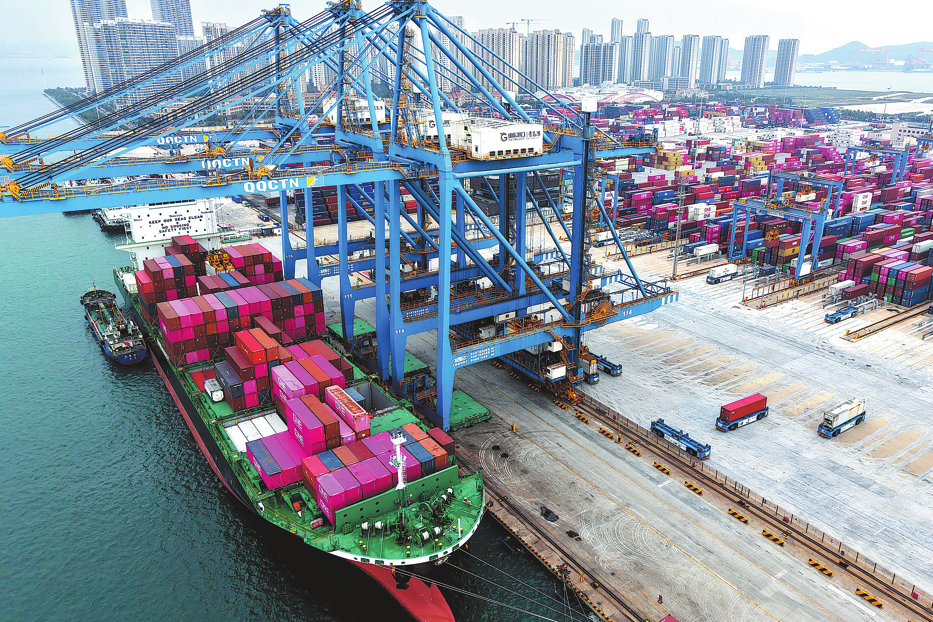
The construction of Peru's Chancay Port demonstrates the "multiplier effect" of infrastructure. As a flagship BRI project in Latin America, the port not only opens a new land-sea corridor between Asia and Latin America but also, through technical training, enables Peruvian workers to master core port operational skills.
The practice in Ecuador more directly reflects "mutual benefit". The commissioning of the Mirador copper mine project not only boosted local economic growth but also improved living conditions through supporting livelihood projects. After the China-Ecuador free trade agreement took effect, non-traditional products such as dragon fruit and quinoa have successfully joined the list of exports from Ecuador to the Chinese market.
Based on practices in multiple Latin American countries, I believe Chinese companies' "Ecosystem Globalization" needs breakthroughs in three dimensions to further deepen the consensus on "shared development opportunities".
First, deep industry chain integration: Great Wall Motor's integrated "R&D, production, supply, marketing, and service" model is worth emulating. Establishing a full-process manufacturing center in Brazil while simultaneously cultivating a local parts system significantly enhanced product adaptability and market response speed. It is recommended that companies conduct "industry chain diagnostics" before entering Latin America and prioritize collaboration with local small and medium-sized enterprises. In sectors such as coffee processing in Colombia or mineral development in Peru, technology shareholding can enable profit sharing.
Second, embedding livelihood value is key: The investigation revealed Latin American countries have an urgent need for "sustainable development". Chinese companies can learn from the Ecuador project experience by incorporating livelihood projects into cooperation plans: building community power grids alongside energy projects, conducting ecological restoration during mining development, and training local technical workers during infrastructure construction. Research from a Chilean development university indicates that Chinese projects including livelihood components saw local social acceptance markedly increase.
Third, multilateral platform synergy is the guarantee. The China-CELAC Forum, established 10 years ago, has become a crucial engine for translating consensus into action. Companies should actively utilize this platform to align with Latin American development plans. When participating in regional projects such as Brazil's green corridor or Costa Rica's digital transformation strategy, it is advisable to collaborate with multilateral institutions such as the Asian Infrastructure Investment Bank to design financing solutions, using "third-party market cooperation" to lower entry barriers while mitigating risks from single partnerships.
The development practice in Latin America has proven that an exclusionary approach is difficult to sustain, while the "inclusive co-construction" of the BRI is demonstrating strong vitality. The "Ecosystem Globalization" of Chinese companies is not a simple model export; rather, it involves jointly cultivating new drivers of development with Latin American nations through industry chain integration, and embedding livelihood values and platform synergy.
Only by adhering to "mutual benefit" can genuine common development be achieved. This is not only a profound insight from my journey through Latin America but also the essential path for Chinese companies to truly achieve internationalization.
The author is counsellor of the People's Government of Guangdong province and a professor at Guangdong University of Foreign Studies.
The views don't necessarily represent those of China Daily.
If you have a specific expertise, or would like to share your thought about our stories, then send us your writings at opinion@chinadaily.com.cn, and comment@chinadaily.com.cn.