Philippines' opportunism doomed to failure









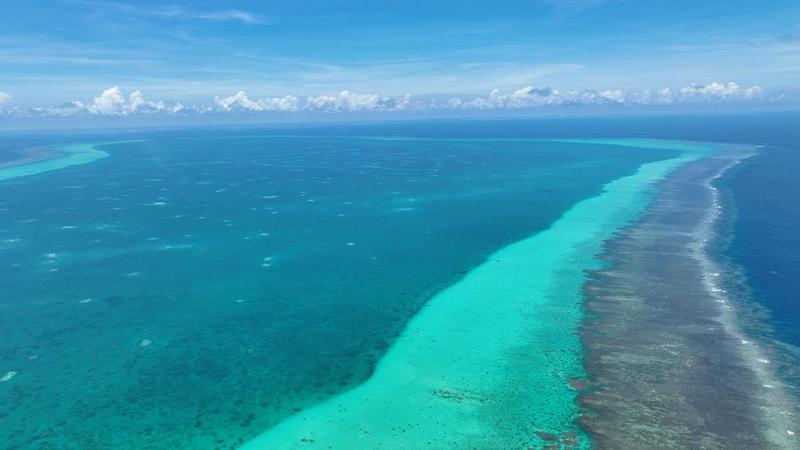
The Philippines has been making provocative moves in the South China Sea and thus escalating tensions in the region since last year. Perhaps Philippine leaders have not heard of a Chinese saying: A quarrel between two sides will only benefit a third party.
The Philippines hopes to benefit from the United States' moves to check China's rise and maintain its hegemony in the Asia-Pacific region.
For decades, the Philippines has been an opportunistic player. In 1971, taking advantage of rotating its troops to deal with a typhoon, the Philippines illegally occupied Zhongye Island in the South China Sea. In 1999, when the bombing of the Chinese embassy in erstwhile Yugoslavia heightened tensions between China and the US, it grounded a World War II-era warship on Ren'ai Reef in a bid to occupy it permanently.
Also, for decades, it has been trying to benefit from the US-China competition, especially from deteriorating US-China relations. However, in its blind pursuit of material and strategic benefits, the Philippines has become a pawn in the hands of the US, which has been furthering its "Indo-Pacific strategy" to contain China.
The Philippines' opportunistic trait aligns perfectly well with the US' China-containment strategy. What Manila doesn't understand is that it can use the Philippines-US Mutual Defense Treaty to extort military aid from Washington, but not draw the US into a confrontation with China.
History tells us that the US has often left its allies in the lurch because it has always believed in serving its own interests. For example, in the Battle of Dien Bien Phu in 1954 during the Vietnam War, the US publicly refused France's request for assistance. In the same year, the US signed a so-called mutual defense treaty with China's Taiwan but did not get directly involved when the Chinese People's Liberation Army shelled Kinmen in 1958, aside from providing some logistical support to the island.
Besides, the US pulled Pakistan into a bilateral mutual defense assistance agreement and the Southeast Asia Treaty Organization with seven other countries, again in 1954. However, during the 1965 India-Pakistan War, it turned down Pakistan's request for assistance, stating that the agreement did not apply to the conflict.
A recent Congressional Research Service report on "US-China Strategic Competition in South and East China Seas "said the US is wary of the Philippines taking extreme actions under the treaty that may drag the US into a military conflict with China, and suggested that Congress review the treaty's applicability.
Buyers are rarely smarter than sellers in business. Dealing with the US is akin to selling the soul to the devil. The US, as the dealer at a gambling table, can see every card the Philippines is holding and knows how to manipulate the latter's moves.
Moreover, the US' interpretation of the Philippines-US Mutual Defense Treaty is flexible, because it uses a strategy of ambiguity to mislead the Philippines in different international political circumstances.
In 1975, then US secretary of state Henry Kissinger issued a memorandum, legally interpreting the commitments of the US under the Philippines-US Mutual Defense Treaty, saying that US commitments in the "MDT may apply in event of attack on (Philippine) forces deployed to third countries". The report cited two reasons for that: first, the Nansha Islands are not part of Philippine territory; and second, the Philippines is not a claimant in respect of the Nansha Islands.
The US always accords the highest priority to its interests, which the Philippines may be aware of. But being an opportunistic player, the Philippines still believes it can gain from its alliance with the US without realizing that it is being led down the garden path by the US. The Philippines will be in great danger if it believes US soldiers will shed blood for Philippine ships or personnel in the South China Sea.
The author is an associate research fellow at the Institute of Maritime Strategy Studies at the China Institutes of Contemporary International Relations.
The views don't necessarily reflect those of China Daily.
If you have a specific expertise, or would like to share your thought about our stories, then send us your writings at opinion@chinadaily.com.cn, and comment@chinadaily.com.cn.