Chinese modernization a new development path









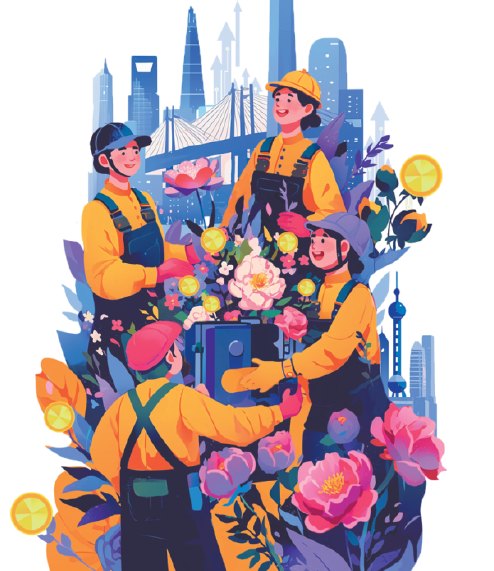
Editor's note: Over the past decades, various sectors in China have undergone thorough transformation, strengthening the country's determination to further deepen reform and widen opening-up to achieve high-quality development and advance Chinese modernization.
The third plenary session of the 20th Central Committee of the Communist Party of China adopted the "Resolution of the Central Committee of the Communist Party of China on Further Deepening Reform Comprehensively to Advance Chinese Modernization" on July 18, reiterating China's commitment to peaceful development but also to contributing to build a global community with a shared future based on mutual respect, inclusiveness and stability.
The resolution posits that Chinese modernization is intrinsically peaceful and aimed at building a global community with a shared future. It emphasizes China's shift from being a passive participant to a leader in global governance. China's approach is rooted in the belief that "global economic development is essential for China's development, and vice versa". This principle underscores China's efforts to foster a fairer and more inclusive global governance system — one that benefits not just a few, but all.
After the 2008 global financial meltdown, China emerged as a key driver of global economic growth, while helping maintain global stability. By contributing to nearly one-third of global economic growth, China has been instrumental in lifting itself as well as other countries out of economic stagnation. Forums such as the recently concluded BRICS Summit in Kazan, Russia, have seen China make new commitments, including making substantial investments in AI, industrial capacity and digital collaboration centers.
China has also pioneered initiatives to eradicate poverty and overcome infrastructure challenges, which include the Global Development and South-South Cooperation Fund and making efforts to realize the United Nations' 2030 Sustainable Development Goals. Also, during the COVID-19 pandemic, China waived interest-free loans for least-developed and landlocked developing countries, demonstrating its commitment to help the developing world meet its development challenges.
Institutionally, China has launched groundbreaking multilateral organizations such as the Asian Infrastructure Investment Bank and the New Development Bank, addressing global infrastructure needs while promoting economic fairness. The AIIB embodies values of transparency, sustainability, and green investment, setting an example for future multilateral financial bodies.
As for the Belt and Road Initiative, it has redefined global cooperation by advocating for policy coordination, infrastructure connectivity, free and fair trade, financial integration, and closer people-to-people ties. By focusing on infrastructure and green development, the Belt and Road Initiative has helped create inclusive economic opportunities, opening channels for a resilient, interconnected global economy.
Beyond material and institutional influence, China's foreign policy is shaped by a moral framework steeped in the values of harmony and mutual respect, which contrasts with the Western binary view of democracy versus authoritarianism. Concepts like "innovative, coordinated, green, open, and inclusive" development resonate worldwide, underscoring China's win-win approach to international relations. Initiatives to combat climate change, safeguard cyberspace, protect maritime rights, and improve governance further reflect China's intent to address emerging global challenges.
China's commitment to a peaceful, inclusive world order, exemplified by the Belt and Road spirit of mutual learning and mutual benefit is shaping the values underpinning global governance. This ensures that different cultures and values coexist peacefully, and helps shape a new model of cooperation that respects pluralism and rejects hegemony.
With regionalization and protectionism on the rise, China advocates for a new, open and inclusive globalization that resists protectionism. The third plenary session's resolution outlines a vision of high-quality Belt and Road partnerships, emphasizing the importance of multilateral platforms in fields such as green development, AI, and digital economies. Such cooperation frameworks align with the Belt and Road spirit of extensive consultation, joint contribution and shared benefits.
China's approach to globalization is also reshaping the fundamental structure of capital flow. While the West has focused on "managed globalization" for years, China argues that fair global competition necessitates good governance and shared rules to avoid the pitfalls of economic polarization. It aims to create a model of "patient capital" focused on sustainable, shared growth rather than short-term gains.
One of China's key goals is to secure the global supply chains. The country has identified strategic fields such as AI, energy and core infrastructure as essential to maintaining secure supply chains. By creating robust and scalable domestic industries, China is not only fortifying its domestic economy but also helping stabilize the global supply chains.
The resolution also reinforces the necessity of higher-standard open economies, ensuring that foreign and domestic markets are accessible, fair and mutually beneficial to all. China's efforts to help reform the global governance system are manifest in its initiatives to establish institutions such as the Center for International Knowledge on Development, where countries can share their experiences of development.
In the ultimate analysis, China's strategy is encapsulated in its vision of a global community with a shared future. China is now committed to helping improve the existing world order to make it fairer and more representative, and promoting collective development. It champions a globalization that is not dominated by any country and, instead, is based on equitable participation. By fostering a global community rooted in common values, China asserts that mutual development is not only possible but essential to building a peaceful, progressive world.
Globalization should not result in the strong growing stronger, and the weak becoming weaker, nor should it damage the environment or erode traditional cultures. It must not be structured around a singular universal value dictated by one dominant power, with other countries revolving around it. Rather globalization should adopt a multipolar approach, embracing diverse, inclusive values that respect all cultures. This approach aims to establish universal values that benefit all.

The views don't necessarily reflect those of China Daily.
If you have a specific expertise, or would like to share your thought about our stories, then send us your writings at opinion@chinadaily.com.cn, and comment@chinadaily.com.cn.