New start or old patterns for the two largest economies?










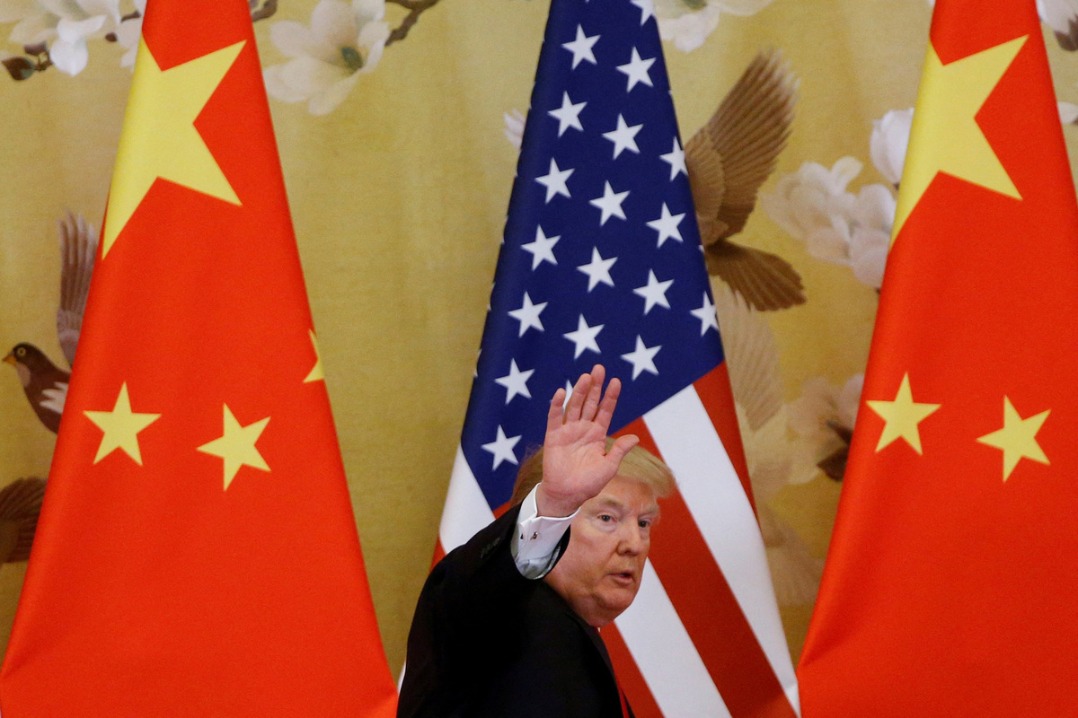
According to US media, the American people have elected Donald Trump as the 47th president of the United States, a momentous event that is significant for not only Americans but also the entire world. The role of the US in global affairs makes every presidential election a matter of great international interest.
As the leader of the world's largest economy with unparalleled military and diplomatic reach, the new US administration's policies and direction will reverberate far beyond the country's borders. One area where the impact of this election will be felt most acutely is the US-China relationship, which stands as the most consequential bilateral relationship of our time.
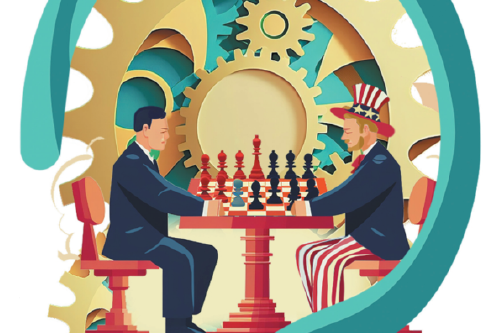
It is a fact that the Sino-US relationship has evolved into a complex rivalry that encompasses economic, technological, military and ideological dimensions. This is not a rivalry likely to fade any time soon, and it risks becoming a source of greater global division. At its core, this rivalry is rooted in differing visions of global leadership and national identity, with both countries vying for influence on the world stage.
Hence, true change in this dynamic would require a major paradigm shift: a reassessment of the US' understanding of China's strategic intentions.
Much of the tension between the two major powers stems from a perception in Washington that China's rise poses a direct threat to the US' prosperity and the American way of life. This belief fuels a tendency toward defensive and adversarial policies, which only serve to heighten tensions.
Yet Trump should recognize that the inevitable renaissance of China does not have to be viewed through a lens of threat or antagonism. While China's economic and political influence continues to grow, it does not necessarily follow that this growth will come at the expense of the US or its global standing. In fact, it is not only possible but highly necessary for China's power to harmonize with the US' power for the sake of global stability and peace.
To navigate this evolving landscape, the new US administration must reconsider its approach to China. Viewing China's rise as an opportunity for cooperation rather than as a zero-sum game is crucial. However, a reassessment of China's strategic intentions should begin with an acknowledgment of the peaceful nature of China's rise.
Over the past few decades, China has demonstrated a largely non-interventionist approach to foreign policy, focusing on internal development and economic growth rather than expansionist or imperialist ambitions. The Belt and Road Initiative is emblematic of China's strategy to enhance its global influence through economic ties and infrastructure development rather than military might.
However, the rise of China does come with complexities. Power is relative, and as China's global influence increases, the US' unilateral dominance in world affairs inevitably erodes. This shift in the global power balance has understandably led to anxiety in the US about its future role in the world.
Nonetheless, this moment in history presents an opportunity for the US to redefine what leadership means in a truly multipolar world. The US can still demonstrate leadership by fostering a global order that prioritizes cooperation, diplomacy, and mutual respect, rather than one rooted in rivalry, conflict and a zero-sum game mindset.
China's peaceful rise, coupled with its massive domestic market and growing technological prowess, can be seen as complementary to global growth rather than as a destabilizing force. The challenge for the US will be to change its mindset from one of containment and confrontation to one of engagement and partnership. By doing so, the US can help shape a future where both nations contribute to a more peaceful and prosperous world.
A critical step toward realizing this goal is through dialogue and diplomacy. Working with China to address common global challenges such as climate change and public health, and to maintain economic stability is essential. Both countries have an interest in addressing these issues, and cooperation in these areas could serve as a foundation for building trust and reducing tensions.
Moreover, addressing the areas where US-China competition is most intense — such as technology and trade — requires a nuanced approach that balances national interests with the broader need for global stability.
The risk of escalating rivalry between the US and China is real but not inevitable. While competition between the two major powers will likely persist, it does not have to devolve into outright conflict. The new US administration has the opportunity to take a bold step in reassessing its understanding of China's strategic intentions and in crafting a more forward-thinking and cooperative approach to managing the Sino-US relationship. In doing so, the administration can maximize the chances of a peaceful and prosperous future for all mankind.
At this pivotal moment in history, the world is watching. How the US chooses to engage with China will have profound implications not only for the future of the two countries but also for the future of the global order. Now more than ever, the US must rise to the challenge of leadership by embracing diplomacy, fostering cooperation, and striving for a future where the rise of China does not signal the decline of the US but rather an opportunity for shared progress.
The author is the founder of the China-Europe-America Global Initiative, editor of China and the World in three volumes, and the creator of the Inspiring Series, a collection of books that aims to introduce China to the world. The forthcoming installment in the series is titled China: Inspiring Greater Bay Area. The views don't necessarily represent those of China Daily.
If you have a specific expertise, or would like to share your thought about our stories, then send us your writings at opinion@chinadaily.com.cn, and comment@chinadaily.com.cn.