Climate change a chronic threat to public health









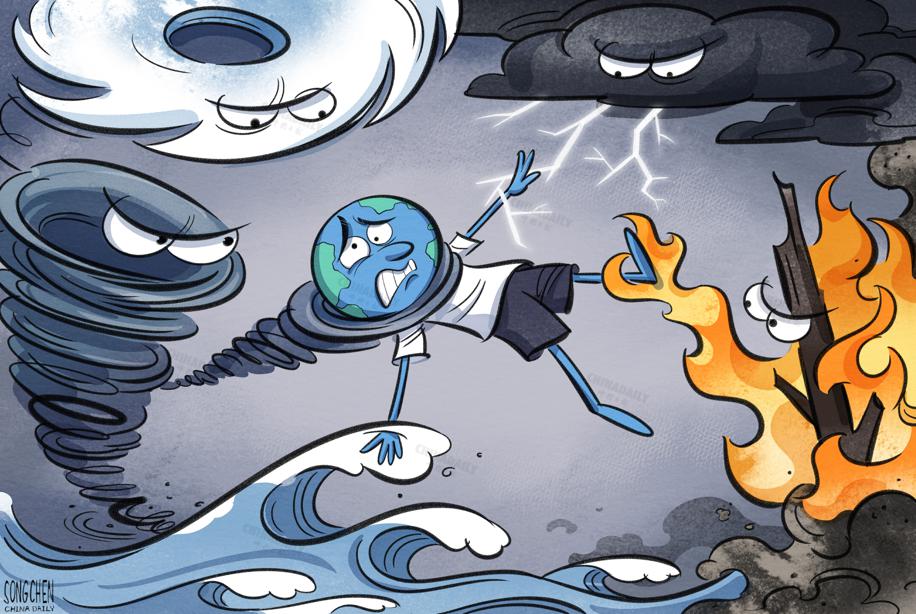
That climate change is becoming an increasingly bigger challenge for humankind was evident, more clearly than ever, in 2023 when average global temperatures rose 1.45 degrees Celsius above pre-industrial levels, making it the warmest year since records began in 1850.
China, too, felt the heat, quite literally, due to the worsening climate change, as it experienced its hottest year on record, while also grappling with severe droughts and floods in some parts of the country.
The 2024 Report of the Lancet Countdown on Health and Climate Change says climate change poses one of the greatest health risks to China today. The Lancet report also highlights the toll extreme weather events have taken on China's public health. In 2023, on average each person in China faced 16 days' exposure to heat waves, much above the historical average. Heat wave-related deaths surged nearly twofold, and the economic cost of lost labor due to heat reached a record $283.4 billion, or 1.65 percent of China's GDP. Not to mention that compound events such as droughts combined with heat waves have increased risks, exposing more people to health hazards and putting a strain on China's healthcare system.
To address the risks, the government requires to focus on both mitigation (reducing emissions to slow down global warming) and adaptation (building resilience to withstand climate impacts). To accomplish this, the report calls for increased funding, policies for collaborative abatement of pollution and carbon emissions, interdepartmental coordination, and improved health and meteorological services to better safeguard the population.
Yet such impacts are not limited to people's health and the healthcare system. Climate-induced economic costs are rising sharply. In 2023, the direct economic cost of extreme weather events jumped to $77.1 billion, or about 0.45 percent of China's GDP. As China moves toward achieving its ambitious climate goals, reducing these economic burdens will require innovative solutions and more investments.
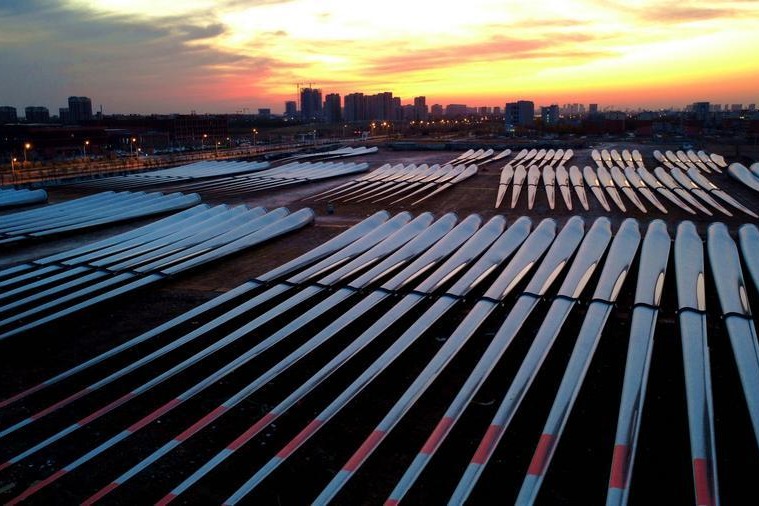
Despite China's achievements in renewable energy — its installed renewable capacity reached a historic high of 1,450 GW in 2023, surpassing that of coal for the first time — the transition remains challenging, as coal still has a large share in energy consumption.
Therefore stronger market incentives, reduced fossil fuel subsidies, and a robust carbon pricing strategy are needed to improve the situation. With renewable energy generation becoming less reliable during extreme weather events, China has to ensure energy security on way to achieving the goal of low-carbon transition.
China has made significant progress in integrating its climate and health policies across local, provincial, national and international levels. This coordinated approach has laid the groundwork for a comprehensive response system centered on the "National Climate Change Health Adaptation Action Plan (2024-30)" and the"1+N" carbon peaking and neutrality policy framework. These policies create a structured road map for addressing climate-related health risks through proactive adaptation and mitigation measures.
This transition from fragmented actions to a systematic approach also draws on lessons from local initiatives. Many Chinese cities have accumulated valuable experiences in health-centered climate actions, laying the foundation for expanding their implementation after the 28th UN Climate Change Conference in Dubai in December 2023. These cities are building advanced governance models that are helping reduce pollution and carbon emissions, promoting sustainable practices, and safeguarding public health.
Establishing a unified interdepartmental coordination mechanism is essential to effectively address the health risks linked to climate change. By pooling resources, data, and funding across sectors, this mechanism can streamline efforts and enhance collaboration, allowing for a more robust response to climate-related health challenges.
However, regional governments should also make more efforts to reduce carbon emissions in alignment with the national policy. Increasing renewable energy capacity and reducing carbon intensity will be critical to achieve the long-term sustainability goals and minimize the impacts of climate change on health. This shift from managing overall energy consumption to focusing on carbon reduction is necessary to prevent future health and economic risks.
Investment in climate-friendly technologies and infrastructure should also be prioritized. Redirecting funds from fossil fuel subsidies to climate resilience measures will help both mitigation and adaptation efforts. In this regard, the key investment areas should include research on impact assessments, early warning systems and advancement in low-carbon technologies.
Also, localized healthcare and meteorological services tailored to specific regional needs can empower communities to better mitigate and adapt to climate change and reduce its impact on health. By providing timely, location-specific health warnings, these services can enable vulnerable populations to deal with climate risks. A comprehensive approach to meteorological and healthcare services will require collaboration among meteorological, environmental and health agencies to ensure accurate and relevant information reaches the public.
Moreover, establishing a low-carbon healthcare infrastructure is necessary to reduce the impacts of the healthcare sector on the environment, while implementing sustainability standards for healthcare facilities and practices.
With the right policies, investments and public engagement, China can set an example in climate adaptation and mitigation, developing a sustainable environment and a healthier future for all in the process.
Zhang Shihui is a postdoctoral fellow in the Department of Earth System Science, Tsinghua University, and Cai Wenjia is a professor in the same department, Tsinghua University.
The views don't necessarily represent those of China Daily.
If you have a specific expertise, or would like to share your thought about our stories, then send us your writings at opinion@chinadaily.com.cn, and comment@chinadaily.com.cn.