



China-Brazil global governance reform bid: China Daily editorial









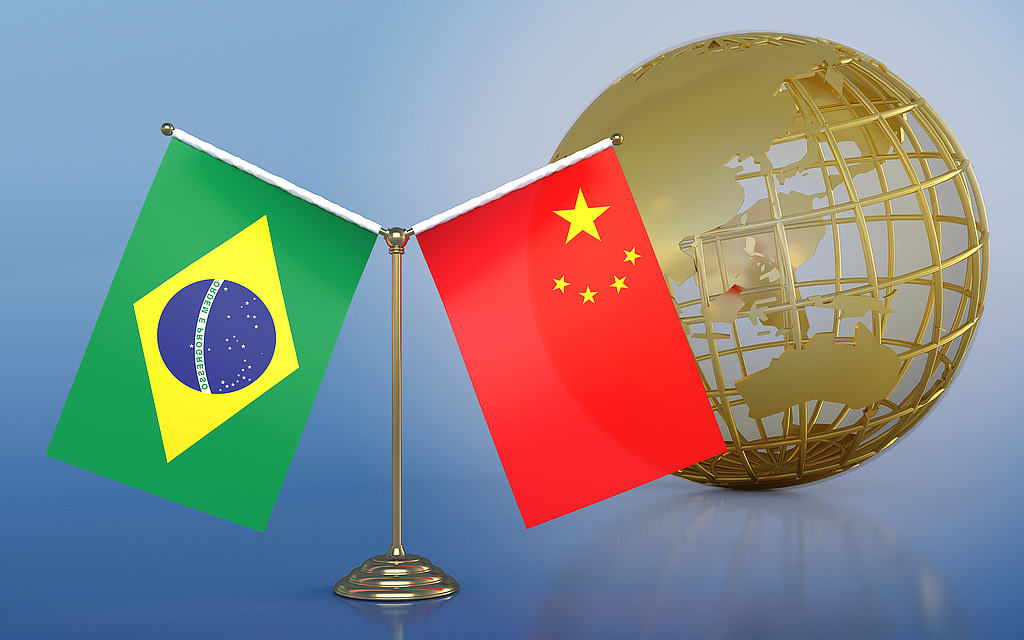
The complementary nature of the Chinese and Brazilian economies has paved the way for the two countries to achieve fruitful outcomes in their cooperation over the years in areas such as agriculture, infrastructure, energy, natural resources, green development and technological innovation, which have greatly spurred economic and social progress in both countries.
That both countries are forging ahead on the path of modernization and striving to accelerate economic development means it is natural that they should seek to broaden the scope of their existing cooperation while breaking new ground.
President Xi Jinping's ongoing visit to Brazil, which started on Sunday, is therefore expected to usher in another "50 golden years" for China-Brazil relations following the two countries' remarkable progress in mutually beneficial cooperation since the establishment of diplomatic relations five decades ago.
China has remained Brazil's largest trading partner for 14 consecutive years, with the bilateral trade volume reaching $181.5 billion in 2023, a 6.1 percent increase year-on-year.
Brazil, the first developing country to establish a strategic partnership with China, and also the first nation in Latin America to upgrade it to a comprehensive strategic partnership, remains China's largest source of agricultural imports, and is among the few countries that have a trade surplus with China.
Head-of-state diplomacy has been one of the key factors behind this fruitful win-win cooperation. The first presidency of Luiz Inacio Lula da Silva, from 2003 to 2010, witnessed booming bilateral trade and investment, as the Brazilian leader sought to strengthen ties with the world's second-largest economy. Lula visited China four times during that period, which saw China overtake the United States to become Brazil's largest trading partner in 2009, which it has remained ever since.
President Xi, meanwhile, has visited Brazil four times prior to his current ongoing state visit, underscoring the importance he attaches to broadening cooperative dimensions with the Latin American country. Upon his arrival in Rio de Janeiro on his current trip, Xi, in a written statement, called the two countries "like-minded friends with the same aspirations and good partners forging ahead hand-in-hand", and expressed the hope that they will continue to deepen political mutual trust and expand practical cooperation in all fields.
Lula visited China for the fifth time in April last year shortly after he was elected president of Brazil for the third time. Since then, the top leaders of the two countries have reached a broad consensus on opening up new prospects in China-Brazil relations in the new era and promoting the building of a China-Brazil community with a shared future.
The all-round strategic cooperation between the two major developing countries in the Eastern and Western hemispheres has often been hailed as a good example for coordination of countries in the Global South. Their friendly bilateral relationship has been built on mutual respect, as the two countries treat each other as equals, and appreciate and support each other's choice of development path. With aligned development strategies, it is hoped that the two countries will fully leverage the cooperation mechanisms they have in place to build a stable, sound and sustainable relationship in the years to come, and work together to balance the global governance system so that developing countries get a fair deal.
The two countries signed an agreement in March 2023 to settle all trade in their respective currencies rather than in US dollars, and pledged to work together for the building of a multipolar world order as well as a more just and effective global governance system.
Those tasks have gained a sense of urgency given that there is still a long way to go for the Global South to have its voice fully heard in the existing international governance system.
As two major developing countries, China and Brazil share the common responsibility to safeguard the developing nations' interests and address global challenges through cooperation. They are doing exactly that.


















