World economy damaged: US could be the main victim









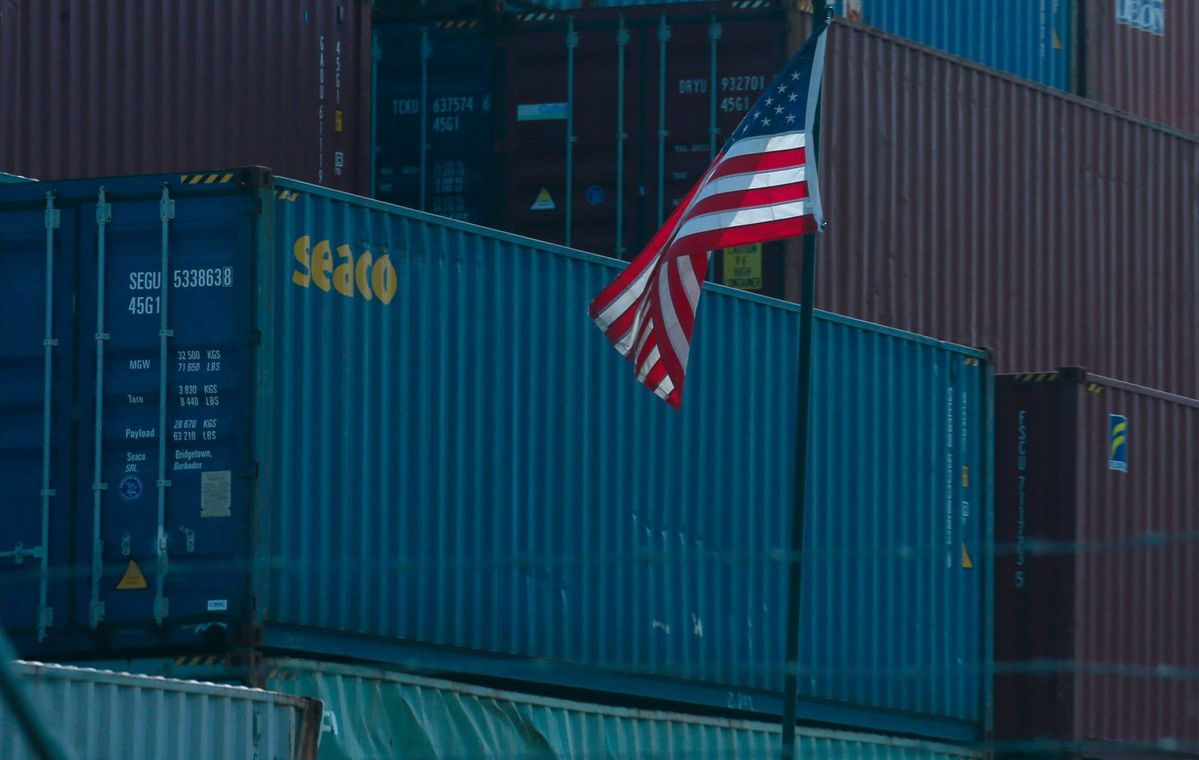
Two key policies of “Trump 2.0”, as announced repeatedly: Make America Great Again 2.0 (MAGA 2.0) and sweeping tariffs of 10-20 percent worldwide and 60 percent to Chinese goods in particular, will be a devastating headwind to world economy and trade, and will be a fatal boomerang to America itself.
MAGA 2.0 calls for moving manufacturing and supply chains back to America. For this purpose, it envisages a direct block of foreign products into America, turning the global supply chain into an American supply chain, “buy America, employ Americans”. The policy prohibits American outsourcing companies to access federal government projects. It calls for 200 percent tariffs on automotives from China and 1,000 percent tariffs on those from Mexico. Hence, the compulsory cut off or disruption of normal global supply chains will undoubtedly lead to major dislocations in world trade, investment and economy.
The sweeping tariffs of 10-20 percent worldwide and 60 percent on goods from China resemble the 1930 American Tariff Act, or Smoot-Hawley Act. By the narrative of protecting American jobs during the Great Depression, the Act increased tariffs across the board to the highest level in history. Then, UK, France, Germany and Canada retaliated immediately by high counter-tariffs on imports from America. As a result, world trade fell by 66 percent in the following three years. Hence the birth of GATT after WWII to correct the disastrous high tariffs towards an open, free multilateral trading system that we have enjoyed over the past 76 years. Now “Trump 2.0” wants to move back to pre-GATT times, a severe prospect that we must be fully prepared for.
To make things worse, the current world is already suffering from geopolitical segmentation and geoeconomic fragmentation. The WTO director general year-end report, issued recently, shows that new unilateral trade restrictions measures increased remarkably over the past year, affecting $887.7 billion trade volume during mid-October 2023 to mid-October 2024, compared to $337.1 billion a year ago, or more than doubled. By mid-October 2024, the current import restriction measures affected trade volumes of $2.94 trillion, or 11.8 percent of world total imports, compared to $2.48 trillion, or 9.9 percent a year ago. The report also found trends in trade diversification with more increase among like-minded trading partners. The reports finds that while there is yet to be a global trend towards regionalization or near-shore outsourcing, the global trade environment seems increasingly vulnerable, uncertain and unstable. Undoubtedly, “Trump 2.0”, MAGA 2.0 and sweeping tariffs will add new significant destruction.
However, taking full account of the possible risks and damages, they should not be overestimated. There are three main reasons behind this.
First, unlike that in the 1930’s, the US is no longer the dominant world trading power today. Total US merchandise imports in 2023, at $3.08 trillion, was only 12.9 percent of total world merchandise trade which stood at $23.8 trillion. The largest trading power today is no longer the US, but China. Most of the world trade does not happen only among the US and other developed economies, or Global North, but between the Global North and Global South, and among Global South economies. In other words, $20.73 trillion, or 87.1 percent of world exports will not be subjected to Trump’s tariffs. If all US trading partners impose counter tariffs on imports from the US which was $2.02 trillion in 2023, there is still $18.7 trillion or 78.6 percent of world exports unaffected by tariffs. A whopping 75 percent of world trade will still be operating on WTO terms.
Second, parallel to the trend of rising trade restrictions, there is also a trend of rising trade facilitation. The above-mentioned WTO director general year-end report also shows that during the same period between mid-October 2023 to mid-October 2024, world trade facilitation, simplification and trade restriction lift covered $1.44 trillion, 47 percent up from a year ago ($977.2 billion). New regional or bilateral free trade arrangements keep increasing. By mid-December 2024, there were 615 RTAs in the world with 373 in operation. A total of 211 RTAs follow GATT article V and another 341 follow GATT article 14. The WTO and multilateral trading system is unshakeable.
Thirdly, in the case of China, the largest target of “Trump 2.0” tariffs has proved that the effect of tariffs is limited. Although Trump imposed tariffs on over $370 billion Chinese goods, the global share of Chinese exports actually increased from 12.9 percent in 2019 to 14.2 percent in 2023, due to the competitiveness of its products and diversification of its global markets.
The latest OECD world economic outlook released on Dec 4, one month after Trump won the election, estimates that the world GDP will grow by 3.3 percent in 2025, slightly higher than 2024 (3.2 percent) and will keep the same speed in 2026. The “Trump 2.0” effects seem to not have been taken into account yet.
On the other hand, a major victim of “Trump 2.0” tariffs could be the US itself. Peterson Institute for International Economics (PIIE) issued a report last month which estimates that if the US imposes 10-20 percent tariffs worldwide and 60 percent tariffs on Chinese goods, the US will lose $158.7 billion of GDP, but add inflation rate by 0.4 percentage point, and further job losses, especially in agriculture, mining and manufacturing of durable goods. Oxford Institute of Economics estimated that the US will lose $1.9 trillion of GDP and 801,000 jobs in year one. Bloomberg has estimated that, if the US revokes China PNTR status and China retaliates, US imports will fall by 40 percent. If the US imposes 10 percent tariffs worldwide and all its trading partners retaliate, the US will see its imports down 55 percent and export down by 30-60 percent, very similar to the scenario in 1930’s after the Smoot-Hawley Act when US imports fell by 66 percent and exports by 61 percent, contributing to a prolonged Great Depression with US GDP down 50 percent.
Based on the above observation, it is clear that, the de-globalization, counter-WTO policies of “Trump 2.0”, if fully implemented, will definitely cause great damages to the world trade, investment and economy, but the main victim could well be the US itself.
The author is senior fellow, Center for China and Globalization, CCG.
The views don't necessarily reflect those of China Daily.
If you have a specific expertise, or would like to share your thought about our stories, then send us your writings at opinion@chinadaily.com.cn, and comment@chinadaily.com.cn.