On the front foot
China must be more proactive to prevent frictions with the anxiety-riven US inadvertently spiraling into conflict










The growing US anxiety over the rise of China is a key driver of its increased containment efforts. Domestic issues such as the pandemic, fiscal deficits, high inflation and industrial hollowing-out, which have brought destructive impacts, have further compelled the United States to scapegoat China and adopt hard-line policies.
From a strategic perspective, US authorities and strategists have labeled China as "the only competitor with both the intent to reshape the international order and, increasingly, the economic, diplomatic, military and technological power to do it".Regardless of Beijing's claims, Washington believes Beijing's genuine policy is one of competition or even confrontation with the US. In terms of bipartisan positions, the 116th US Congress introduced 620 China-related bills between 2019 and 2020, while the 117th US Congress introduced 860 China-related bills between 2021 and 2022. Meanwhile, in 2023 alone, the 118th Congress proposed 616 China-related measures. Committees under the US House of Representatives even set a record by passing 10 anti-China, pro-Taiwan island bills on a single day on Feb 28, 2023. This indicates that the confrontational aspect of Washington's China strategy is likely to persist and even intensify in the future.
Moreover, the US perceives itself to be suppressing China from "a position of strength". Under the pretext of the so-called China threat, the US is mobilizing its allies to "shape the strategic environment" around China by worsening China's external environment. The US has endeavored to implement decoupling strategies and disrupt supply chains to impede China's rapid development, even at significant cost.
The nature of China-US relations has fundamentally shifted in the new era. Increasing frictions and conflicts are inevitable, and the methods of competition and rivalry are evolving. The complexity, intensity, longevity and recurrence of China-US competition are becoming more pronounced. The previous approach of relying solely on economic engagement to stabilize bilateral ties is no longer entirely applicable. Therefore, the priority for managing China-US relations is to prevent the relationship from spiraling out of control or resulting in conflict. The main approach should shift from one of mutual benefit and cooperation to a comprehensive strategy that combines collaboration and struggle, trust-building and counterbalancing in managing the relationship. China should try to transform the US-driven competition and zero-sum rivalry into constructive competition and multidimensional engagement, keeping relations within controllable boundaries.
China should continue to urge the US to enhance dialogue based on the three principles put forward by President Xi Jinping — mutual respect, peaceful coexistence and win-win cooperation. While seeking to manage differences prudently, promote cooperation with a spirit of reciprocity, and strengthen international coordination with a sense of responsibility, China must also firmly oppose any US attempt to maliciously infringe upon China's sovereignty, interfere in its internal affairs, or unjustly deprive it of its legitimate right to development.
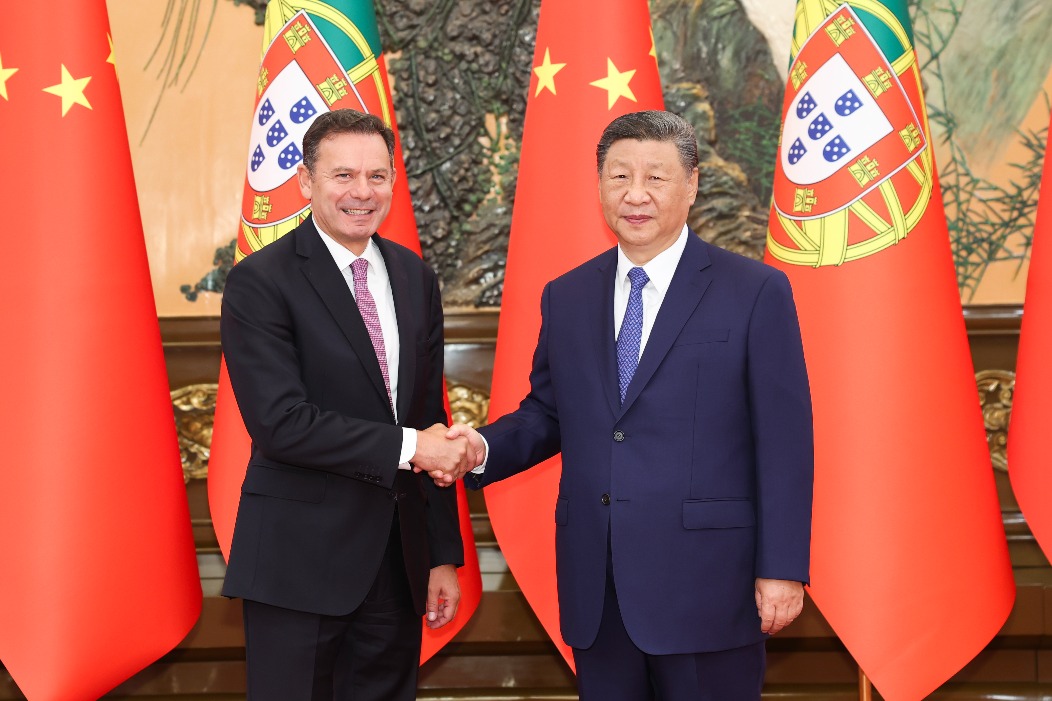
In terms of policy implementation, priority should be given to leveraging head-of-state diplomacy and other high-level bilateral dialogue mechanisms. Direct communication at the highest levels is crucial for addressing sensitive issues related to politics, security and technology, helping to avoid misunderstandings and misjudgments. Strengthening crisis management and strategic communication is essential to ensure timely communication during emergencies and to prevent strategic miscalculations. Practical cooperation should also be deepened in areas such as trade, climate change, public health, people-to-people exchanges and law enforcement. It is important to engage in military exchanges with the US, so as to foster mutual trust and cooperation on broader regional and global issues. Additionally, the boundaries between competition and cooperation need to be further explored and clarified.
Operationally, China must shift from passive reaction to proactive planning. The first priority is to properly handle the Taiwan question. In the foreseeable future, the US will not abandon its strategy of "using Taiwan to contain China" and may escalate its support for "Taiwan independence". China must respond resolutely to US"salami-slicing" tactics, assertively uphold the one-China principle, clearly delineate red lines and bottom lines, and maintain pressure on separatist forces. Preparations for military contingencies must also be intensified.
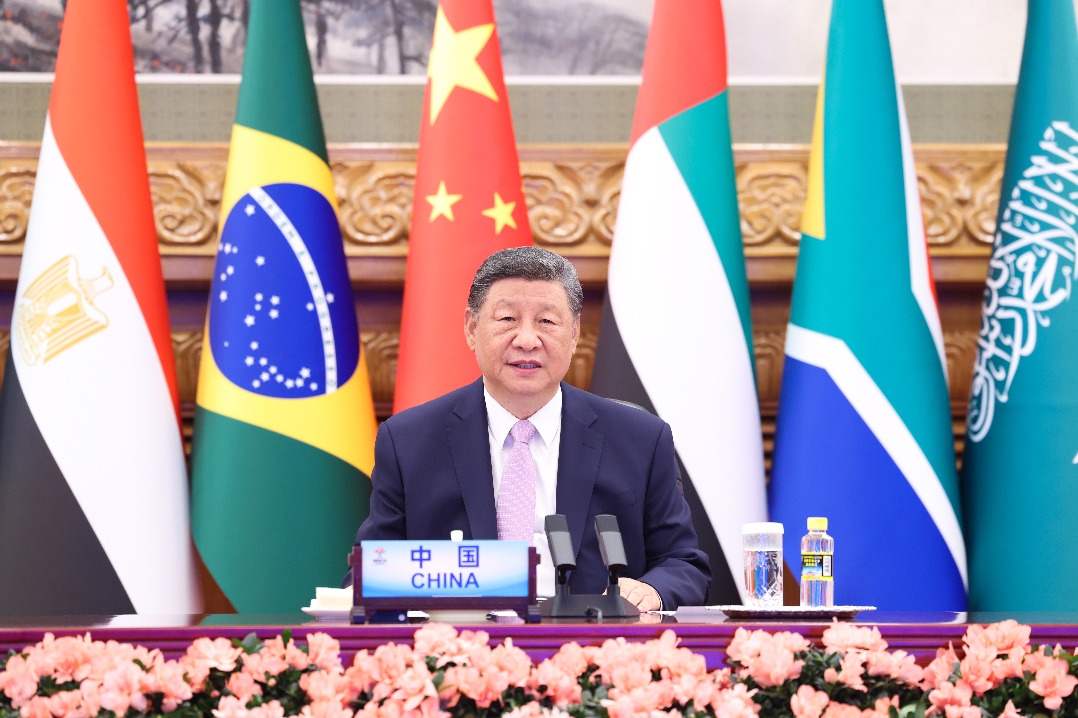
China should enhance its capacity to counter US interference in its external environment and endeavor to break the US containment strategy. This can be achieved by deepening bilateral cooperation with various countries and actively leveraging multilateral platforms such as the United Nations, G20,BRICS, Shanghai Cooperation Organization, the Belt and Road Initiative as well as those that enhance dialogue and cooperation with various regions. These platforms can help strengthen ties, expand China's network of partners, and bolster efforts to build a community with a shared future for mankind. Domestically, policy adjustments should align with international concerns to further enhance China's global image. Strengthening ties with US allies, particularly those with significant economic ties to China or diverging views from the US on trade or climate change, can create examples of mutual benefit and undermine the US strategy of containment through alliances.
In critical areas, China must adopt a proactive and strategic approach to gain the upper hand. The US suppression of China has expanded and now includes trade wars, financial wars, technology wars, cyber warfare and public opinion battles. In response, China should take the initiative in making due adjustments. For instance, advancing the internationalization of the renminbi is a key strategy. Increasing the renminbi's role in global transactions and reserves and enhancing the application of digital currencies can reduce the country's reliance on the US dollar and mitigate the impact of potential financial warfare. It is important to speed up efforts to develop new quality productive forces, build up new momentum for growth and gain the upper hand in the technological revolution so as to expand internal growth engines and improve the resilience of the country's industrial and supply chains. The nation should actively expand its opening-up, allowing more US companies to experience the benefits of integration, while also helping them recognize the harms of decoupling.
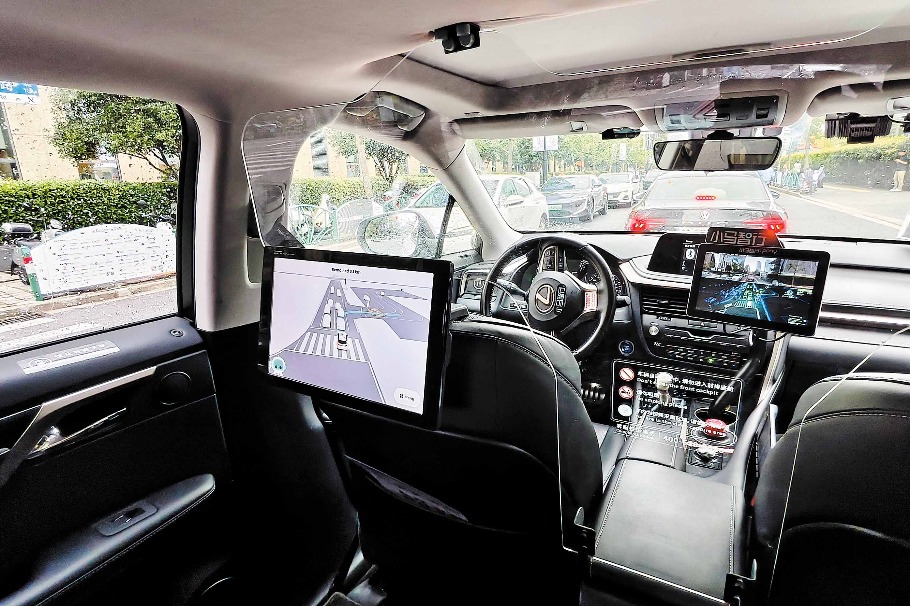
In the field of science and technology, efforts should focus on improving the sci-tech system, further stimulating domestic innovation, and developing independent core technologies to reduce vulnerabilities in the technology war. In terms of cybersecurity, there is a need to strengthen the protection of domestic network infrastructure, improve the defense capabilities against external attacks, and actively participate in international cyberspace governance and the formulation of relevant standards and guidelines in order to gain a voice in this domain.
Additionally, in the realm of military security, China should not only strengthen its national defense and military modernization but also place high importance on enhancing China-US military exchanges and crisis management mechanisms to build mutual trust, and prevent and resolve conflict risks.

The author is president of China Foreign Affairs University. The author contributed this article to China Watch, a think tank powered by China Daily. The views do not necessarily reflect those of China Daily.
Contact the editor at editor@chinawatch.cn.