Great experience covering nation's transformation as a journalist









When I first joined China Daily in Beijing in 1987, I was housed in a dorm in Tuanjiehu Hotel not far from the then office on the People's Daily compound on Jintai Xilu. That hotel, in fact, the entire compound, was nowhere to be seen and the area was unrecognizable when I went there to have dinner with friends last week. The area where horse-drawn carts were common has become part of the central business district.
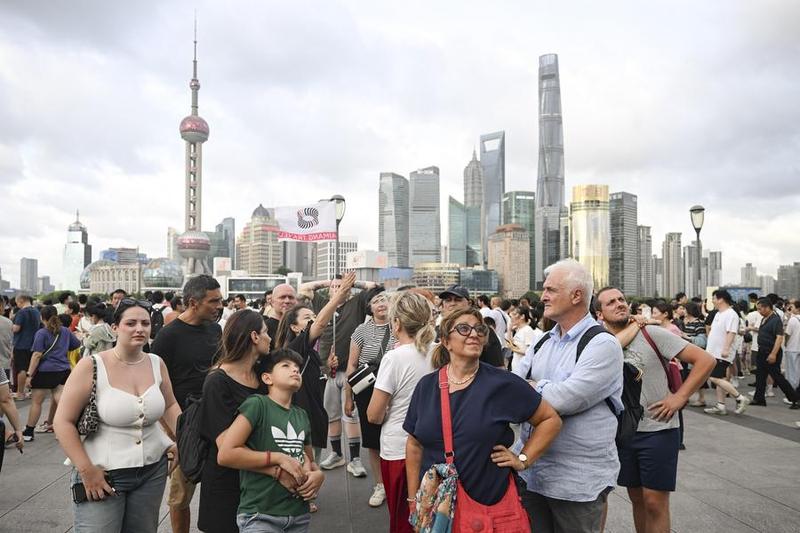
A similar transformation has taken place in my home city of Shanghai, where I was posted from 1988 to 2009. I was in Shanghai on April 18, 1990, when then premier Li Peng announced the launch of Pudong New Area. Pudong was mostly farmland where my elder brother used to take me to catch crickets during our childhood.
The Pudong skyline is now one of the most futuristic in the world. The area is home to banks, financial institutions, tech companies, and advanced manufacturing facilities from around the world, as well as splendid cultural and sports facilities.
Traveling on the high-speed train between Shanghai and Beijing over the past 14 years, I've seen the view from the train window changing, with new skylines emerging here and there. The same phenomenal transformation has taken place across the country, not just in developed big and coastal cities but also in the relatively less-developed northwestern and southwestern regions.
While China paid a high environmental price for the supersonic economic growth in the initial decades after the launch of reform and opening-up, the nationwide campaign of "green mountains and clear waters are actually equal to mountains of gold and silver" has started to pay dividends. For example, smog in Shanghai and other Chinese cities is less severe today than 10 years ago. But more needs to be done to improve the air quality across the country.
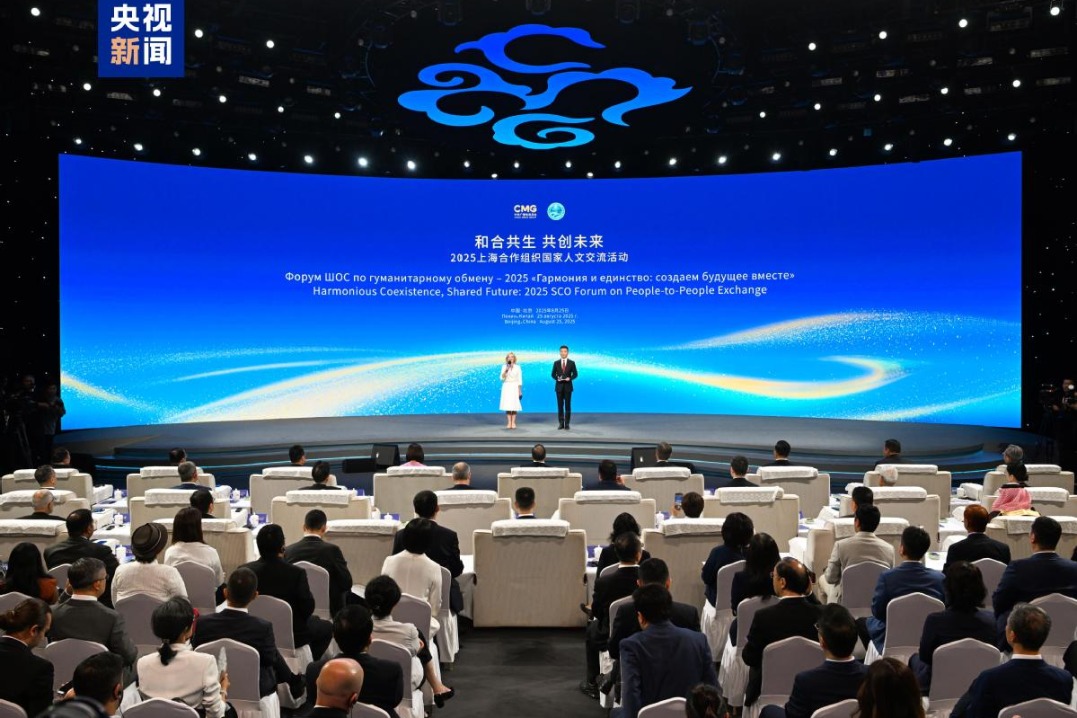
In 1988, I embarked on my first trip abroad on a COSCO container ship to cover China's largest shipping company and the lives of its sailors. The vessel set sail from Tianjin — where on Aug 31 and Sept 1 leaders of the Shanghai Cooperation Organization gathered for a summit — to Japan, Australia and New Zealand.
No one at the time thought the Tianjin port would become the world's eighth-largest container port. As a matter of fact, six of the top eight ports in the world today are in China, with Shanghai being the biggest.
The situation was totally different in 1988, when China's GDP was only $313 billion, lower than Canada's $509 billion and Italy's $894 billion.
During that two-month-long ocean voyage, I bought a 21-inch Hitachi color TV set — a much-coveted electrical appliance in China in those days — in Yokohama, Japan. Few then imagined China would become the world's largest manufacturing country, making not just large-screen TV sets and other electrical and electronic products, but also electric vehicles, solar photovoltaic panels and wind turbines.
China's engineering achievements, building some of the most spectacular bridges and by far the largest high-speed railway network, have left the world in awe and inspired other developing countries, including SCO member states, to initiate similar development projects.
China's success story is attributed to its hardworking people as well as reform and opening-up policy. As such, it should advance its high-level opening-up and play a bigger role in international cooperation and global governance amid the increasingly volatile international environment.
After winding up my 38-year career at China Daily in late August, I intend to spend the next decade discovering my country. I know many of the places I visited 16 years ago are unrecognizable today due to rapid modernization. And those include my ancestral hometown of Fuding in Fujian province, known the world over for its white tea. Once a poor, remote mountainous region, it is now connected to Shanghai by a four-hour high-speed train and a seven-hour drive.
It has indeed been a fantastic experience covering a rapidly changing China, both from home and abroad, for 38 years.
chenweihua@chinadaily.com.cn