Imported goods add to festive charm









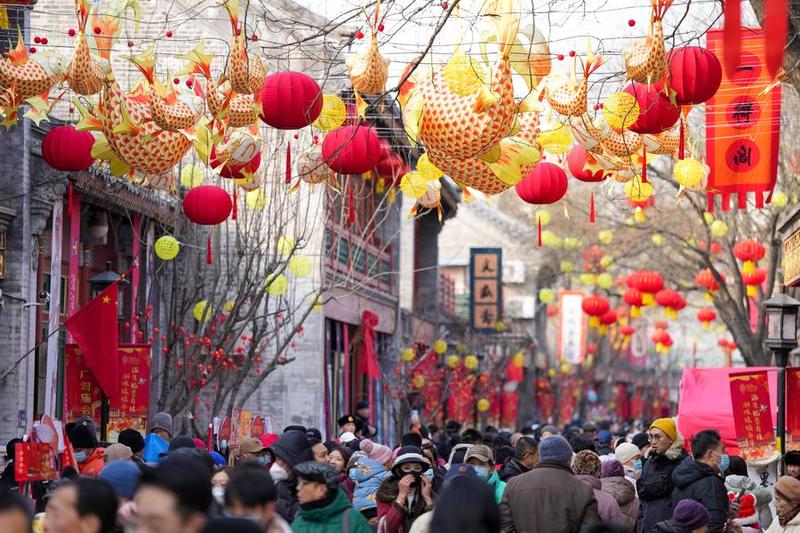
Chinese New Year celebrations, just like everything else in modern day China, are evolving with the advancement of digital technology. Chinese New Year goods, or nianhuo, are traditionally purchased in bulk before the Spring Festival holiday. However, the country is seeing an increase in the purchase of imported Chinese New Year goods, which include fruits, seafood and meat.
The general perception is that imported products are superior to locally produced goods. As a result of the increasing demand, imported goods are now widely available in China.
The preference for domestic and imported products has been going back and forth in recent decades. After decades of imported fashion products replacing "outdated" traditional Chinese clothing, most of my friends who are in business have ditched their Western suits for more high-end domestically made clothing. Those associated with arts and culture shifted to local brands even earlier.
The guochao trend of younger generations sporting traditional brands is expected to gain further traction, because China is becoming not only increasingly prosperous and cosmopolitan but also more diverse and spontaneous, which is both exciting and invigorating. The CCTV Spring Festival Gala, for example, might be the same every year, but other things around the edges of Chinese New Year traditions continue to have sparks of newness.
The question is: Are the imported goods disrupting or enhancing the spirit of Chinese New Year? While imported products add variety and a touch of international flair to the most culturally important holiday in China, their growing popularity prompts domestic brands to adapt and innovate. This dual impact reflects the evolving dynamics of a globalized market where tradition meets modernity, just like some mooncakes now have chocolate filling, and coffee is flavored with baijiu.
The answer to why import of gifts and Chinese New Year goods is growing will be different depending on who you ask. Some people would say they trust the quality of imported goods more. Others might see the imports as trendy, sophisticated or just something different, especially if they buy such imported products. Small-town grandparents may not appreciate high-end imported chocolates as much as their college-going grandsons. But they would probably welcome imported seafood or fruits as a Chinese New Year's gift.
Some may buy imported Chinese New Year goods just because they are promoted on JD or Taobao. These e-commerce sites, thanks to their aggressive marketing, have made imported goods more accessible than ever before, because very few young people today want to walk to a market to buy Chinese New Year's goods.
The popularity of these imported goods is a good thing for many reasons. Apart from adding something new to traditional festivals, imported goods are also good for business and competition. They prompt local brands to improve their products and/or marketing strategy. No business can survive by being complacent. Competition is good because it prompts everyone to keep innovating to thrive.
I work with Chinese companies, advising them on how to improve their brands and expand abroad. One thing the companies have in common is struggling with branding and marketing. While imported goods come with their inherent reputation, many Chinese companies lack the resources or expertise to create equally compelling narratives. Competition will compel them to do so.
The same is true for the North American market, where some Chinese brands are making inroads. The legacy brands have to improve their products in order to win back their market share through competition.
Domestic companies have much room for improving their brands and storytelling. Highlighting the heritage, craftsmanship and cultural significance of traditional products can resonate with consumers seeking genuine products. Attractive packaging, digital marketing and collaboration with influencers can help local brands better compete with their foreign counterparts in today's crowded markets.
Chinese brands can also collaborate with global brands or incorporate international elements in their brands just like global brands incorporate Chinese New Year elements into their holiday offerings. For example, luxury Swiss chocolatier Lindt uses packaging adorned with Chinese New Year motifs.
Imported goods are not affecting Chinese New Year traditions; instead, they are reshaping them to reflect a more globalized and interconnected world and injecting new life into routine traditions. By taking up the challenge of out-competing their foreign counterparts, local brands can ensure they remain an integral part of Chinese New Year celebrations, combining the best of both worlds to create a richer and more inclusive experience as families and friends gather to look ahead to an exciting new year.
The author is the founder and CEO of iMpact, a communications and business consulting group. The views don't necessarily reflect those of China Daily.
If you have a specific expertise, or would like to share your thought about our stories, then send us your writings at opinion@chinadaily.com.cn, and comment@chinadaily.com.cn.