Adapting higher education to tech revolution










This year's Government Work Report has set clear requirements for deepening comprehensive reforms in higher education, making reforms in universities essential for advancing Chinese modernization.
Chinese universities have developed at a rapid pace by leveraging the benefits of reform and opening-up. But today, when they face the dual challenge of keeping ahead of the global changes and coping with slowing economic growth, they need to deepen reforms to maintain their global status and help advance Chinese modernization.
If universities view reforms as a way to extend their academic reach or compete for resources, they could become less efficient. Therefore, they should focus on structural reforms to improve their quality and performance, and foster sustainable innovation.
For example, Fudan University has adjusted the structure of academic disciplines, with interdisciplinary majors accounting for 20 percent of its undergraduate admissions. In the next phase, it plans to focus new undergraduate enrollments on interdisciplinary fields, in order to promote innovation.
The university is enrolling more students in fields critical to national strategies and societal needs. It is focusing on pioneering future industries by consolidating its resources and establishing six innovation-oriented schools in fields such as integrated circuits, computing and intelligence, biomedical engineering, intelligent robotics and advanced manufacturing, intelligent materials and future energies, electronics and information and future space. This initiative is aimed at reshaping its engineering disciplines.
To boost its faculties' development, the university is focusing on talent development, especially nurturing young talents, ensuring teachers fulfill their responsibilities, reforming the evaluation and incentive systems, facilitating the orderly mobility of teachers, and enhancing support for basic research.
Furthermore, higher education reforms should be people-centric, creating a virtuous cycle of education, technology and talents. As universities cultivate talents to advance the cause of the nation, university reforms should be focused on the people.
To begin with, it is essential to cultivate individuals who think big, because thinking big is not the exclusive domain of geniuses and authorities. Young students acquiring knowledge and skills should set goals: to promote human progress, explore the unknown, and contribute to the nation and its people.
Studies carried out by Fudan University's Institute of Higher Education and other universities in the country show that some students, even highly talented ones, are losing their interest in research and innovation, partly because the pressure of exams stifles their curiosity and creativity. That's why Fudan University advises both teachers and students to learn from their mistakes, fostering a robust system of innovation — and aims to cultivate more young talents who dream of finding solutions to the problems facing the country and the world.
There is also a need to cultivate individuals who are multitalented or have a broad perspective, because such individuals can independently build their knowledge framework and become innovators in interdisciplinary fields. In fact, Fudan University is advancing "AI plus" reforms by including AI instruction in all its programs to cultivate versatile talents and innovators.
Recognizing that excessive dependence on AI may impede a student's creativity, the university provides guidance on mastering and transforming AI tools, with a focus on curbing the potential misuse of AI technologies.
Moreover, Fudan University offers students a course called the "path to national rejuvenation", which integrates various courses, and combines values with acquisition of knowledge and skills. This approach aims to strengthen students' resilience and boost their confidence.
With 2025 marking the 120th anniversary of its establishment, Fudan University pledges to continue deepening reforms, fostering innovation, and contributing more to the advancement of Chinese modernization.
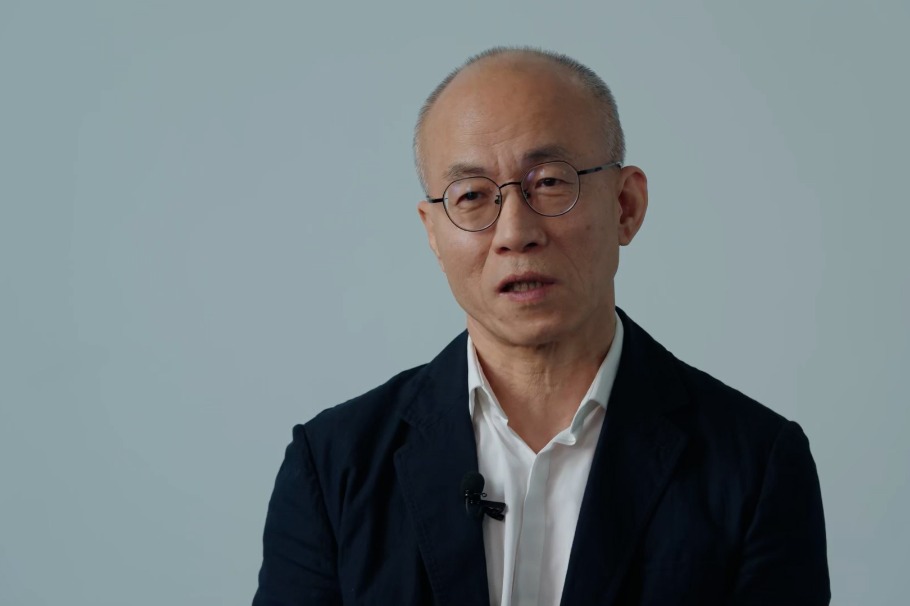
The author is president of Fudan University, and a deputy to the 14th National People's Congress. The views don't necessarily reflect those of China Daily.
If you have a specific expertise, or would like to share your thought about our stories, then send us your writings at opinion@chinadaily.com.cn, and comment@chinadaily.com.cn.