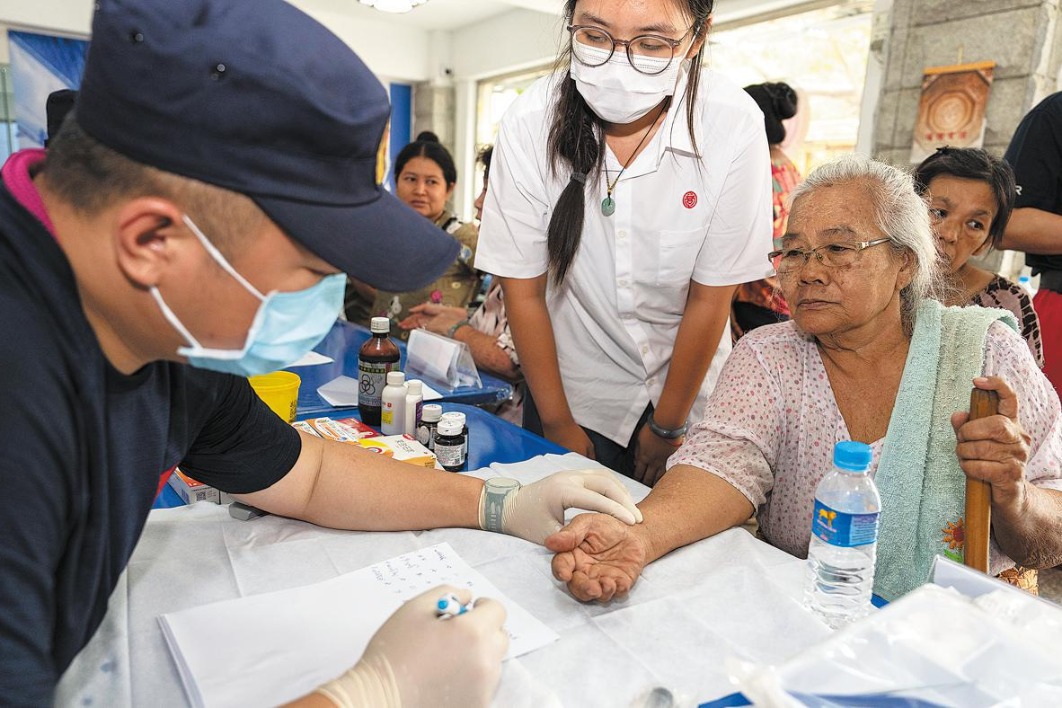
A 'time bank' system can ease burden of eldercare










My wife and I stayed at a German friend's home in Karlsruhe several years ago. Our friend was in his late 70s and bed-ridden due to thrombosis, and therefore needed attentive care. During our weeklong stay, we noticed that each day between four to five visitors would come to help him take a shower and shave, feed him, massage his limbs or do the necessary exercise with the support of equipment.
In a country where labor is costly, it could cost the family a fortune to hire so many helping hands. "They are paid either by the medical insurance company or the 'time bank'," his wife told us.
The time bank concept is said to have been proposed by a Japanese scholar nearly a century ago. The time bank model allows people who are young and capable to "deposit time in hours" in a virtual bank by providing voluntary services for community members, and use their "time deposit" when they grow old and need help.
This mutual-help model has been welcomed by elderly people in countries with fast increasing aging populations. A few dozen countries have set up time banks. Some Chinese communities, too, have introduced the model on a trial basis.
By the end of 2024, there were over 310 million Chinese people aged above 60, making up 22 percent of the country's population. With eldercare becoming a big challenge for the Chinese society, the country has accorded the issue due priority on its working agenda. For instance, the government recently released a guideline to develop a solid service system for the elderly people by 2029.
Since it's not possible to accommodate all the elderly people in nursing homes, the government is developing a home-based care system, which allows community committees to set up day-care centers for the elderly people. The committees are also allowed to establish special bodies to provide necessary services for the elderly people who prefer living in their own home. The services range from sending meals and massaging to chatting with them and cleaning the rooms.
Some communities have installed emergency call buttons on the bedside tables of the elderly people so that those in need can get timely help. It's the community committees that pay for all these services.
When the government says it will put in place "a solid service system for the elderly people" in four years, I guess it means it will invest more to build more day-care centers, better organize and supervise the special service-providing bodies, and ensure that such services are accessible to all the people who need them.
As a retired man but in a relatively good physical condition, I am grateful to the government for its efforts. However, I would suggest that the departments involved seriously consider introducing the time bank system because it can supplement the already available eldercare services.
Many women in China still retire at the age of 50 and men at 60. Since many of them are still relatively healthy, they join square dancing and chorus singing groups and regularly meet with friends in community parks to play chess or cards. Such people can be incorporated into a time bank system, which will increase their sense of belonging as they extend help to others and "deposit time" that one day they can use to make their life better. Many people have special skills and, thanks to their rich experience, can provide company for ailing or bed-ridden elderly people.
The establishment of thousands of community committees should enable China to operate a large time bank system and mobilize millions of helping hands in the eldercare service system.
I will be more than happy to join the time bank and help those in need for my as well as the country's benefit.
The author is former deputy editor-in-chief of China Daily.
kangbing@chinadaily.com.cn