US tariffs to 'hurt' developing economies and to slow down Asian economies, says ADB report









Higher US tariffs are expected to weigh on developing economies in Asia-Pacific, according to economists from the Asian Development Bank.
But some of Asia's big economies such as India and Indonesia, which rely more on domestic consumption and investment, are seen as resilient even amid the reciprocal tariffs imposed by the United States, according to a webinar held on April 9.
The webinar was held on the same day that the Manila-based lender released the Asian Development Outlook (ADO) which forecasts a slowdown in Asia-Pacific economies to 4.9 percent this year, down from 5 percent last year.
Regional growth is expected to decline further to 4.7 percent next year.
Domestic demand and strong global appetite for semiconductors driven by the artificial intelligence boom are supporting economic expansion. but tariffs and trade uncertainty will rein in growth, the ADB said. Its growth forecasts were finalized before US President Donald Trump announced the new tariffs on April 2.
"Assuming a full implementation of the tariffs, then the implication would be that we would see some slower growth than we had projected prior to April 2," said John Beirne, ADB's principal economist.
He added that there is "significant uncertainty" on the implementation of the tariffs and how they will affect the regional growth outlook. ADB will assess the developments on the tariffs in the next few months and then update its forecast accordingly for the July ADO, Beirne said.
ADB sees South Asian GDP growing at 6 percent this year, higher than the 5.8 percent posted in 2024.
Rana Hasan, ADB's regional lead economist for South Asia, said that India's economy is the key driver of South Asia's economy, accounting for more than 80 percent of the regional GDP.
"India registers higher growth in 2025 because it's a domestically led economy in a big way. So what we see is rural consumption, in a big way, picking up after quite some time," he said.
While the US has imposed a 26 percent on India's exports, Hasan noted that India primarily exports services and these are not subject to tariffs.
"The bottom line is domestic demand factors are really what were driving our estimates prior to April 2. And I think for the most part, we're going to see that coming in and stabilizing the impact (of higher tariffs)," he said.
The tariffs will also have a limited impact on Indonesia, Southeast Asia's biggest economy, according to Nguyen Ba Hung, principal country economist at ADB's Vietnam Resident Mission.
Indonesia's exports to the US are "relatively small", accounting for less than 2 percent of the GDP.
"So although the tariff rate that the US announced is 32 percent, this is mainly a result of the healthy trade surplus that Indonesia has (with the US)," he said.
Hung added that domestic consumption and investment are the key drivers of the Indonesian economy. Hence, the quantitative impact of the tariffs "is still early to be identified but qualitatively, we feel the impact would be not as serious as the 32 percent tariff sounds".
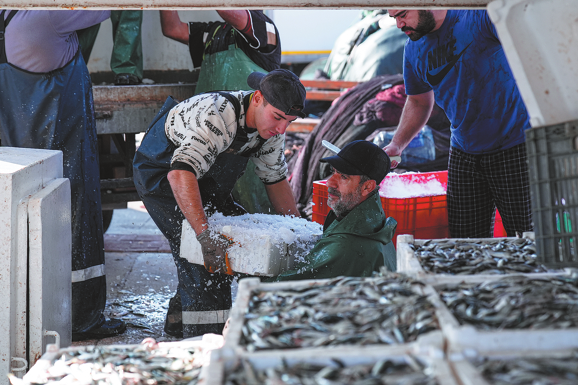
Some economies, while export-dependent, may be able to limit the negative impact of the high US tariffs. One such economy is Vietnam, which was slapped with a 46 percent tariff. But its "broad network of free trade agreements" and its deep integration with the Southeast Asian market can mitigate the impact of steep US duties, said Hung.
Reforms introduced by the Vietnamese government, such as improving the business regulations and environment will also boost domestic demand, he added.
"Asia and the Pacific stands at a critical juncture," ADB president Masato Kanda said in the foreword to the ADO report. "The region now faces a complex economic landscape, with increasing trade tensions, policy shifts, and geopolitical conflict."
Kanda said enhancing regional cooperation is needed to address shared vulnerabilities, such as supply chain fragility, energy security, and disasters.
Xinhua News Agency contributed to this story