Tariff climbdown: A tactical retreat or strategic rethink?









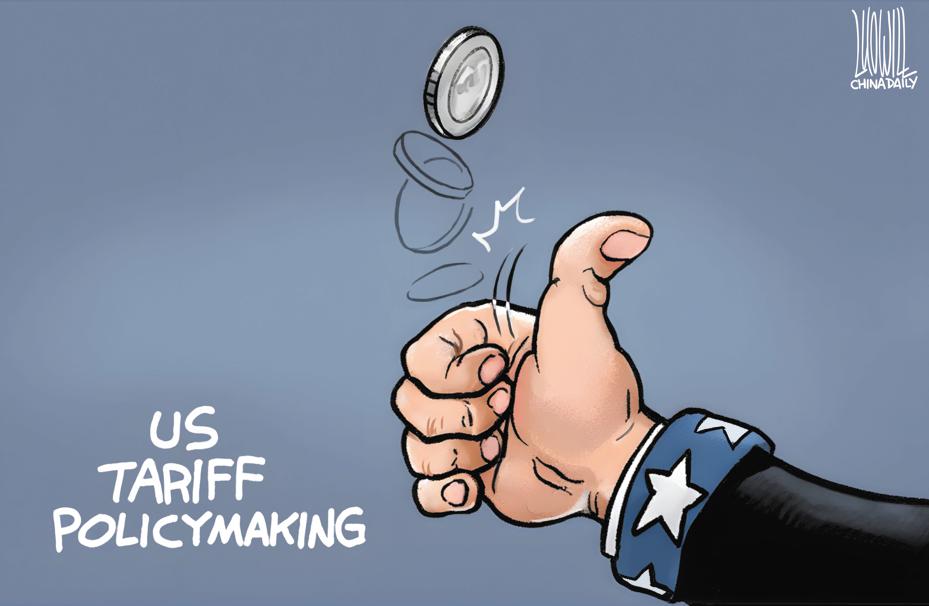
The US recently announced that the exorbitant tariffs imposed on Chinese goods would be "significantly reduced". This reversal signals a candid concession that protectionist overreach has its limits. On the same day, US Treasury Secretary Scott Bessent echoed this sentiment, declaring the existing tariff regime on China "unsustainable". These statements unmask a fundamental truth: Washington's tariff war is faltering under the weight of its own contradictions.
Let us not forget the numbers. According to China's Ministry of Commerce, tariffs on some Chinese goods have skyrocketed to 245 percent — a figure that would be laughable were it not so economically absurd. This is not merely a question about punitive economics; it's an exposé of how tariffs, traditionally used as instruments of statecraft, have become tools of coercion and short-sighted populism.
The US government's rationale for tariff hikes was to curtail what it saw as unfair Chinese trade practices and force Beijing to accept American terms in trade negotiations. But years into this economic standoff, the results have been underwhelming at best and damaging at worst. American consumers, particularly those in the middle and working classes, have faced higher prices. US manufacturers who rely on Chinese components have seen rising production costs, while farmers suffered major export losses due to retaliatory tariffs from Beijing.
This recognition that the current tariff policy is "unsustainable" points to a harsh reality: tariffs have failed to yield the strategic leverage Washington once hoped for. Instead, high tariffs have bred mutual mistrust, economic inefficiencies, and collateral damage on both sides of the Pacific. The so-called 'America First' policy is increasingly looking like 'America Isolated'.
China, for its part, has refused to be coerced. Its response has been measured but firm, repeatedly reminding Washington that such tactics contradict the principles of equality and mutual respect that underpin international diplomacy. China's stance is rooted in defending its legitimate rights, not engaging in the transactional bravado that often characterizes US foreign economic policy.
More crucially, this episode underscores the urgent need for a new framework for global economic engagement — one not built on zero-sum thinking or the outdated Cold War calculus of containment. Trade should not be weaponized.
It must be seen as a bridge for cooperation, not a tool for hegemony. The rules-based international order that the US so often claims to champion must be applied uniformly, without exceptions made for political expediency.
What the world needs now is strategic maturity. The US–China relationship is far too consequential to be governed by tariffs and tweets. If the US government is merely a tactical retreat — perhaps driven by electoral calculations or mounting domestic economic pressure — then the world should remain cautiously skeptical.
Regardless, the message is clear: unilateralism has reached its breaking point. Dialogue, mutual respect, and multilateralism are no longer optional — they are imperative.
Qaiser Nawab is chairman of the Belt and Road Initiative for Sustainable Development (BRISD). The views don't necessarily reflect those of China Daily.
If you have a specific expertise, or would like to share your thought about our stories, then send us your writings at opinion@chinadaily.com.cn, and comment@chinadaily.com.cn.