China-EU green cooperation key to global climate action









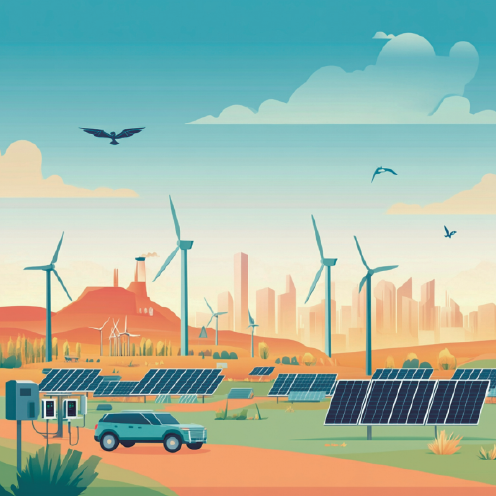
One of the most promising areas for deepened cooperation between the European Union and China is green technologies. The EU has long been at the forefront of innovation in clean energy — pioneering developments in wind power, solar energy, and electric vehicles. China, meanwhile, has become the global manufacturing powerhouse capable of scaling up these solutions rapidly. Together, they can accelerate the global deployment of renewable energy technologies.
Consider the case of electric vehicles. China is the world's largest EV market, with companies such as BYD and NIO leading innovation and adoption. The EU, driven by stringent emissions regulations, is pushing hard to phase out fossil fuel vehicles. This creates a natural alignment for collaboration — not just in technology development, but in building out the necessary infrastructure, including EV charging networks and battery supply chains. Joint efforts can drive down costs, expand access to green mobility, and help lead the global automotive sector toward a cleaner future.
Renewable energy is another key area for partnership. China dominates in the production of solar panels, wind turbines, and energy storage systems. The EU, aiming to vastly increase its renewable energy usage as part of its carbon neutrality targets, stands to benefit from closer collaboration.
China's large-scale manufacturing has significantly reduced solar energy costs globally, including in Europe. By deepening this cooperation, both regions can further lower costs, enhance efficiencies, and make renewables the cornerstone of their energy systems. The EU can also contribute financial expertise and regulatory support to help de-risk large renewable projects in China, making them more attractive to global investors.
The EU operates one of the world's most developed carbon markets through its Emissions Trading System. China, having recently launched its national carbon trading scheme, is in the early stages of building a robust carbon pricing framework. This presents a strategic opportunity for both regions to align their carbon markets, creating more predictable global carbon pricing. Such alignment could catalyze investments in low-carbon technologies and level the playing field for industries across both economies.
Ongoing dialogues between China and the EU on harmonizing carbon pricing mechanisms are crucial to ensure that industries are incentivized to reduce emissions and adopt sustainable practices.
To unlock the full potential of China-EU collaboration, both sides must optimize existing trade and economic dialogue platforms. These mechanisms are essential to overcoming trade barriers, mitigating geopolitical risks, and fostering effective cooperation in green technology sectors.
A practical step forward is the establishment of targeted bilateral agreements focused specifically on green technologies and decarbonization. Agreements promoting the exchange of clean energy solutions — such as wind, solar, and green hydrogen — can bridge technological gaps and ensure that tariff and non-tariff barriers do not hinder the flow of green goods and services.
The EU-China green cooperation initiative is a strong foundation, aiming to align both regions' green strategies and promote low-carbon technology exchanges. Expanding this initiative to include concrete joint ventures, particularly in emerging areas such as carbon capture and energy storage, would further solidify this partnership.
Beyond tariffs, regulatory divergence presents a significant obstacle to industrial cooperation. Aligning environmental standards, product certifications, and safety regulations between China and the EU would simplify cross-border trade, reduce protectionist tendencies, and enable businesses to scale green technologies more effectively.
A vital but often under-appreciated aspect of cooperation is knowledge sharing. Both regions boast leading universities, research institutions, and companies in the clean energy space. Expanding platforms for collaboration — through joint research initiatives, policy dialogues, or business exchanges — can deepen mutual understanding and drive innovation. Academic exchanges on renewable technologies or joint R&D on energy storage could lead to breakthroughs benefiting both economies and the global energy transition.
Despite the challenges posed by geopolitics and trade tensions, the potential for China and the EU to lead the global decarbonization effort is immense. By intensifying collaboration in green technology, harmonizing carbon markets, and enhancing dialogue mechanisms, both can forge a more sustainable, resilient future. Their partnership is not just crucial for their own prosperity, but serves as a powerful example of how nations can set aside differences to achieve shared climate goals.
The author is executive committee member of the European Union Chamber of Commerce in China and chairman of Eni China BV and EVP Eni Representative Office in Beijing.
The views don't necessarily reflect those of China Daily.
If you have a specific expertise, or would like to share your thought about our stories, then send us your writings at opinion@chinadaily.com.cn, and comment@chinadaily.com.cn.