China-LAC infra deals fuel regional economies









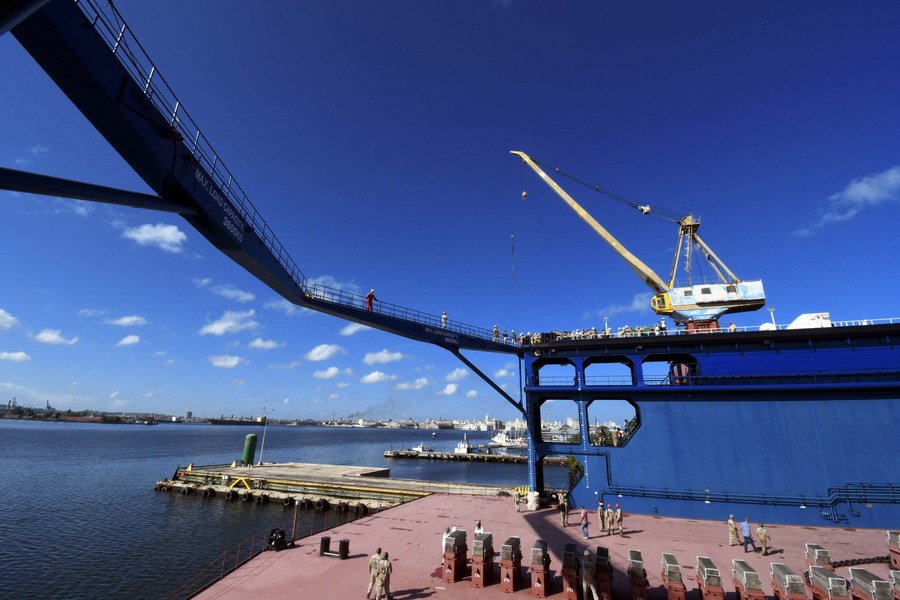
China and the Latin American and Caribbean states have been fostering a virtuous relationship, including making concerted efforts to realize President Xi Jinping's proposal to build a community with a shared future for mankind. China has proposed win-win cooperation with the LAC countries, which is in stark contrast to the United States' policies. By imposing punitive tariffs on imports from its trading partners, especially China, and using other pressure mechanisms, the US is causing great difficulties for the region's economies, particularly for those that refuse to undermine their relationship with China.
The China-CELAC Forum, which held its fourth ministerial meeting in Beijing on May 13, is the first multilateral platform that includes China and all 33 countries in the LAC region. The forum has become a vital platform for dialogue between China and the LAC states and for boosting people-to-people relations between the two sides. With more advanced procedures and coordinated development plans, and deeper mutual understanding, the two sides have elevated their relationship to a higher level. More important, their relationship is based on equality, mutual benefit and openness.
Infrastructure improvement is key to economic progress; it helps attract more foreign investment, improve productivity, create jobs and raise people's incomes.
According to the fifth annual version of the Monitor of Chinese Infrastructure in Latin America and the Caribbean, published by the Academic Network of Latin America and the Caribbean on China, 268 infrastructure projects worth $112.81 billion were carried out by China in the LAC countries from 2005 to 2023, which created more than 777,000 jobs.
During the 2020-23 period, a record 121 infrastructure projects worth about $46 billion were executed, accounting for 45.15 percent of the total projects, 40.75 percent of the total amount, and 28.57 percent of the total jobs created. The transportation sector, including ports, airports, roads and transportation support services, has been growing steadily. In 2020-23, the sector contributed 63.24 percent of the amount and 80.28 percent of the jobs created by China's infrastructure projects in the LAC states.
Many of the recent projects have been carried out under the Belt and Road Initiative framework, which currently covers more than 20 LAC countries. Proposed by President Xi in 2013, the BRI is the largest socio-economic development plan that a country has put forward, and is aimed at improving infrastructure connectivity across economies and, by default, further stimulating the flow of trade, and boosting people-to-people and cultural exchanges.
The initiative's ultimate goal is to help improve people's livelihoods and quality of life by building a community with a shared future for mankind. The initiative advocates a world order based on multilateralism, where all countries, big or small, developed or developing, are treated equally. The initiative believes in the principles of equality, mutual respect and noninterference in other countries' internal affairs.
A key project Chinese companies have completed in Latin America is the port of Chancay in Peru, which, from its inauguration on Nov 14, 2024, to the end of January this year, had transported more than 15,866 containers, handling 112,000 metric tons of bulk cargo and over 2,100 vehicles. The exports from the port mainly comprise agricultural products, including blueberries, avocados and corn, with the shipments reaching China in just 23 days.
China and the LAC states have been implementing their projects based on agreements of economic and technological collaboration, using commercial loans, capital financing and/or development financing, and leveraging multilateral financing sources, such as a special credit line for China-Latin America infrastructure development, the China-Latin America cooperation fund, the Asian Infrastructure Investment Bank, and the New Development Bank.
Despite the remarkable success of Chinese infrastructure projects in the LAC states, however, the two sides need to further strengthen data centers and build more smart cities, as well as expeditiously implement the digitalization plan in the LAC countries, in order to integrate the digital and the real economies, and realize sustainable development.
The author is a professor at Changzhou University and deputy director of the Latin American Studies Center of the university.