Equitable medical access through smart technology









International healthcare systems are under increasing strain, facing challenges ranging from aging populations to the rising burden of chronic diseases and inadequate access to medical care. While each country grapples with its own set of issues, there are common aspects that transcend borders: inefficiency, accessibility and cost. In China, whose nearly one-third of the population is expected to be 60 or above by 2035, the challenge is particularly severe.
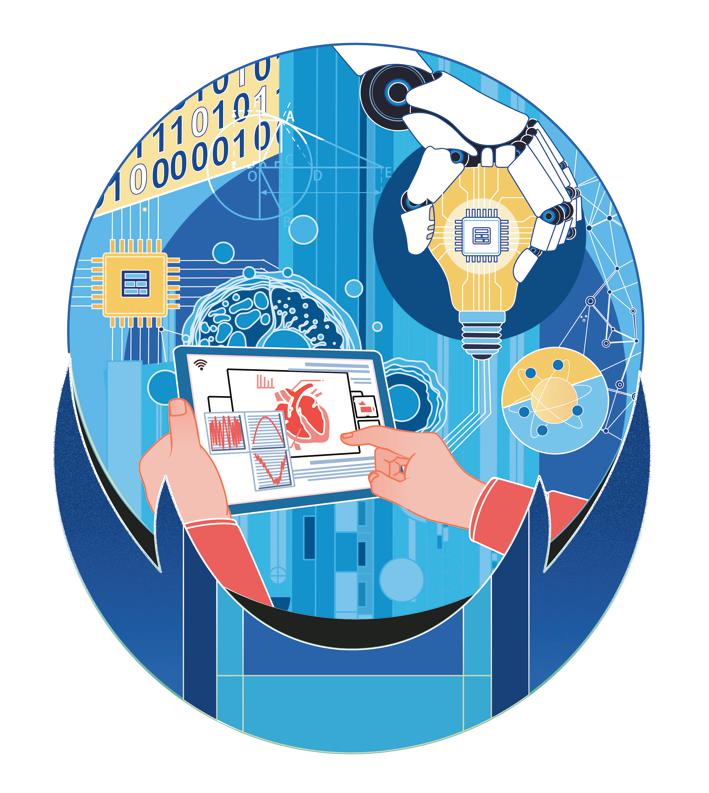
The good news is that AI-driven innovations are already making an impact, from specialized testing centers to advanced diagnostic systems implemented across hospitals. These advancements highlight AI's potential to transform public health systems. Yet AI and digital health tools will only be as effective as the systems that support them.
AI allows a country's healthcare system to zero in the most pressing issues, preventing dispersion of resources across uncoordinated, unsuccessful efforts. This focus is especially crucial for rural communities, low-income groups and people in rapidly urbanizing regions, which often suffer from under-resourced healthcare infrastructure and the perpetual challenge of infectious diseases. In such environments, healthcare practitioners are constantly burdened by systemic flaws, which limit their ability to fully concentrate on patient care.
When something as fundamental as diagnosis becomes a challenge, with the misdiagnosis rate in China averaging 30 percent, AI intervention is making a significant difference. AI-powered remote diagnosis systems in rural areas have already reduced misdiagnosis by 63 percent, demonstrating the transformative potential of AI.
Capacity strain, another major hindrance to building resilient healthcare systems globally, finds solace in AI integration. It's not uncommon for hospitals in high-demand areas to be characterized by unsustainable ratios like 820,000 annual outpatient visits with just 136 physicians in the cardiology department, as in the case of the Zhongshan Hospital. AI-driven solutions are being integrated for diagnosing and treating cardiovascular diseases.
Even in smaller, local hospitals such as the one in Wuzhen, Zhejiang province, AI integration is helping improve health outcomes, having already served thousands of patients since its opening last year.
From national initiatives such as the "AI Plus" program, which promotes standardized infrastructure and data sharing to regional efforts like Shanghai's strategy to boost AI in drug development and clinical decision-making, China is at the forefront of a multi-tiered push to make healthcare more equitable.
Similarly, Brazil's Unified Healthcare System has integrated AI technologies to enhance disease diagnosis, personalized treatment plans, and remote patient supervision, underscoring the potential of AI to improve healthcare delivery in diverse settings.
Needless to say, such transformative technologies also require strong, responsive regulatory mechanisms that can balance the pace of advancement with the need to protect individuals and communities from any potential harm. The regulation of AI, being a critical concern for policymakers, technologists and healthcare system leaders alike, requires concerted global efforts to ensure such technologies don't exacerbate existing inequalities or leave vulnerable groups behind.
Moreover, a responsible and inclusive AI-driven health system holds the greatest promise for under-served and vulnerable populations, many of whom live in areas where bridging the healthcare gaps remain both a critical challenge and an opportunity for innovation.
Also, cross-border collaboration allows different countries to pool resources, reduce duplication of efforts and jointly invest in AI research and development, thereby aligning efforts and speeding up progress. Working together supports standardized, interoperable systems while ensuring that no single player shoulders the financial and technical burdens alone. By co-developing AI solutions, countries can design healthcare models that improve both efficiency and access, solving country-specific issues with cross-border potential.
To ensure the responsible use of AI in healthcare, it is essential to recognize that the impact of a single development or failure in one part of the world can have global reverberations. This makes robust mechanisms, such as the Global Early Warning System for post-market surveillance being developed by HealthAI, all the more crucial for addressing potential adverse events.
Encouragingly, China is already moving in this direction. Its general AI regulatory landscape has taken shape through a dynamic policymaking process that involves not just the State but also academics, middle-level officials and policy researchers. What's needed now is to extend this momentum into healthcare, a sector where the stakes are particularly high. So the margin for error there needs to be exceedingly slim.

The views don't necessarily reflect those of China Daily.
If you have a specific expertise, or would like to share your thought about our stories, then send us your writings at opinion@chinadaily.com.cn, and comment@chinadaily.com.cn.