US Senate votes to block California emission rules









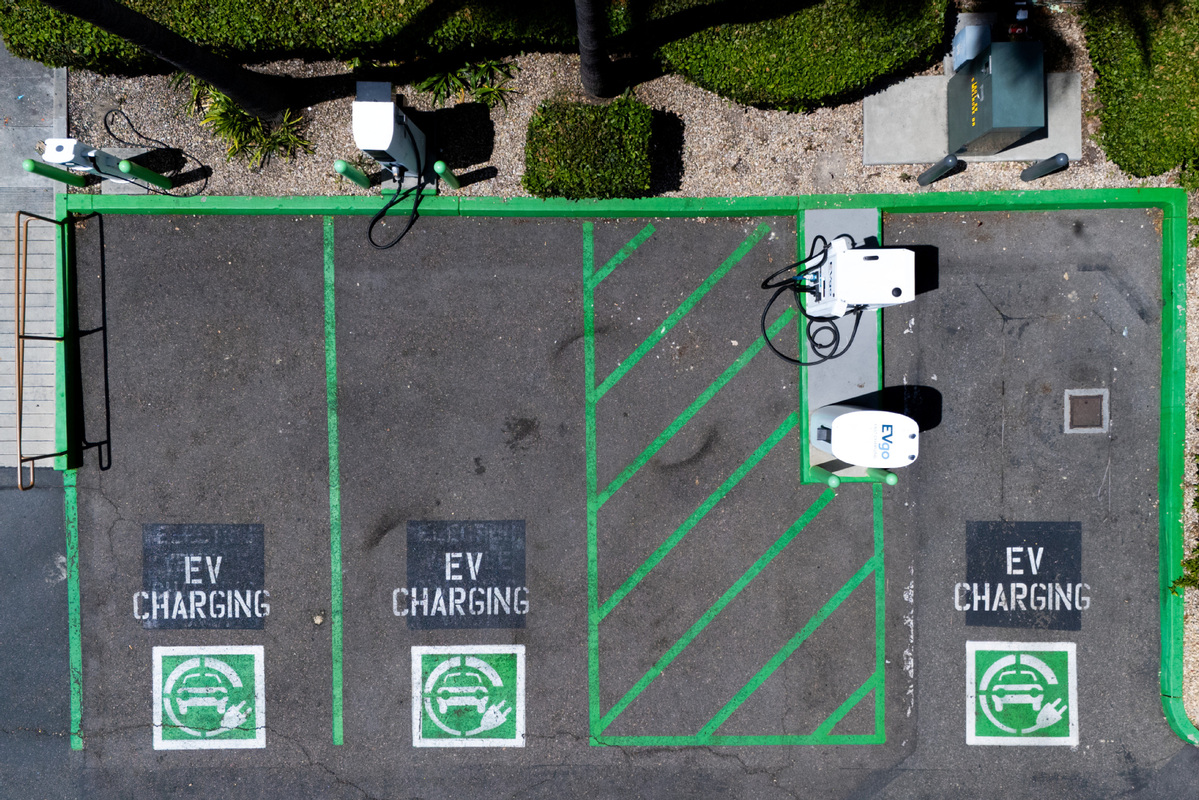
The US Senate has voted to block California's ambitious mandate requiring the phase-out of gasoline-powered vehicles, delivering a significant setback to the state's transition toward clean energy and setting the stage for a legal confrontation.
In a 51-44 party-line vote, the Republican-controlled Senate voted on Thursday to revoke federal waivers that permit California to establish vehicle emission standards stricter than federal rules. The measure, which has passed the House of Representatives, now awaits President Donald Trump's signature.
The congressional action represents the first time in more than six decades that lawmakers have moved to block California's vehicle emission standards, marking a dramatic escalation in the ongoing national debate over electric vehicle policy and state regulatory authority.
California Governor Gavin Newsom immediately condemned the Senate vote, declaring that "zero-emission vehicles are here to stay". California's Attorney General Rob Bonta announced that the state would file a lawsuit against the Trump administration, calling the congressional action unlawful.
The revoked waivers, granted by the Environmental Protection Agency, or EPA, under the Joe Biden administration, include an electric vehicle mandate and two rules targeting diesel truck emissions. Under California's mandate, 35 percent of new vehicles sold in the state must be of zero emissions by 2026, with the rate escalating to 68 percent by 2030 and reaching 100 percent by 2035.
The authority for California's emission standards traces back to the 1970 Clean Air Act, which granted the state special regulatory powers due to its unique air quality challenges. However, implementation requires EPA approval for standards exceeding federal requirements.
The Clean Air Act also allows other states to adopt California's emission standards. Eleven other states have adopted California's electric vehicle mandate, while a growing number embrace the state's more stringent regulations.
Republican lawmakers and industry supporters said the mandates are costly and impractical and prevent consumers and businesses from making their own choices. "US carmakers and auto dealers argued that keeping in place the waiver … could cripple the industry by forcing sales of cars the public doesn't want in mass numbers," said the Senate's report.
The American Petroleum Institute, representing oil industry interests, has repeatedly challenged California's stricter rules through lawsuits, saying that electric vehicle mandates reduce consumer options while increasing vehicle costs.
Opposition voiced
Environmental and public health organizations strongly opposed the Senate action, warning of severe consequences for air quality and climate objectives. More than 100 environmental and public health groups said in an April letter to Congress that blocking California's standards would result in over 1.5 million metric tons of nitrogen oxides, 17,700 metric tons of fine particles, and 1.6 billion metric tons of climate-harming emissions being released into the atmosphere.
"More pollution means more children suffering asthma attacks and missing school, more grandparents dying prematurely, and more death and destruction from extreme weather," the groups warned.
The Union of Concerned Scientists described the congressional move as "illegitimate", while the Zero Emission Transportation Association, representing electric automakers, called the waiver repeal "an extraordinary action that sets a dangerous precedent".
Trump, a Republican, had repeatedly pledged to revoke the waivers granted to California before he assumed office in January. During his first term, Trump revoked California's waiver in 2019, a move that was later reversed by the administration of Biden, a Democrat, in 2022.
The use of the Congressional Review Act to revoke California's waivers is new, as last time Congress was not involved. Both the Government Accountability Office and the Senate parliamentarian, serving as neutral arbiters of procedural rules, have determined that California's waivers cannot be legally repealed through this mechanism.
While describing the congressional action as "totally norm-busting", Ann Carlson, a law professor at the University of California, Los Angeles, told CalMatters, a nonprofit news organization, that Congress is "willing to use a statute that doesn't apply, which is highly unusual".
liazhu@chinadailyusa.com