Make the road ahead smoother for those who clear gaokao









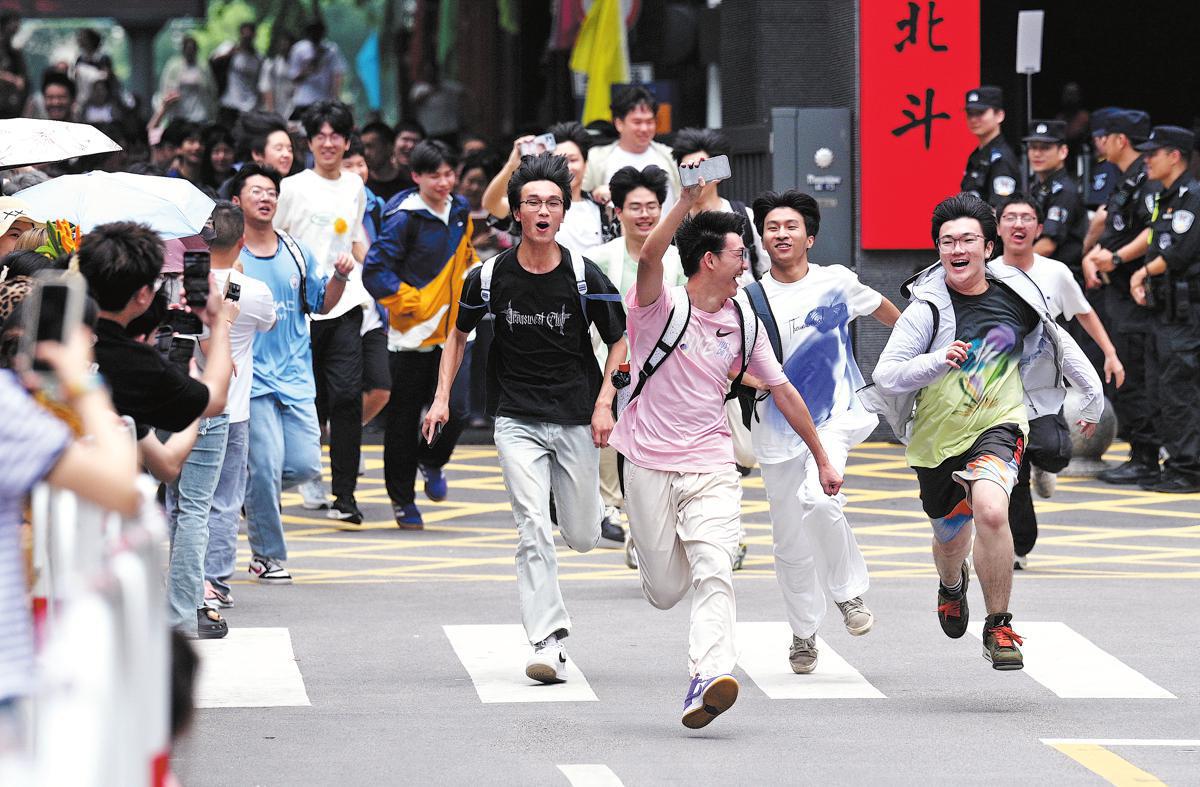
As the dust settles on another grueling national college entrance examination, the collective sigh of relief from students and their parents across China is palpable. According to the Ministry of Education, 13.35 million candidates sat this year's gaokao, 70,000 less than last year.
Yet, for these young minds on the cusp of adulthood, the conclusion of the gaokao merely marks the beginning of another critical journey. The subjects they choose to major in demand prudent consideration, as these decisions will directly shape their future career prospects.
Meanwhile, their seniors face an even more pressing challenge: transitioning from academic life to meaningful employment. Official data show that 12.22 million candidates are likely to graduate from colleges in China in 2025, up 430,000 from last year.
As the number of graduating students sets a record amid global headwinds, a robust and multipronged approach is needed to stabilize the job market. It is for this reason that the government is encouraging universities to visit businesses and explore employment opportunities. As of June 6, over 4.7 million graduate job openings had been created through such visits.
Meanwhile, public employment services will be introduced on campuses, for universities to partner with local human resources departments to set up employment service stations.
Perhaps the most encouraging campaign is the sixth National Employment Action that will run through August this year. It targets the 2025 class of college graduates, as well as unemployed graduates from 2023 and 2024. The initiative also supports the setting up of youth employment stations, which provide temporary accommodation and career guidance to job-seekers relocating for work.
Since the initiative was first launched in March 2020, over 100,000 enterprises have participated, receiving over 55 million resumes and offering more than 8 million job opportunities. For example, Chinese e-commerce giant JD.com is ramping up efforts to offer job positions to fresh graduates as part of its broader push to expand employment. The company is expanding its campus recruitment scale this year, providing over 18,000 job positions to fresh graduates and raising salaries.
Actually, private enterprises have long been a key driving force behind China's economic ascendance, contributing more than 60 percent to GDP and 80 percent to urban employment.
Therefore, while it is good that the government is speeding up recruitment of K-12 teachers, civil servants and for State-owned enterprises, it is encouraging to see that it has introduced favorable policies so that private enterprises hire those graduating this year as well as unemployed youths who graduated in previous years.
Encouragingly, market-oriented mechanisms are reshaping higher education to meet the needs of industrial transformation. Universities are aligning their curricula with societal and industry demands, prioritizing majors with strong employment prospects while phasing out programs that consistently produce graduates struggling to find work.
Moreover, the Ministry of Education launched a program to enhance the work capabilities of college students, with a focus on expanding knowledge and skills needed in emerging industries. The initiative saw the opening of 1,000 short-term courses and 1,000 vocational training programs nationwide.
The technological revolution, while displacing some traditional roles, is creating new opportunities across industries. This evolution demands proactive skill development by job seekers through vocational training and technology platforms. For enterprises, embracing technological transformation and optimizing recruitment strategies will prove decisive in the intensifying competition for talent.
And it is equally important to ensure a fairer and well-organized working environment to stabilize the job market. Especially, the flexible workers and those in new forms of employment need to get more sound working rights protection.