Nepal's hydropower a climate change solution









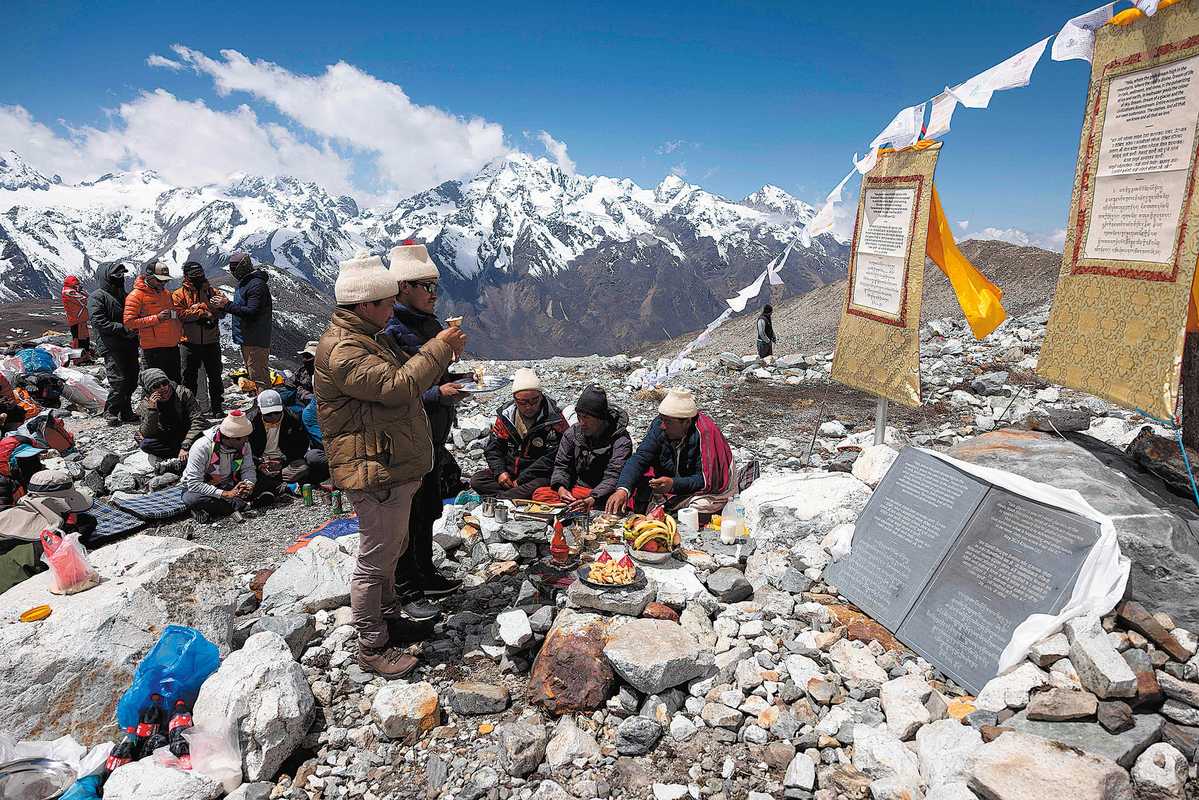
Buddhist monks perform a ritual during a tribute ceremony for the Yala Glacier in Langtang Valley, Nepal, on May 12, to mark its rapid disappearance due to climate change and draw attention to global glacial retreat. JITENDRA RAJ BAJRACHARYA VIA AFP
Many parts of the world have been suffering from scorching heat again. The eastern United States is currently experiencing its first round of extreme high temperatures this year, with record-breaking highs in many areas on June 23 and 24, affecting over a hundred million Americans. And this week, the high temperatures in the North China Plain escalated, with many areas experiencing scorching heat. Last year was the hottest on record.
Extreme weather has been exacerbating the climate crisis. The damage caused by climate change can be seen everywhere: sea levels are rising faster than ever (more than 4 millimeters a year), Himalayan glaciers are melting 65 percent faster than they did just a decade ago, climate disasters such as droughts and devastating floods have become more calamitous and frequent, and the loss of biodiversity has quickened. It's no longer about just saving the environment, but also about protecting humanity. To survive the climate crisis, we must urgently embrace zero-carbon economy.
In addressing the climate challenge, Nepal, a small Himalayan country rich in rivers and clean water, has a powerful role to play. Despite having more than 6,000 rivers and the potential to generate up to 72,000 MW of hydropower, Nepal is becoming a climate victim. Yet Nepal remains a major contributor to climate solutions, which could help Asian countries and save the planet.
Nepal's rivers could help power a green future, especially because the country uses less than 3,000 MW, which is about 2 percent of what it could generate, with research conducted by Nepal Electricity Authority and international experts showing that with better technology like reservoir-based hydropower, and more efficient project design (Q20/Q25 standards), Nepal can unlock the full 150,000 MW potential.
To put this into perspective, it would be more than India's total hydropower capacity. Nepal's rivers can generate more than 500 terawatt-hours (TWh) of electricity each year. If that clean electricity replaces coal, it could prevent 350-450 million tons of CO2 emissions a year, equivalent to the annual volume of emissions of France or the United Kingdom.
This is exactly the kind of energy that Nepal's neighbors India and China also need. It's good for not only the planet but also for the people who are battling deadly air pollution in India and those areas of China facing energy shortage.
China, with its advanced hydropower technology and vast experience in infrastructure development, could play a pivotal role in helping Nepal realize its hydropower potential. In fact, China and Nepal have achieved concrete results in the field of clean energy. The Sanjen Khola hydropower station, about 180 kilometers from Kathmandu, is equipped with three 26-megawatt impulse turbine generator units, with a total installed capacity of 78 megawatts. The average annual electricity generation of the station is 412.7 million kilowatt-hours.
Nepal's low-cost hydropower, some of the cheapest in Asia, can also unlock the future of green hydrogen. This clean fuel, made by splitting water using electricity, is critical for sectors that are difficult to clean up, such as steel, cement, trucks, ships and planes. With its abundant scope of generating hydropower, Nepal can produce green hydrogen for just $2-3 per kilogram, one of the lowest costs in the world, which could make the country the green hydrogen hub in South Asia.
Nepal has been cooperating with India and China in the hydropower industry, converting excess clean energy into products such as hydrogen or ammonia. On the other hand, Nepal should make full use of its geographical environment and develop pumped storage hydropower to ensure a stable supply of energy and export it to other countries. This cooperation could turn hydropower into a stable, storable, exportable green commodity and help build a new green economy for the whole region.
Nepal started strong, building Asia's largest hydropower plant way back in 1911. Since then, progress has been slow due to a lack of investment, outdated policies and weak infrastructure. This offers China and India the opportunity to generously invest in this potentially lucrative green hydrogen field.
Nepal could urge other economies to co-invest in large hydrogen plants, pipelines, and exports to deliver clean hydrogen to factories, planes and trucks. Such a partnership holds the potential to foster a more sustainable and secure energy landscape in Asia.
Nirajan Dhungana is a young economist based in Nepal; and Jiang Qingzhe is a professor at China International Carbon Neutrality Research Institute, University of International Business and Economics.
The views don't necessarily reflect those of China Daily.
If you have a specific expertise, or would like to share your thought about our stories, then send us your writings at opinion@chinadaily.com.cn, and comment@chinadaily.com.cn.