AI shouldn't undermine humanity's progress









Editor's note:The 2025 China-Europe Seminar on Human Rights was concluded on June 25 in Madrid, Spain. More than 100 Chinese and international scholars, officials attended the seminar. Here are excerpts of two experts' views at the seminar.
Digital divide shouldn't be underestimated
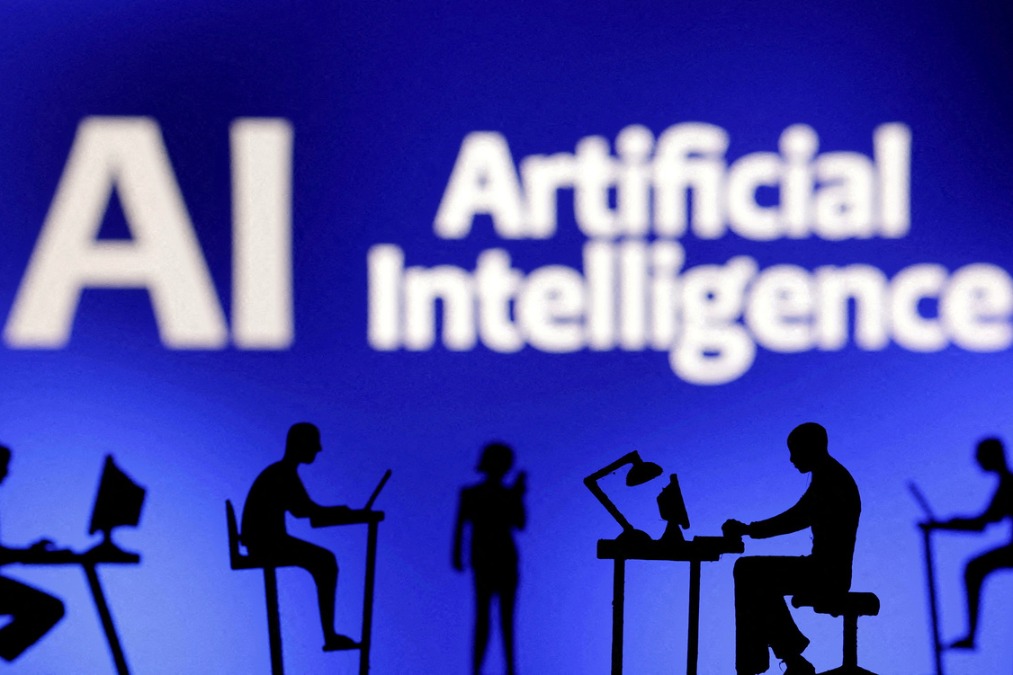
In the context of the information economy, digital work has emerged as a new form of labor, involving by millions of people participating in activities on digital networks. This work, often unpaid, is appropriated by major companies to generate substantial profits through advertising. The accumulation and processing of personal data from users of search engines, social networks, and other software allows companies to tailor advertising and plan the production of goods and services accordingly. This leads to a cycle where users are both the producers and consumers of digital content, leading to economic overexploitation and increasing inequality.
The true digital divide lies not between those who have access to devices and those who do not, but between users and the large corporations that collect, process, and sell that information. These global corporations wield power that exceeds that of many states, posing a significant challenge to digital sovereignty and human rights, particularly regarding privacy and data protection. Techno-capitalism has widened the gap between work and the appropriation of digital wealth, threatening human rights further with the introduction of surveillance and digital intelligence systems.
The European Union's regulatory efforts to protect data face significant challenges due to a lack of independent digital infrastructures. This impotence of states translates into a growing discredit of their institutions, which are incapable of ensuring the autonomy and independence of their digital assets, leaving citizens unprotected from the abusive practices of large tech companies. The growing dependence on these corporations highlights the need for a strategy that prioritizes social purpose and human rights.
Consequently, the reappropriation of data production and management infrastructures requires states to regain their digital sovereignty and direct it toward democratic goals. Ensuring universal access to digital infrastructures and equitable distribution of digital work benefits necessitates the development of digital tools and artificial intelligence within a collaborative international framework. This aligns with China's concept of a shared future for mankind, which contrasts with the Western discourse that views digital technology as a threat.
From a domestic standpoint, digital sovereignty offers the opportunity to create structures for free and equal access to digital media and to initiate a public debate about data ownership and usage, aiming to direct artificial intelligence toward achieving social benefits. China's experience serves as an example of how digital tools can achieve prosperity and could guide other countries in pursuing digital development without gaps between capital and work, or between knowledge and the distribution of its benefits.
At the international level, equity in a multipolar framework could lead to non-competitive cooperation systems, allowing for great growth in knowledge and shared experiences for the benefit of all. In short, digital intelligence can shift from being a threat to becoming an effective mechanism for economic, scientific, and academic development, with China and the European Union potentially complementing each other in this endeavor.
Juan Carlos Utrera García, professor of philosophy of law at the National University of Distance Education (UNED) in Spain and advisor to Cátedra China Foundation