There is no alternative to multilateralism









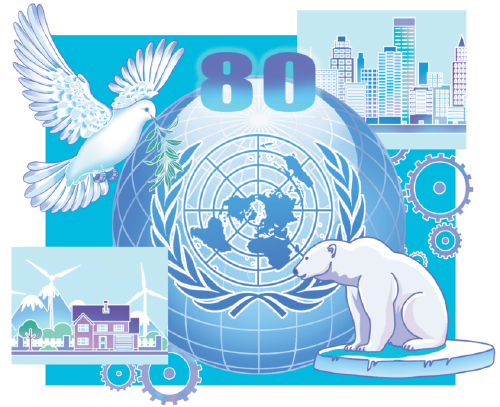
The year 2025 should be a time of celebration, marking eight decades of the United Nations' existence. But it risks going down in history as the year when the international order built since 1945 collapsed.
The cracks had long been visible. Since the invasions of Iraq and Afghanistan, the intervention in Libya, and the war in Ukraine, some permanent members of the Security Council have trivialized the illegal use of force. The failure to act vis-à-vis the genocide in Gaza represents a denial of the most basic values of humanity. The inability to overcome differences is fueling a new escalation of violence in the Middle East, the latest chapter of which includes the attack on Iran.
The law of the strongest also threatens the multilateral trading system. Sweeping tariffs disrupt value chains and push the global economy into a spiral of high prices and stagnation. The World Trade Organization has been hollowed out, and no one remembers the Doha Development Round.
The 2008 financial collapse exposed the failure of neoliberal globalization, but the world remained locked into the austerity playbook. The choice to bail out the ultra-wealthy and major corporations at the expense of ordinary citizens and small businesses has deepened inequality. In the past ten years, the $33.9 trillion accumulated by the world's richest 1 percent is equivalent to 22 times the resources needed to eradicate global poverty.
The stranglehold on the state's capacity for action has led to public distrust in institutions. Discontent has become fertile ground for extremist narratives that threaten democracy and promote hate as a political project.
Many countries have cut cooperation programs instead of redoubling efforts to implement the Sustainable Development Goals by 2030. The available resources are insufficient, the costs are high, access is bureaucratic, and the conditions imposed often fail to respect local realities.
This is not about charity, but about addressing disparities rooted in centuries of exploitation, interference, and violence against the peoples of Latin America and the Caribbean, Africa, and Asia. In a world with a combined GDP of over $100 trillion, it is unacceptable that more than 700 million people still suffer from hunger and live without electricity or water.
The richest countries bear the greatest historical responsibility for carbon emissions, yet it is the poorest who will suffer the most from climate change. The year 2024 was the hottest in history, showing that reality is moving faster than the Paris Agreement. The binding obligations of the Kyoto Protocol were replaced by voluntary commitments, and the financing pledges made at COP15 in Copenhagen — promising $100 billion annually — never materialized. The recent increase in NATO's military spending makes that possibility even more remote.
Attacks on international institutions ignore the concrete benefits the multilateral system has brought to people's lives. If smallpox has been eradicated, the ozone layer preserved, and labor rights still protected in much of the world, it is thanks to the efforts of these institutions.
In times of growing polarization, terms like "deglobalization" have become commonplace. But it is impossible to "de-planetize" our shared existence. No wall is high enough to preserve islands of peace and prosperity surrounded by violence and misery.
Today's world is vastly different from that of 1945. New forces have emerged, and new challenges have arisen. If international organizations seem ineffective, it is because their structure no longer reflects the current reality. Unilateral and exclusionary actions are worsened by the absence of collective leadership. The solution to the multilateralism crisis is not to abandon it, but to rebuild it on fairer and more inclusive foundations.
This is the understanding that Brazil — whose vocation has always been to foster collaboration among nations — demonstrated during its G20 presidency last year and continues to demonstrate through its presidencies of the BRICS and COP30 this year: that it is possible to find common ground even in adverse scenarios.
There is an urgent need to recommit to diplomacy and rebuild the foundations of true multilateralism — one capable of answering the outcry of a humanity fearful for its future. Only then can we stop passively watching the rise of inequality, the senselessness of war, and the destruction of our own planet.
The author is president of Brazil. The views don't necessarily reflect those of China Daily.
If you have a specific expertise, or would like to share your thought about our stories, then send us your writings at opinion@chinadaily.com.cn, and comment@chinadaily.com.cn.