Tea drinkers may take their lumps with hefty tariffs









While coffee remains the dominant drink in the United States, tea has seen a significant surge in popularity.
"I love tea for its many flavors," said Robert Coakley, 41, who prefers tea over coffee and takes it just a little sweet. "I don't need that much sugar."
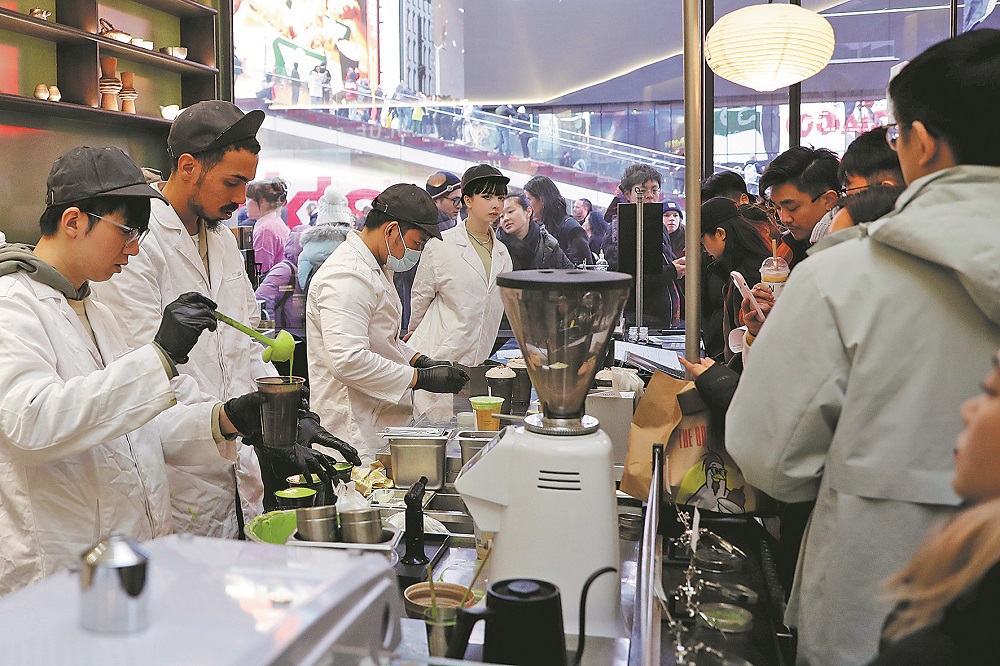
Tea is offered in a diverse range of preparation styles: sweet tea brewed with sugar, bubble tea, or simply enjoyed plain.
Over 159 million US citizens drink tea on any given day, according to the US Census Bureau.
"Tea is the most widely consumed beverage in the world next to water, and can be found in almost 80 percent of all US households," the Census Bureau said.
However, rising tea prices combined with the US administration's unpredictable tariffs are expected to impact consumers. "The price of everything is going up. Passing the tariffs on to consumers is inevitable," Liu Zhongming, who has been running Grand Tea and Imports for almost 30 years in Manhattan, told China Daily.
Grand Tea and Imports currently has a substantial inventory purchased before the tariffs took effect, but once they begin importing under the new tariffs, those additional costs will ultimately be passed on to customers.
Liu's store serves both the local Chinese community seeking to preserve their tea culture as well as discerning enthusiasts who look beyond mainstream brands like Lipton and Twinings. It offers a wide range of selections.
Almost 90 percent of US adults say they're stressed about the cost of groceries, according to a new poll by The Associated Press-NORC Center for Public Affairs Research.
The Consumer Price Index saw a 3 percent increase in food prices over the past year, with groceries up 2.4 percent and dining out 3.8 percent more expensive than a year ago.
From June 2024 to June 2025, grocery prices rose across every category tracked by the Bureau of Labor Statistics. Nonalcoholic beverages are now 4.4 percent more expensive than they were a year ago. Yale University's Budget Lab says tariffs will drive those prices up even higher.
According to The Observatory of Economic Complexity, the US imported $550 million worth of tea in 2024, up from $514 million in 2023. China, the world's largest exporter, shipped approximately $55.5 million worth of tea to the US last year, ranking fourth among US suppliers behind Japan, India and Argentina.
As the birthplace of tea cultivation, drinking and culture, China is home to the world's oldest tea trees, with records showing the Chinese have been drinking tea for over 3,000 years, according to the National Institutes of Health. Green tea accounts for 83.7 percent of China's exports, followed by black and oolong.
Healthy beverage
Green tea is a particularly healthy beverage, according to an article by the Harvard T.H. Chan School of Public Health. It offers a range of benefits, including lowering blood sugar levels, preventing tooth decay, and potentially reducing the risk of certain types of cancer due to its high concentration of catechins, a type of polyphenol that helps lower the risk of chronic diseases.
Peter Goggi, president of the Tea Association of the USA, said in a letter to Howard Lutnick, the Secretary of Commerce, that a tariff "potentially impedes the consumption" of tea, a drink that comes with health benefits.
"The free and unencumbered import of true tea from its origin is a centuries-old tradition… The imposition of tariffs on all imported teas will not impact the producers, exporters or governments. However, it will negatively impact the American consumers. As a result of these tariffs, real pain will be felt by everyday Americans," said Goggi.
The Tea Association of the USA has urged the US administration to waive tariffs on tea and other non-US-grown agricultural products such as coffee and cacao.
Goggi added: "The United States is not a tea-producing nation. There is no commercially grown tea that requires protection via tariffs, nor are there any tea-related farm-based jobs that would be protected by these tariffs."