China's tech advancements strengthen global peace









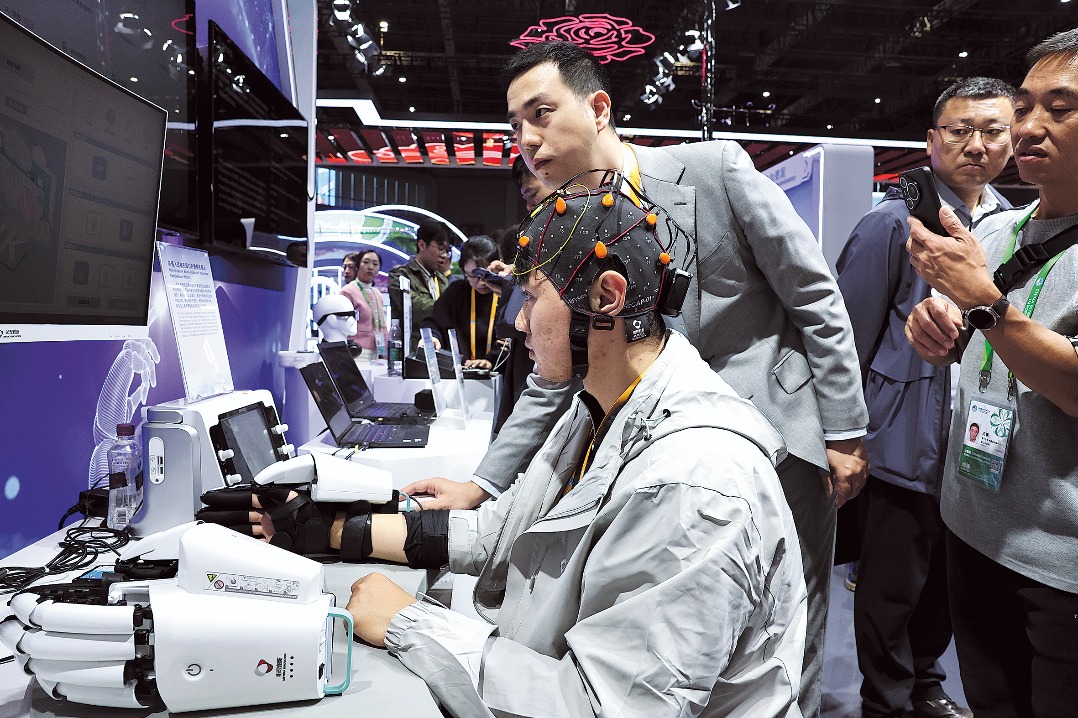
Amid profound global changes, and increasing interactions between technological advancements and major power competition, the Ukraine crisis and the Israel-Palestine conflict have become testing grounds for innovation in military technology.
Emerging technologies such as unmanned combat platforms, AI-driven command systems, long-range precision strike weapons, electromagnetic warfare, and information warfare are rapidly transforming military technology in theory and practice, accelerating the shift toward unmanned and intelligent combat, with technological innovation becoming a critical tool for gaining military advantage.
While the United Kingdom capitalized on the First Industrial Revolution to build the British Empire, the United States led the second and third technological revolutions, laying a solid foundation for its global dominance. Today, the fourth technological revolution, based on automation and artificial intelligence, is not only accelerating but also deeply integrating into national security and global military competition. As such, a nation that masters the core aspects of the fourth technological revolution will likely gain dominance in future warfare.
Strengthening military capabilities through technological innovation is essential for securing advantage in future conflicts. Major big countries are fiercely competing with each other in military technological innovation, taking measures like issuing strategic guidance documents, establishing dedicated management bodies, and developing unmanned systems, AI, hypersonic weapons, and quantum communications to gain a technological edge in warfare.
Several trends are evident in technological military advancements, with unmanned combat systems playing a major role in combat. Major countries are developing new unmanned equipment, including drones, ground robots and unmanned submarines. The US military, for instance, has developed more than 50 types of unmanned underwater vehicles in the 21st century, while the Russian military plans to make a series of home-developed drones by 2035, and France is developing 6,000-meter-class military unmanned underwater vehicles and related combat technologies.
Also, AI is rapidly integrating into military operations. Countries view AI as a key to future battlefield success and are accelerating its integration into military practices to transform combat capabilities. In 2021, Australia's Department of Defence issued a joint study, titled "Fighting artificial intelligence battles: operational concepts for future AI-enabled war". And Japan's Ministry of Defense is advancing AI in drone reconnaissance and ship maintenance.
With hypersonic technology reaching new levels of sophistication, hypersonic weapons are challenging traditional air defense systems, and the use of hypersonic missiles in the Russia-Ukraine conflict has intensified the hypersonic arms race. While Russia is demonstrating its hypersonic technologies with Kinzhal, Zircon and Avangard, China has developed the Dongfeng missile series.
Another trend is the intensifying competition in quantum communications technology, which can disrupt military competition. China has made breakthroughs in quantum radar, quantum computing and quantum communication satellites, while the US Air Force's quantum geomagnetic navigation system, the UK Royal Navy's quantum accelerometer, and Australia's quantum clock are undergoing rigorous testing to achieve high-precision passive navigation in GPS — or GNSS-denied environments, which means navigating even when signals are jammed, spoofed, or unavailable.
Besides, cyberspace technology has become a focal point of competition. Countries are advancing cyber offense and defense technologies to develop asymmetric strategic deterrence capabilities. For example, Lockheed Martin's cyber readiness management system for the US military, which became operational in 2023, supports comprehensive cyber operations. And in 2024, the UK awarded a cybersecurity contract to Jacobs Solutions, a US-based firm.
China, on its part, has steadily strengthened its military through technological development. With heavy investment, China has independently achieved breakthroughs in critical technologies, achieving progress in stealth technology, unmanned systems and AI. In addition to leading hypersonic weapons technology, China has also made progress in space technology. Equally important, China has improved its naval and aerial equipment, unmanned combat equipment system, and strategic defense and directed energy weapons, and comprehensively upgraded its defense industry and overseas support capability thanks to technological innovation.
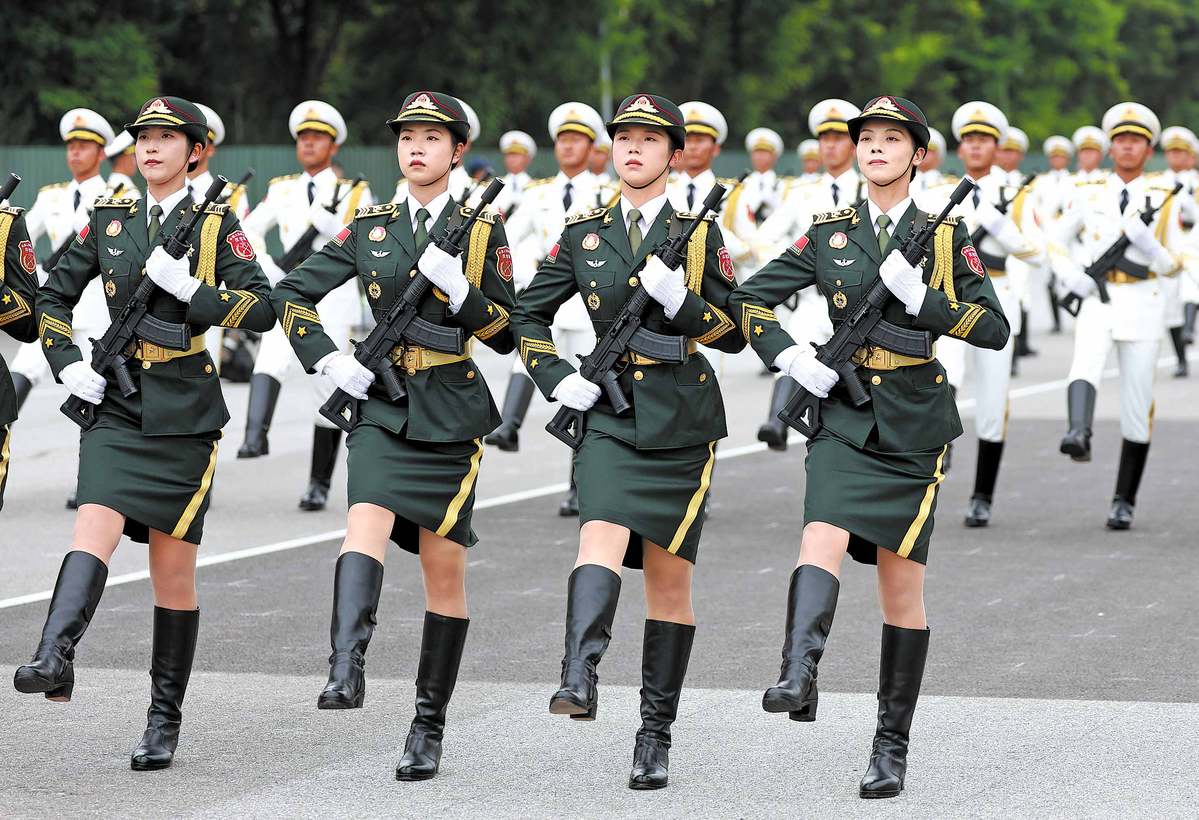
In the Sept 3 military parade to mark the 80th anniversary of the victory in the Chinese People's War of Resistance Against Japanese Aggression (1931-45) and the World Anti-Fascist War, China will showcase its latest advancements in defense technologies, including unmanned intelligence, underwater operations, cyber and electronic warfare, and hypersonic capabilities, demonstrating the Chinese military's ability to adapt to technological advancements.
Strengthening the military through technology is not only necessary in response to the new global military revolution but also an important way for China to fulfill its responsibilities as a major power. China is enhancing its military capability through technological innovation to bolster its national security, not to pursue hegemony, because the Chinese military is committed to promoting justice and peace, and maintaining regional stability.
China will continue to advance its military technology, adopting an open and cooperative position, while participating in global security governance and ensuring that military technological innovation serves as a protector of peace.
The author is a research fellow at the People's Liberation Army Academy of Military Sciences.
The views don't necessarily represent those of China Daily.
If you have a specific expertise, or would like to share your thought about our stories, then send us your writings at opinion@chinadaily.com.cn, and comment@chinadaily.com.cn.