Whitewashing Japan’s brutal past won’t lead to better future









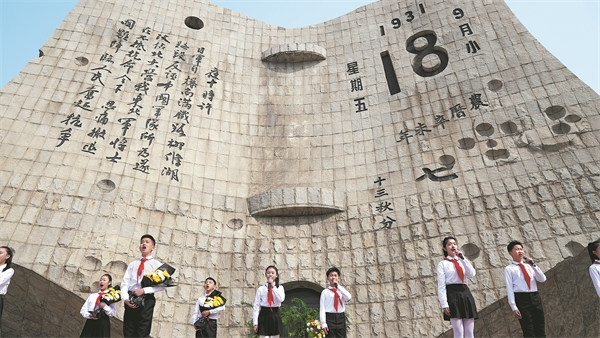
On August 15, 1945, Japan announced its unconditional surrender. Together with progressive forces around the world, the Chinese people finally defeated the Japanese militarist aggressors — a hard-won victory for which millions of Chinese people made the ultimate sacrifice.
A historical juncture: Honoring the victory and learning from the past
Eighty years on, the world is going through profound changes, with widespread uncertainty and instability. Humanity once again stands at a critical crossroads, facing a severe test of its collective conscience and responsibility. As a Chinese saying goes, "History, if not forgotten, serves as a guide for the future". We must never forget the tragedy of World War II — its root causes and lessons — and remain firmly committed to preventing such catastrophes from ever happening again.
Whether Japan, the aggressor that inflicted untold suffering on the peoples of Asia, can profoundly reflect on its war crimes, draw serious lessons from history and genuinely embrace a path of peaceful development is closely watched by countries in the region and the wider international community. This is not just about upholding historical justice, but bears directly on the world's present and future, for the purpose of remembering history is not to perpetuate hatred, but to inspire a steadfast commitment to peace.
Japan's historical responsibility: A question of conscience and sincerity
How a nation confronts its history serves as a touchstone of its moral conscience. Only with a correct view of history can Japan truly free itself from the shackles of the past.
Regrettably, over the past eight decades, right-wing forces in Japan have persistently sought to whitewash history. Media reports indicate that about 56 billion yen (around $380 million) have been spent on this campaign. They have paid homage at the Yasukuni Shrine, where Class-A war criminals are enshrined, obscured the truth about the coerced "comfort women", downplayed or denied war crimes in textbooks, and fabricated a narrative of victim hood in an attempt to distort the history of aggression.
Today, many of the most widely used junior high school textbooks in Japan have significantly diluted descriptions of Japan's wartime atrocities. Some refer to the Nanjing Massacre merely as the "Nanjing Incident", while others use evasive language when describing key facts; for instance, stating vaguely that "many civilians and soldiers were killed in Nanjing" and that "the number of victims remains undetermined and under study".
Such attempts to revise history not only contravene international legal instruments such as the Potsdam Declaration but also deeply offend the people of the victimized countries. Japan still has much to account for in admitting its wartime aggression.
Alarming retrogression: Distorting history triggers concerns
In recent years, new archives documenting the atrocities of the invading Japanese troops continue to emerge. In the face of such irrefutable evidence, any attempt to distort history is ultimately futile.
Alarmingly, Japan's more recent military moves run counter to its post-war pacifist commitments. It has exaggerated external threats, substantially increased defense budgets, eased restrictions on arms exports, forged small military circles to stoke bloc confrontation, and even floated the idea of revising its Three Non-Nuclear Principles of non-possession, non-production and non-introduction of nuclear weapons.
These moves, which violate Japan's peace-focused constitution and its exclusively defense-oriented policy, have triggered grave concern over the country's strategic intentions among its Asian neighbors and the international community.
A sincere and correct understanding by Japan of its history of militarist aggression has been essential to the post-war restoration and development of Sino-Japanese relations. In the 1972 China-Japan Joint Statement, Japan declared that it "is keenly conscious of the responsibility for the serious damage that Japan caused in the past to the Chinese people through war, and deeply reproaches itself".
This commitment to earnest reflection was a crucial precondition for the normalization of bilateral ties. The principles laid out in the four political documents between China and Japan — especially Japan's solemn commitments on issues such as history and the Taiwan question — form the political underpinnings of the relationship. They must be strictly upheld, with no room for ambiguity or backtracking.
Yet it must be pointed out that some Japanese politicians have repeatedly overstepped boundaries on the Taiwan question. Japan's recently released 2025 Defense White Paper once again hyped up the "China threat" and meddled in Taiwan-related matters. These provocations not only undermine the political foundation of China-Japan relations, but also pose a grave challenge to the post-war international order.
The way forward: Upholding peace through sincere action
Japan must understand that genuine regional security cannot be achieved through military confrontation. As major countries in Asia and the world, China and Japan should work together to translate the important political consensus they have reached into concrete policies and actions, and provide greater stability and certainty to a world plagued by growing volatility and challenges.
The memory and truth of history will not fade with the passage of time. Their lessons will continue to illuminate the present and guide the future. Eighty years after victory in the Chinese People's War of Resistance Against Japanese Aggression and the World Anti-Fascist War, Japan must not remain mired in the swamp of historical revisionism. Instead, it should adopt a responsible attitude toward history, the people and the future, reflect deeply on its past, make a clean break with any attempts to glorify or whitewash its history of aggression, and truly embark on a path of peaceful development.
Only through concrete actions can Japan win the trust of its Asian neighbors and the international community.
The author is a commentator on international affairs, writing regularly for Xinhua News, Global Times, China Daily, CGTN, etc. He can be contacted at xinping604@gmail.com.
The views don't necessarily reflect those of China Daily.
If you have a specific expertise, or would like to share your thought about our stories, then send us your writings at opinion@chinadaily.com.cn, and comment@chinadaily.com.cn.