How Chinese students are turned away at US borders









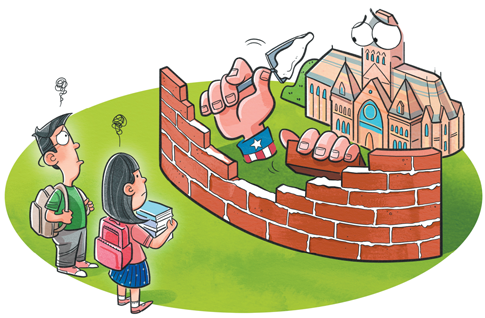
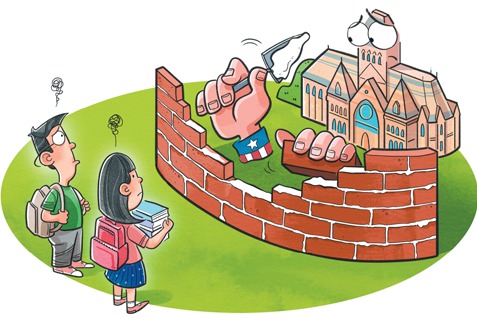
What does a Chinese student expect when boarding a flight to the US? Access to world-class educational resources? A chance to pursue cherished academic dreams? A promising future full of opportunities?
Yet for some, the harsh reality is far from what they imagined: Instead of a warm welcome, they may be met with hours, sometimes even days, of grueling customs interrogations. Their journey ends not in a classroom, but at a plane bound for repatriation.
Dreams shattered, plans abruptly cut short.
Recently, China's Foreign Ministry and embassy in the US issued reminders to students and scholars going to the US: beware of potential "unwarranted interrogations, harassment, and mistreatment" by US border officers upon arrival. According to the embassy, more than 10 Chinese students and scholars have reported such deeply disturbing experiences in recent entries into the US. Some were reportedly detained in windowless "small dark rooms" for up to 80 hours.
Enduring uncomfortably low temperatures, insufficient food and with personal electronic devices confiscated and thoroughly searched, they suffered from prolonged and aggressive interrogation. Rather than focusing on their academic research, these students and scholars were questioned by Customs and Border Protection officers about their family background, political beliefs, and ties to government-funded programs in China — questions that are apparently discriminatory and politically motivated. In several cases, the officers were described as acting rudely and confrontationally.
And perhaps most disturbingly: despite holding valid US visas, some individuals were issued deportation orders without clear explanations, and barred from re-entering the US for five years, even though US laws and regulations stipulate that decisions to deny entry must be based on specific and articulable facts.
These are not isolated incidents, nor are they the first of their kind that we've heard of. In fact, Chinese authorities have, in recent years, issued reminders about similar incidents. Yet the border agency has attempted to downplay the issue by claiming that "less than 0.01 percent of arriving international travelers encountered by it at a port of entry had their electronic devices searched."
But this is not a matter of percentages.
This is about dignity and justice.What truly matters is the unreasonable, unjustified and discriminatory nature of these interrogations and harassment, and the lasting trauma inflicted on individuals who endure them. The physical and mental toll, financial losses, and disruption to career development plans, none of these can be dismissed with a simple figure of percentage. For those who have suffered such unfair and frightening mistreatment, the US may become a place they never dare to set foot on again.
The chilling effect is real — and it is spreading. "Is it still safe to study in the US?" This is the question now being asked by many anxious families across China.
According to the 2024 Open Doors Report published by the Institute of International Education, the number of Chinese students in the US dropped by 4.2 percent during the 2023-24 academic year—marking the fourth consecutive year of decline. And unfortunately the trend might intensify. As China is the second-largest source of international students in the US, this is not merely a statistical dip. It is a significant blow to educational exchanges, to people-to-people ties, and to America's global reputation as a leading destination for higher education.
In the context of strained China-US relations, educational exchanges, as a vital component of people-to-people ties, play a crucial role in building mutual trust and should not be hindered by political considerations.
While President Trump has publicly expressed openness to welcoming Chinese students, the message on the ground is very different. Some US government departments and law enforcement personnel seem half-hearted at best in implementing the president's commitment.
In the face of such political and ideological bias, it is more important than ever that reason and the rule of law prevail.
Guan Yan is a commentator on China-US relations and international affairs, writing for Xinhua News Agency, Global Times, China Daily, CGTN etc.
The views don't necessarily represent those of China Daily.
If you have a specific expertise, or would like to share your thought about our stories, then send us your writings at opinion@chinadaily.com.cn, and comment@chinadaily.com.cn.