Visa-free policy boosts China-Malaysia exchanges









Editor's note: As the Asia-Pacific region faces growing uncertainties and destabilizing factors in its development, APEC members should take on their founding mission to promote economic growth and improve people's lives, and champion open development to benefit the region. Four experts share their views with China Daily.
China and the Association of Southeast Asian Nations (ASEAN) took another step toward deeper regional integration this week, signing the Free Trade Area 3.0 Upgrade Protocol in Kuala Lumpur. Coming on the heels of the China-Malaysia mutual visa exemption pact, this agreement will not just boost trade, but also allow more smooth movement of people, goods and services, thus bringing new momentum in the region.
When China and Malaysia signed a mutual visa-exemption agreement in April this year, it was more than just a travel convenience. It represented a strategic deepening of ties under the vision of a China-Malaysia community with a shared future.
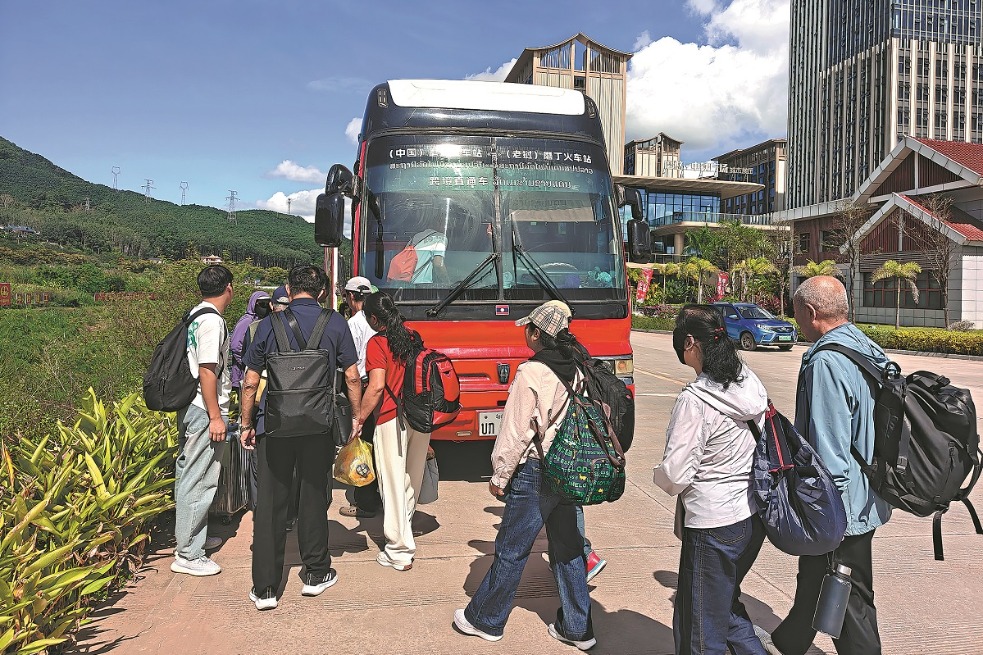
Tourism has gained immensely from this integration. Malaysia's tourism authority reports that 3.7 million Chinese tourists visited the country in 2024, surpassing pre-pandemic levels. This year, this number is expected to shoot up to 5 million.
The nature of tourism has also changed. Traditional hotspots such as Kuala Lumpur, Penang or Langkawi no longer top the checklists of Chinese tourists. They are increasingly venturing to Tioman Island, the Cameron Highlands and the lesser-known charms of the east coast. The longer stays reflect a desire not just to sightsee, but to experience. They taste local cuisines, mingle with communities and live the Malaysian rhythm.
Visa-free travel has also facilitated cross-border business. Entrepreneurs from southern China, especially the Guangdong-Hong Kong-Macao Greater Bay Area, can now take short flights to Kuala Lumpur or Johor Bahru for weekend meetings, market research and investment scouting. Malaysian business associations, including the Malaysia-China Business Council, the Associated Chinese Chambers of Commerce and Industry of Malaysia and the Malaysia-China Chamber of Commerce are hosting Chinese delegations almost weekly. This new ease of mobility is strengthening economic links and facilitating cross-border business decisions.
Clearly, the visa exemption has not only boosted tourism revenue but further strengthened China-ASEAN cooperation and provided a solid foundation for the CAFTA 3.0 upgrade. The newly signed pact establishes a systematic framework and institutional arrangements for cooperation in digital trade, green industries, and supply chain interconnectivity. These are key pillars of future regional growth.
The growing presence of Chinese digital nomads and entrepreneurs in Malaysia has created new demand for high-quality healthcare, education, legal, and financial services. This has prompted both countries to consider mutual recognition of professional qualifications and financial service standards. For instance, Malaysian regulators are exploring ways to streamline licensing procedures for Chinese professionals.
Such institutional alignment has also expanded the digital economy. Alipay and WeChat Pay are commonly used in shopping centers in Kuala Lumpur. The two countries are even exploring mutual recognition of digital identities. This could enable "one-code access" for hotel check-ins in the future. These pioneering efforts are laying the foundations for building a broader China-Malaysia digital community.
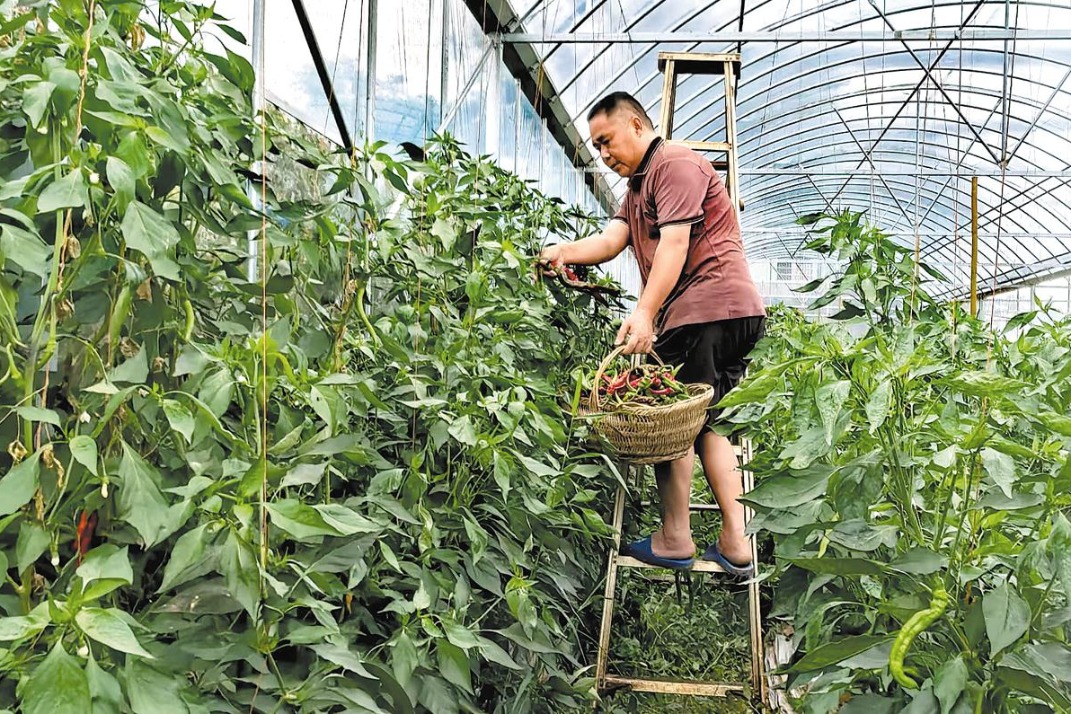
The cooperation and innovation extend to food and agriculture. As demand grows in China for Malaysian delicacies such as Musang King durians and white coffee, and in Malaysia for China's pre-prepared dishes, the two sides are being nudged toward mutual recognition of food safety and quarantine standards. Once an abstract term, "behind-the-border" coordination has now become a practical necessity.
Over the past decade, China-ASEAN cooperation focused on "hard connectivity" of infrastructure projects. The future growth engine is "soft connectivity", which aligns regulations, standards and institutions that enable systems to work together in tandem. The China-Malaysia mutual visa exemption policy is a good example of how the "soft connectivity" of people-to-people exchange works. By easing the movement of travelers, it sets off a chain reaction that opens up trade and boosts all-round growth.
China and Malaysia's success in institutionalizing this approach offers a replicable model for other ASEAN countries. Visa-free travel may appear a small step, but in practice it can unlock significant opportunities for regional mobility, economic synergy, and institutional openness. It is a policy lever that shifts the region from facilitation to deeper integration, and from "hard" to "soft connectivity".
This not only benefits both nations but also serves as a model for advancing toward higher-level institutional openness and integration between China and ASEAN. As CAFTA 3.0 takes effect, the free flow of people can well become the invisible highway for the next wave of prosperity.
The views don't necessarily represent those of China Daily.





Today's Top News
- Inclusivity critical for AI governance
- Massive response to latest bonds issue
- Control of precursor chemical exports tightened
- Xi greets Ouattara on reelection as Cote d'Ivoire president
- CIIE displays innovation, global confidence in China
- Nation set to sharpen focus on key sectors