Is the Golden Week worth the hassle?










For millions of Chinese, the Golden Week festival poses a major dilemma. Should they join the rush and travel during the holidays or just stay at home and relax instead? When it was introduced in 1999, the seven-day National Day festival was meant to increase holidays for working citizens as well as boost domestic consumption and travel. Its utility and drawbacks have been widely debated in the past 26 years.
From the authorities' perspective, the measure has been a roaring success. In the first year of 1999, 28 million travels were made during the week. The total consumption during those seven days was 14.1 billion yuan ($1.98 billion). In the just-concluded Golden Week this year, the Ministry of Transport reported 2.43 billion cross-regional trips, averaging 304 million trips a day. The Ministry of Culture and Tourism estimated that 888 million trips boosted 809 billion yuan of consumption.
But while this acceleration in domestic consumption is good news for the country's economy, there is also a downside to this. The enormous number of Golden Week travelers stretches the country's infrastructure to its limits. Railways, highways, airports, harbors, parks and scenic spots groan under the pressure of a nation on the move.
While local officials happily count the huge revenues earned during the holidays, many travelers return home with bruised tempers and depleted wallets. They probably paid twice as much compared to what they normally spend on transportation, accommodation, catering and sightseeing.
"There are so many people everywhere" is the common refrain about the Golden Week. A friend who went to Xi'an, Shaanxi province, said he couldn't get to see the famed terracotta warriors because there were too many people. Another was stranded after bad weather prevented his descent from a mountain peak. He spent the night huddled on the floor of a restroom, the only roofed space available at the resort.
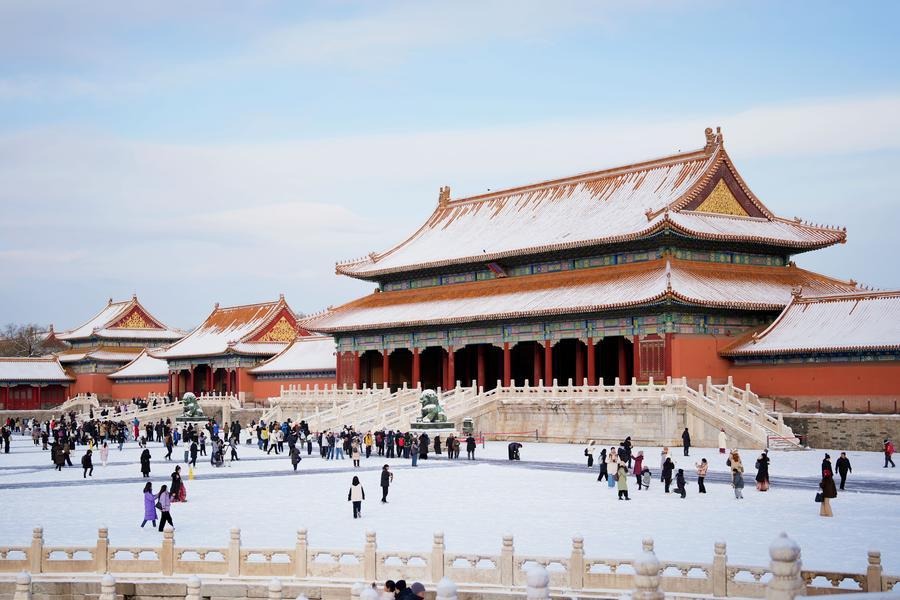
Though China has made remarkable progress in infrastructure development, its transport, accommodation and tourism facilities cannot meet the needs of millions of people who choose to travel at the same time during the Golden Week. Train tickets are gone within minutes, and airfares soar even as airlines refuse to offer discounts. Images of traffic jams on highways and travelers wandering on the streets late in the night searching for a hotel room have become an annual ritual. The irony is inescapable: a holiday designed for rest and rejuvenation often ends in exhaustion and frustration.
Given the problems faced by travelers during the Golden Week, I had given up traveling during the festival. A few times I had tried to outsmart the crowd by visiting some offbeat spots during the holidays, only to find that thousands of visitors had the same idea. Now, I prefer to stay at home in Beijing and leave the city's scenic spots and its scarce hotel rooms to visitors. Retirement allows me to travel at my convenience and lower cost.
The economic gains from the Golden Week are very inviting. But with complaints about poor travel experiences published in the mainstream media and circulated on social media, it is high time the authorities made some adjustments in the design of the Golden Week holidays.
The seven-day Golden Week comprises three days of National Day holiday and the closest two-day weekend and one day each from the previous and following weekends. This can be very exhausting for working people. They get two shorter weekends before and after the Golden Week, which can lead to fatigue.
It's also not good for the industry. During the week when most Chinese people are holidaying, the national economic production comes to a virtual standstill. Restarting this huge production engine can be costly. Also, people coming back to work need a few days to get back their rhythm.
Having experienced the trials and tribulations of the Golden Week since the start till now, I suggest the authorities should consider doing away with it and extending the annual paid leave of workers by 2-3 days. With longer paid leaves, they can plan their holiday travel at a time convenient to them and at reasonable costs. The transportation and hospitality infrastructure will also not get stretched. That way citizens will get the holiday experience they truly deserve.
Yes, the consumption revenue during the period won't be as impressive as it is now. But if a majority of citizens welcome the adjustment, the change would be worthwhile.
The author is former deputy editor-in-chief of China Daily.
kangbing@chinadaily.com.cn