China, Africa foster shared food security









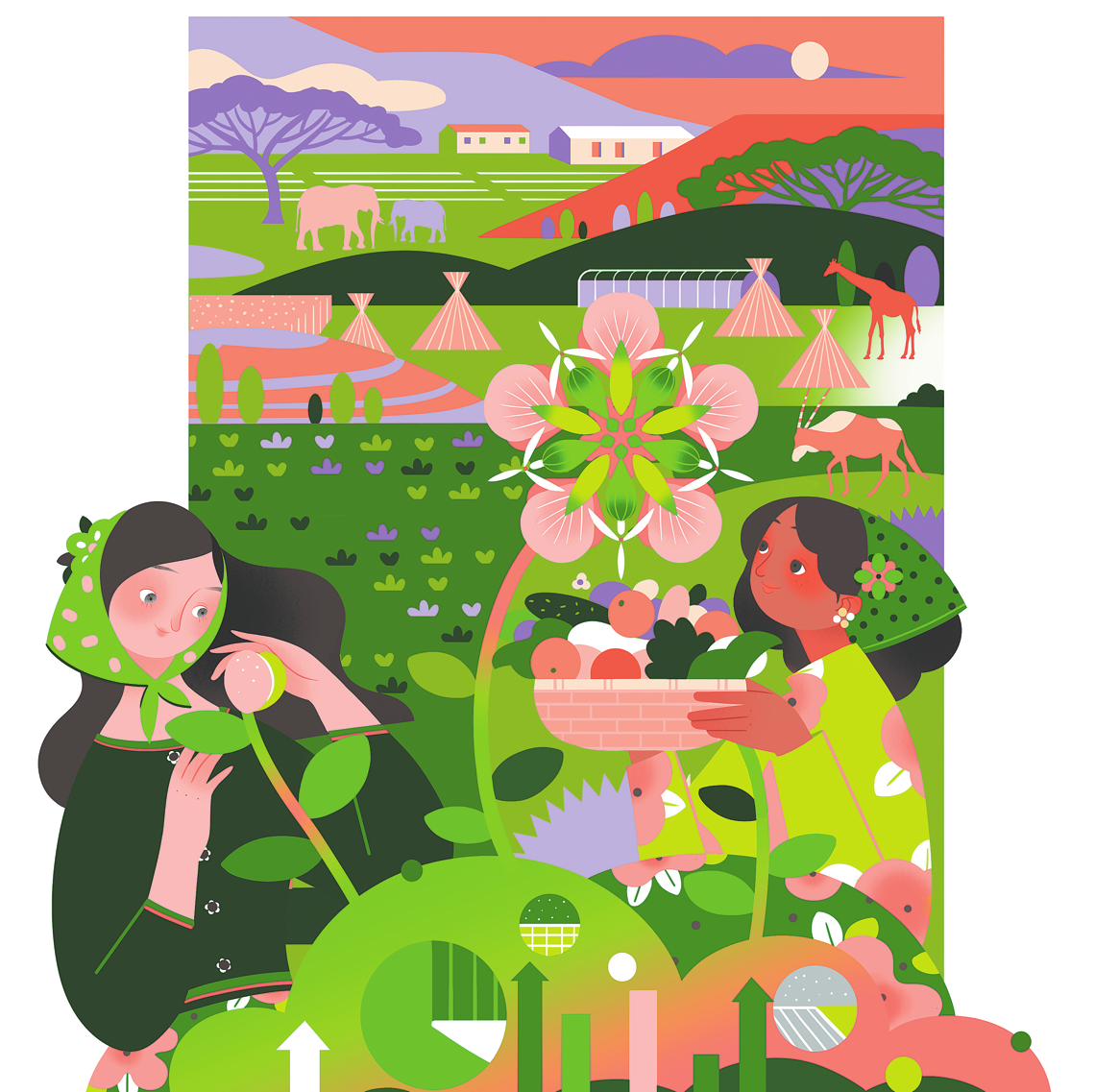
Agriculture is a living bridge between our nations. It carries our histories, our labor, and our aspirations. As the global community confronts rising food insecurity, climate pressures, and economic shocks, collaboration between China and Africa stands as one of the world's most meaningful opportunities to cultivate shared prosperity. When we nourish each other, we grow together.
In 2025, under South Africa's presidency of the G20, food security returned to the center of the global agenda. The establishment of the G20 Food Security Task Force enabled the world to consolidate collective responses to the escalating food and nutrition crisis affecting millions. The task force's work culminated in the G20 Ministerial Declaration and Ubuntu Approaches on Food Security and Nutrition and Excessive Food Price Volatility. These complementary outcomes reaffirm that the right to food is not aspirational or optional; it is a fundamental human right that must be protected with intention and accountability.
South Africa emerged with 11 approaches to food security and nutrition and excessive food price volatility named "Ubuntu". These approaches bring forward an African philosophy: I am because you are. This philosophy recognizes that no nation is secure until all nations are secure, and that hunger anywhere threatens stability everywhere. Statistics on the world's food security show that while there is a decrease in the number of people that are experiencing hunger in the world, accelerated efforts are still required, especially in most subregions of Africa and in Western Asia where the rise in hunger remains persistent.
The Ubuntu approaches offer a shift from fragmented, reactive interventions to coordinated, people-centered governance of food systems, rooted in dignity and shared responsibility. They call for food systems that are adaptive, inclusive, sustainable, and resilient, supported by transparent data, responsible investment, fair trade, and regional cooperation.
Africa brings vast arable land, deep ecological knowledge, and farming systems that have evolved through generations of community-based stewardship. Our indigenous knowledge systems demonstrate sophisticated soil regeneration practices, rotational cropping, intercropping, seed-saving traditions, and livestock integration techniques that maintain ecological balance. These practices are increasingly recognized as science-aligned approaches that strengthen biodiversity, reduce input dependency, and support climate adaptation. With expanding research institutions and innovation networks across the continent, Africa is advancing its own evidence-based models, creating strong foundations for knowledge exchange and scientific cooperation with China and the Global South.
There are three opportunities to deepen collaboration. First, agricultural technology for climate resilience. Climate change is now the greatest threat to food security. Farmers across Africa are working to rebuild after prolonged droughts, flooding, and shifting seasons. China's advancements in solar-powered irrigation, drought-tolerant seed varieties, soil-health monitoring, and remote sensing can be scaled through joint agricultural demonstration zones and university-to-university research partnerships. These tools are most transformative when they are co-owned, not merely transferred. Fostering innovation and technology transfer in agriculture and agro-processing is one of South Africa's G20 priorities.
Second, strengthening value chains and agro-processing. The Food Security Task Force outcomes placed emphasis on building the adaptive, inclusive, resilient and sustainable food systems to reduce the effects of excessive food price volatility and persistent food inflation.
Africa produces food, with numerous challenges across the value chain. By partnering in local processing plants, mobile milling services, cold-chain infrastructure, and cooperative storage systems, we create industries that grow rural incomes and enable farmers to move from survival to enterprise. China's experience in building integrated agro-industrial clusters provides a model that can be adapted to community scale, ensuring that value addition happens where food is grown.
Third, regional trade and market diversification. The Ubuntu approaches call for fair, predictable, transparent trade systems and diversification of import and export markets to reduce exposure to global volatility. Strengthened cross-border trade corridors, harmonized standards, and regional food reserves can cushion societies during climatic or geopolitical disruptions. The goal is not dependency, but cooperative resilience, where neighbors support each other in times of scarcity and abundance alike.
Cooperation for resilient food systems. Behind every hectare planted, there is a human story: a mother feeding her family, a young person choosing farming as a livelihood, a community organizing to store grain for the dry season. Food security is not only measured in yields; it is measured in dignity restored and hope sustained. This is where Ubuntu and traditional Chinese values converge. We both understand that prosperity is meaningful only when it is shared.
We now stand at a moment where cooperation must deepen in both vision and execution. Our shared commitment must be to invest in knowledge exchange, strengthen local capacity, supporting farmers as economic actors, and ensuring that food systems respect both people and the planet.
Food binds us across borders. It reminds us that the well-being of one nation is linked to the well-being of another. When Africa grows, China grows. When China thrives, Africa thrives. When we act together, we nourish a world that is more resilient, more just, and more humane.
I am because you are. We are because we feed one another.
The author is deputy minister of agriculture, Republic of South Africa.
The views don't necessarily represent those of China Daily.
If you have a specific expertise, or would like to share your thought about our stories, then send us your writings at opinion@chinadaily.com.cn, and comment@chinadaily.com.cn.