TCM's future is looking up down under
Chinese medicine poised for growth in Southern Hemisphere, experts say









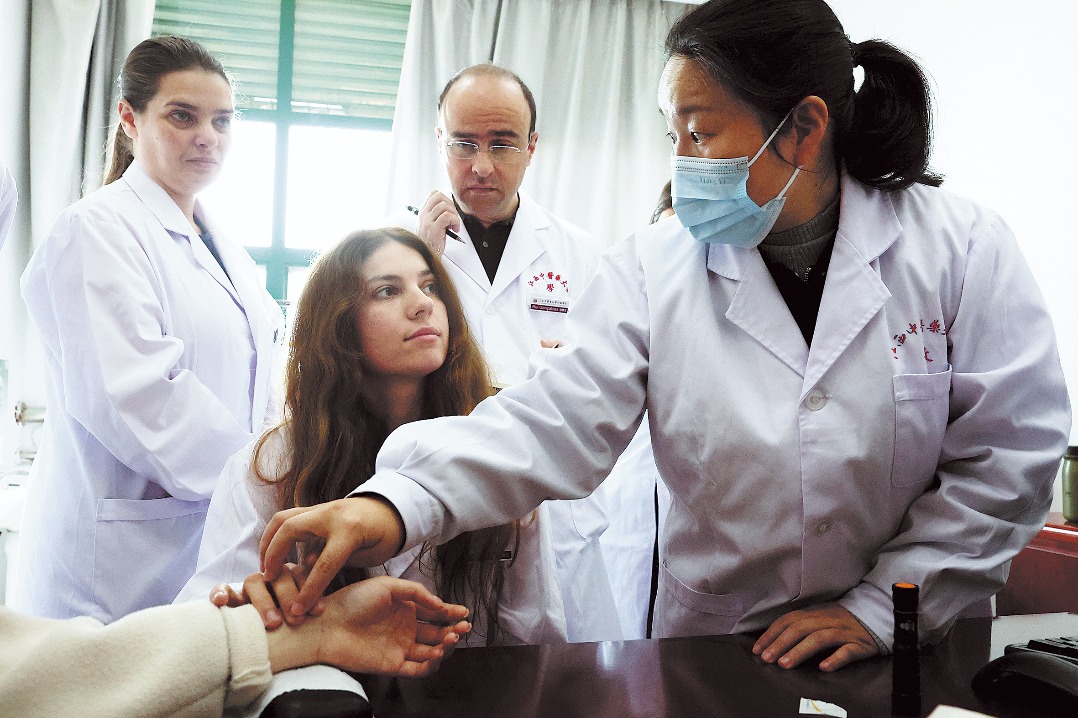
Traditional Chinese medicine practitioner Steven Wolfgang Sass vividly remembers one patient who saw him for a neck condition that was causing a lot of pain.
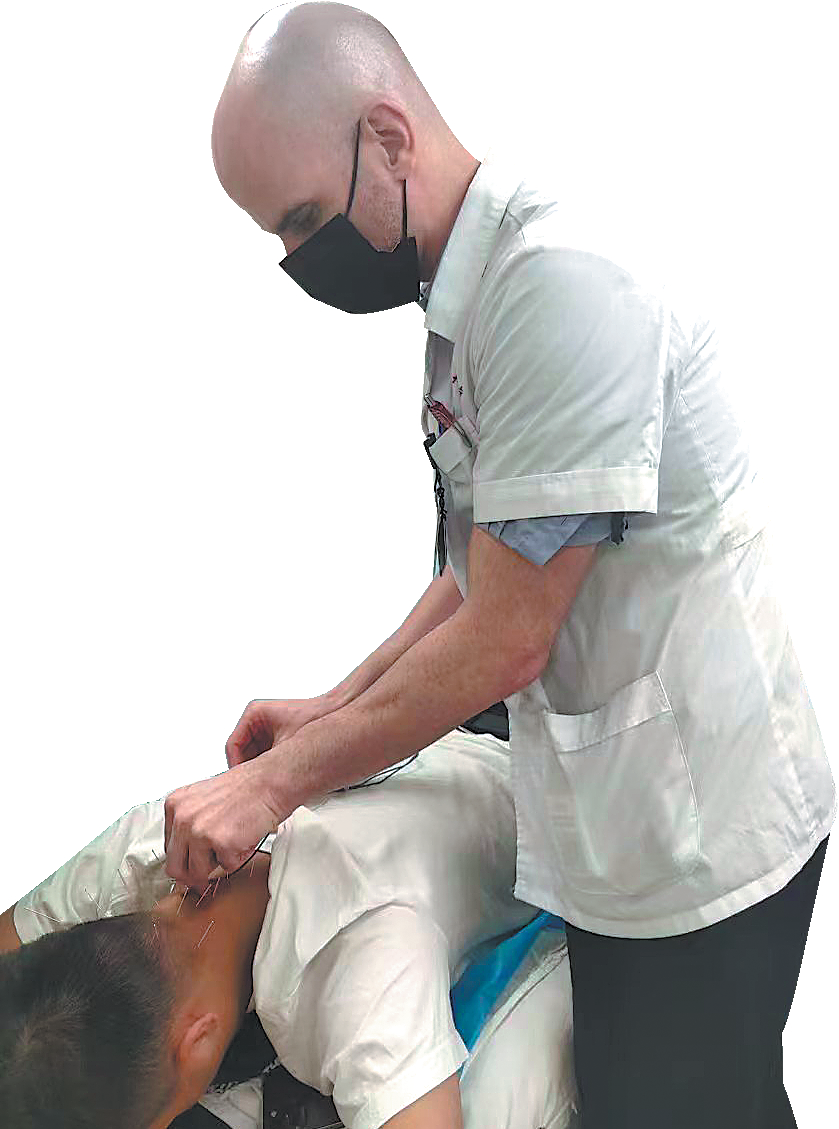
"Today you are getting my magical needles," Sass told his patient.
After about 15 minutes of the acupuncture treatment, complemented with moxibustion and a light massage, the patient "sat up and was able to turn and tilt his head all the way to the right without pain", Sass told China Daily.
The Australian physician said the patient, a neurologist, asked him, "How in the world did that work?"
"We both had a great laugh. I saw him one more time a week later. … A herbal prescription was not needed in this case," said Sass, who runs a TCM clinic in Melbourne.
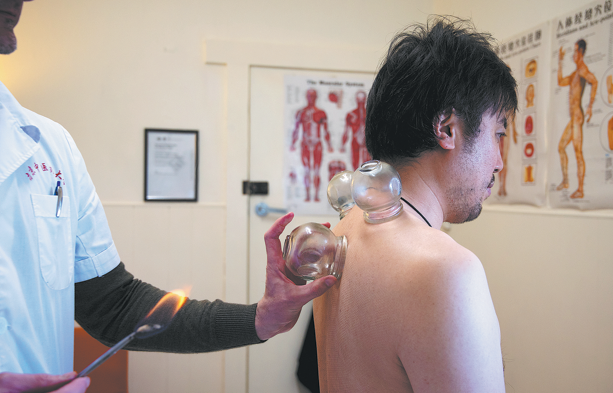
Since the opening of the clinic nearly two years ago, the number of patients has increased, with many of them "delighted and relieved that Chinese medicine can work alongside any other therapy and complement Western medical interventions as needed", Sass said.
Sass' recollection of a high point in his more than two decades of TCM experience was a clear reflection of the growing influence of the medical practice in the Southern Hemisphere.
As a registered acupuncturist and remedial massage therapist, as well as a registered Chinese herbal products dispenser and Chinese herbal medicine practitioner, he has a background that shows TCM is now widely accepted as a treatment in Australia.
TCM, an ancient system of health and wellness developed from thousands of years of knowledge and experience focusing on the prevention of illness, is a nationally registered profession in Australia, according to Healthdirect Australia, the country's public health information service provider.
The use of TCM in Australia has increased in recent years. Acupuncture, which has been practiced in Australia since the 1880s, has already become the country's most popular form of complementary medicine.
According to the Chinese Medicine Board of Australia, which regulates the sector, in the 2023-24 period, there were 4,853 Chinese medicine practitioners, up 0.6 percent year-on-year, and comprising 0.5 percent of all registered health practitioners.
The board also provides guidelines for the safe practice of Chinese herbal medicine, including the requirement that practitioners write in English on prescriptions and labels.
Under the guidelines, medicines used in Chinese herbal medicine cover raw herbs, ingredients of natural origin such as minerals and animal products, as well as decoctions of single or multiple ingredients.
World congress
More than 800 international TCM experts and professionals gathered in Sydney for the 22nd World Congress of Chinese Medicine, held from Oct 30 to Nov 1.
During the opening ceremony on Oct 31, Chinese Consul General Wang Yu read a congratulatory message from Xiao Qian, China's ambassador to Australia.
Under the guidance of President Xi Jinping's Global Development Initiative, China is steadily advancing the modernization and industrialization of TCM, demonstrating its vitality in today's global health landscape, Wang said.
China remains committed to the coordinated development of traditional and modern medicine, will continue to strengthen complementarity and integration between Chinese and Western medicine on multiple levels and in various dimensions, and aims to lay a solid foundation of a global community of health and well-being, he said.
Chinese Medicine Board of Australia Chair Danforn Lim said Australia is known for its rich cultural diversity, deep respect for traditional knowledge, and commitment to safe, inclusive healthcare.
"Regulation shapes our healthcare system, and our healthcare system reflects the kind of society we wish to build. The prevention of harm is at the core of our mission, but so too is the promotion of trust, integrity and professional excellence," he said.
The board supports the integration of TCM, as a culturally rooted healthcare system, one that continues to evolve while remaining grounded in its traditional wisdom, into Australia's diverse healthcare landscape, Lim said.
Jenny Shipley, former prime minister of New Zealand, said the growth and potential offered by TCM for the healthcare sector reflected many similarities with communities in the region.
"Here in Australia, aboriginal traditional medicine offers profound insights that in many respects align with and enrich traditional Chinese medicine, especially through its holistic, spiritual and nature-based healing philosophies," said Shipley, who is also co-chair of the advisory board of the Mencius Foundation, which promotes cultural understanding and dialogue through events and activities.
"Like TCM, aboriginal medicine and in New Zealand Maori health practices, are increasingly being integrated into modern healthcare settings, offering models for how TCM might collaborate with indigenous systems and within diverse economies globally," she said.
Shipley said that TCM is "a cultural treasure, a philosophical framework, and a living testament to the harmony between humanity and nature".
Furthermore, TCM is rooted in thousands of years of observation, practice and refinement, which offers a holistic approach to health — "one that values balance, prevention and the interconnectedness of body, mind and environment", she said.
Shipley said preserving the cultural integrity of TCM "while embracing the transformative power of technology" offered a major opportunity for its development, amid the increasing interconnectedness of a world enabled by artificial intelligence to elevate TCM to the mainstream of people's lives in the East and the West.
She noted a significant increase in the volume of global research and publications on Chinese medicine, indicating growing scientific curiosity and interest, as well as potential for TCM's future growth.
Vital role
Sohel Saikat, a senior adviser at the World Health Organization, said the 22nd World Congress of Chinese Medicine was held at a challenging time.
Countries are struggling to meet public health demands, amid significant reductions in overseas development aid, erosion of multilateralism, and economic contractions, Saikat said.
TCM resources and infrastructure have a vital role to play, he said. Saikat added TCM is often seen as accessible, more affordable and more acceptable to local populations, their culture, and heritage, thereby offering "a pathway to achieving universal health coverage".
Chris Zaslawski, a visiting fellow at the University of Technology Sydney, told China Daily that Australia's TCM practitioners are under a regulatory framework that positions them to help the sector's development at home and abroad.
"There is regulation and the use of quality standards for both practitioners and for devices that are used, and herbal products … Australia is well-placed to support the growth of Chinese medicine internationally.
"We have engagement on several levels with some of the universities and some of the associations in Australia, in China, and I think there is great potential for further growth as well. We have a multicultural community here as well, so it has all the right things for engagement and support of Chinese medicine here in Australia," said Zaslawski, who is a member of an industry committee for developing standards for Chinese medicine.
He also practices acupuncture and herbal medicine.
"I've been practicing for 45 years in Australia, and over that time I've watched an acceptance, an increasing use by the Australian public and community for both acupuncture and Chinese herbal medicine. But also in areas such as tai chi," Zaslawski said.
"So more and more Australian people are taking up the treatment of acupuncture, herbal medicine, and also practicing things like tai chi," he said, adding that there is a healthy interest in TCM from Australian students from non-Chinese backgrounds, with accredited courses ensuring quality in teaching and practice.
The advances in technology, such as AI-enabled databases, will help the industry face the demands of evidence-based medicine, he said.
"If we're able to engage databases and standardize the TCM terms and the input of all the information, we've got potential for a lot of development, both for herbal medicine and acupuncture, and diagnosis and medical records; there are many areas where AI can become very helpful and important in the development," Zaslawski said.
Gaining recognition
Damien Mathews, CEO of the Sydney Institute of Traditional Chinese Medicine, which trains TCM practitioners through accredited courses, reiterated the need to "work closely with the regulators and to make sure that all of the knowledge, the expertise and the millennia of learning that went into Chinese medicine are able to flourish in Australia".
Expanding TCM recognition in public health and insurance will also address one of the major challenges in its development, he told China Daily.
"Public health insurance currently favors other allied health professions, such as physiotherapy or psychology … But TCM doesn't receive this kind of recognition, and that is a major disadvantage for TCM," Mathews said.
Noting that patients have financial concerns that mean healthcare has to be affordable, he said that getting that level of government recognition is an important long-term goal for the whole sector, so TCM can be found "not just in private clinics but also throughout Australia's public hospitals".
Another challenge is the "different professional associations and that can create a little bit of fragmentation", Mathews said, with different groups representing acupuncturists of Chinese and European backgrounds, for example.
"There's no easy solution, it's just a product of history, of the development of Chinese medicine in Australia. Now that we're here, we do need to find a way to work together so that the professional associations can really be as united as possible," he said.
Nevertheless, the benefits of TCM remain evident, Mathews said, especially when he sees patients who have tried various other healthcare options discover that Chinese medicine is the solution they were seeking, and continue returning for treatment.
"We see that kind of story again and again. I think that's Chinese medicine's real strength. The experience, clinical outcomes," he said.
Sass, the TCM practitioner in Melbourne, said that over time, his patients would go to him for pain or movement limitation injuries and "find that there are solutions for stress, gastrointestinal, chronic fatigue, bronchitis, kidney stones, even cold and flu symptoms within a Chinese medicine framework".
TCM has been enriching not only from a cure and treatment perspective, but also from a quality of life standpoint, he said, adding that there is "a very healthy respect for our contemporaries in Western medicine".
Sass said his tertiary studies in TCM in Australia encompassed subjects that were wide-ranging from both a Western and Chinese medicine perspective, with "each contributing invaluable knowledge, which helped to further refine and broaden my perspective and skill set as a clinician".
"Acupuncture study was completely new to me … Being able to differentiate and effectively execute a prescription of treatment is leagues above simple knowledge," he said.
Countless hours of practice and refining theory understanding, exposure to patients in a student clinic and the invaluable sharing of teachers, senior practitioners and fellow students were invaluable, Sass said, adding that the "ultimate highlight" of his studies was an internship at a hospital in Nanjing.
He said the experience touched his heart and soul, and he longs to return and reconnect. "I will never stop sharing the story of this adventure with my patients or anyone who will listen."
Alan Bensoussan, emeritus professor of integrative medicine at the NICM (National Institute of Complementary Medicine) Health Research Institute of Western Sydney University, said more can be done for grants and support for TCM research in the West.
Collaborative research and exchange of medical specialists between Australia and China are needed, with targeted outcomes that boost the recognition of TCM in the West, along with its approaches being adopted by medical specialists in key clinical areas, he said.
"We want to reach out to industry, we want to reach out to professional associations, and help make Chinese medicine much more recognized and established globally. It is … a treasure house of knowledge, but we need to make sure that it's visible," Bensoussan said.
Contact the writers at xinxin@chinadaily.com.cn
- Traditional treatments soothe patients' pains
- Nation aims for AI-fueled healthcare
- Chinese Medicine Industry Council of Australia calls for deeper Australia–China health cooperation
- TCM's role in addressing global health challenges highlighted at Thai forum
- Sharing wisdom of traditional Chinese medicine with the world