Aviation reform seeks to ease travel for wheelchair users









A proposed aviation reform aims to end what many wheelchair users describe as an undignified and dangerous process: being transferred multiple times between their personal wheelchairs and those belonging to airports.
According to a draft regulation from the Civil Aviation Administration of China, airports and airlines would allow passengers to check in their personal wheelchairs at the boarding gate instead of the checkin counter.
The proposed change, now open for industry feedback, would permit users to remain in their own chairs throughout the airport.
The rules also encourage well-equipped airports to extend this service to electric wheelchair users, who often face check-in obstacles because of battery restrictions.
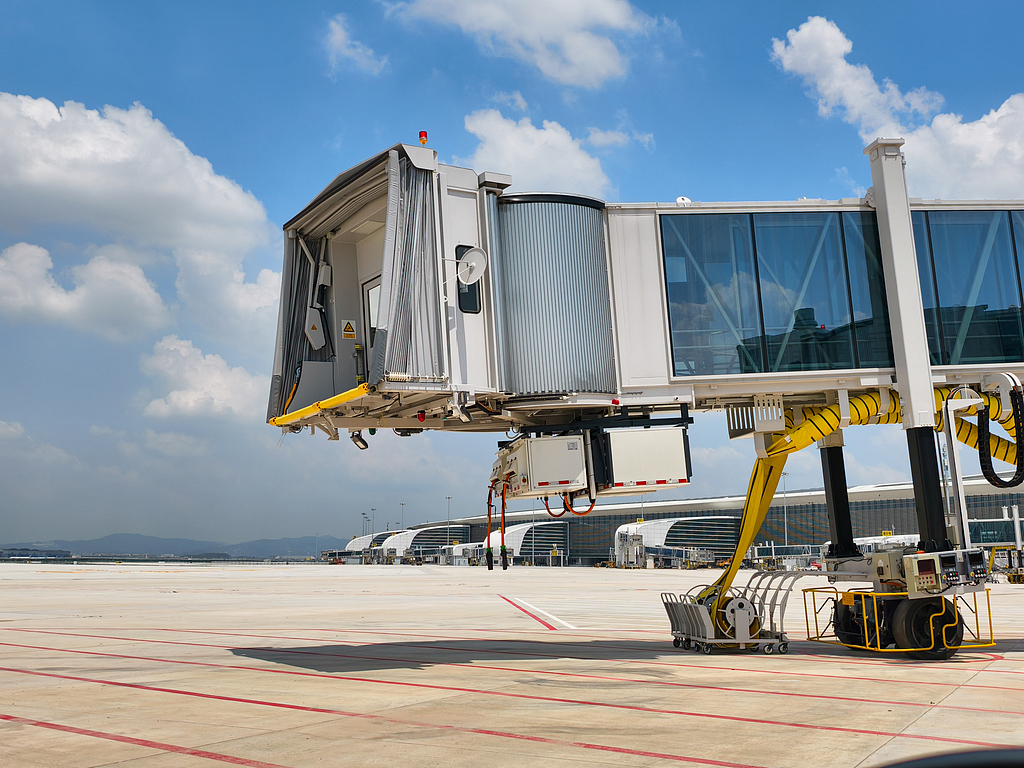
The draft instructs airlines to prioritize allowing passengers with disabilities to board via aerobridges where possible. It also mandates the use of ramps to reduce height differences between the plane and boarding lifts or stairs.
These reforms would mark significant progress from existing rules that require 48-hour advance notice and allow airlines to decline passengers due to logistical concerns.
For frequent flyer Shen Chengqing, air travel remains a recurring challenge. She welcomed the proposed reform allowing passengers to stay in their personal wheelchairs until boarding. "In theory, you should only switch wheelchairs once — from your own to the narrow cabin chair," Shen said, noting it is a vast improvement over being forced into uncomfortable airport chairs.
Shen also highlighted safety lapses, recalling a frightening disembarkation ordeal. "They backed the wheelchair down from a height of over 20 centimeters without confirming I was ready," she said. She and others have also frequently faced damaged wheelchairs due to rough handling.
The measures emphasize that safeguarding the air travel rights of persons with disabilities is fundamental to the principle of "aviation for the people".
The administration has pledged better facilities, improved services, and increased funding and staff training to provide standardized, respectful assistance for those with special needs, creating a barrier-free and warm travel environment.
The draft also requires airports to ensure barrier-free pathways, tactile paving, lowered service counters, and accessible toilets are available and functional. For hearing — or speech-impaired passengers, counters and cabins should be equipped with writing boards.
Additionally, the draft mandates professional escort services for unaccompanied passengers with disabilities. Airlines, airports, and ground service agents must incorporate disability service training into mandatory annual courses, covering laws, service awareness, and communication skills.
It also calls for enhanced training for security staff to better identify assistive devices and use correct inspection methods, avoiding psychological discomfort to passengers.
Authorities will strengthen oversight, making compliance a key part of routine inspections, the draft said.
Wheelchair users have long preferred high-speed trains over air travel, citing concerns about device damage, undignified transfers, and ill-fitting airport chairs.
After a last-minute flight cancellation in 2018, Wang Rui, an electric wheelchair user, has traveled exclusively by rail. The key advantage is staying in her own chair. "My wheelchair cannot accompany me on a plane; it has to be checked in," Wang said. In contrast, high-speed trains allow her to drive directly into the carriage.
For Li Zhen and her husband, a wheelchair user, a single difficult experience in 2017 solidified their travel preferences. "The cabin crew said let him stand up and walk into the cabin. He can't stand up," Li said. The resulting stalemate made them the last to board. While switching to business class on subsequent flights helped, it was expensive. "We decided to try to take high-speed rail domestically."
Other wheelchair users, including Guo Yuanyuan — who has never flown because of safety concerns — echo those worries. She views the proposed regulations as a positive step but stresses the need for safe wheelchair handling and dignified transfers.
"For people with severe physical disabilities like me, the wheelchair is our legs," Guo said. She noted that being carried by staff is often unsettling. "It's not that we are unwilling to be helped. But being lifted to and fro as the only method is psychologically very difficult to accept," she said, adding she hopes for hardware improvements that minimize such invasive assistance.






- Hong Kong mourns victims of devastating Tai Po fire
- Memorial service held for victims of Hong Kong's residential building fire
- Experts share ideas on advancing human rights
- Private firm enters missile production
- China-Europe freight trains accelerate trade
- Aviation reform seeks to ease travel for wheelchair users