Ex-UN envoy recalls historic vote restoring China's role









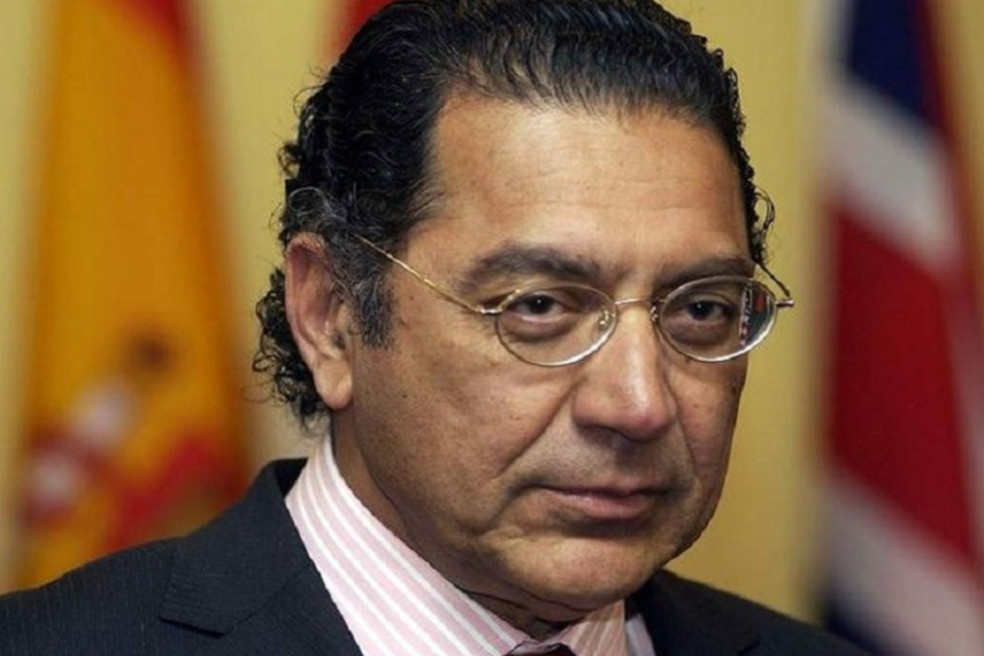
Late on Oct 25, 1971, after a full day of debate on China's representation at the United Nations, Munir Akram — then a young diplomat with Pakistan's UN mission — thought the session would adjourn and the vote would wait until the next day.
Instead, that night, the 26th UN General Assembly adopted the resolution that restored the People's Republic of China's seat.
"The purpose of the resolution was both to restore the legitimate rights of the People's Republic of China in the United Nations and to reaffirm the principle that there was only one China," Akram said in a recent interview with China Daily at UN Headquarters in New York. Now a veteran diplomat, he has served as Pakistan's permanent representative to the UN in both New York and Geneva.
His comments came as China and Japan entered a period of heightened tension following remarks on Nov 7 by Japanese Prime Minister Sanae Takaichi, who told the Diet that a "Taiwan contingency" could be considered a "survival-threatening situation" for Japan, suggesting potential military involvement.
Earlier in 1971, Albania, Algeria, Pakistan and 20 other countries jointly submitted the draft that would become Resolution 2758.
As the debate went on, the opposing bloc — including the United States — tried several ways to delay or block the settlement of the PRC's representation. One tactic was a procedural motion to classify the issue as an "important question", which would have required a two-thirds majority and raised the bar for adoption.
As the debate stretched late into the night, the resolution's sponsors asked the US delegation to postpone the vote until the next day. Akram, then the most junior diplomat in Pakistan's delegation, shuttled messages between his ambassador and George H.W. Bush, then US ambassador to the UN.
Akram said that Pakistan and the other sponsoring states believed 1971 was the right moment because Henry Kissinger, then national security adviser to US president Richard Nixon, secretly flew to Beijing from Pakistan that July.
"It was our understanding that there should be better response from the United States regarding China's representation at the United Nations," he said.
Then, without warning, a delegate from the opposing bloc called for an immediate vote — triggering a rush through the hallways.
"We had to move quickly to make sure all our supporters were present because it was late in the evening," Akram said. "We knew the margin would be very small, so we went to the delegates' lounge and even the bathrooms to ensure no one was missing."
That night, the 26th General Assembly rejected the "important question" motion with 59 votes against, 55 for and 15 abstentions.
"As soon as we defeated the procedural motion, the delegation of the Chiang Kai-shek regime realized that the game was up and that our proposal would be adopted by simple majority," Akram said. "They quietly got up and left the General Assembly Hall in total silence."
The assembly then adopted the draft with an overwhelming majority — 76 votes in favor, 35 against and 17 abstentions — becoming UN General Assembly Resolution 2758.It restored all the lawful rights of the PRC in the UN and expelled the representatives of the Kuomintang from the organization and all its affiliated agencies.
Akram recalled the scene that followed. "The General Assembly witnessed what it had never witnessed before — celebration and dancing in the General Assembly Hall by the friends of China," he said.
"They were jubilant. There was applause for many, many minutes. (As) friends of China, we were all very overjoyed with the results. … And we just waited after that to welcome the delegation of the People's Republic of China."
The Chinese delegation included vice-foreign minister Qiao Guanhua and Huang Hua, the PRC's new permanent representative to the UN, who took China's seat on the Security Council as one of its five permanent members 15 days after the resolution passed.
Great jubilation
"It showed that there was even greater support for the People's Republic of China than we had anticipated," Akram said. "It was a surprise — and a cause for great jubilation on our part — to see that we had more votes than we thought we would have."
He recalled sensing that he was living through history. "It was a great excitement."
The resolution made clear the scope of the decision, he said. "It said we will restore all the rights of the People's Republic of China. All the rights mean the right to representation, the right to be a permanent member of the Security Council, and the right to be the only representative of China, and that there were no other representatives of China."
Another proposal that attempted to address China and Taiwan as separate issues was rejected by the General Assembly, reflecting the international community's position at the time, he said. "The international community has already definitively rejected that proposition of trying to split China."
More than 50 years later, Akram said the 1971 decision continues to guide the UN's position. As discussions around the Taiwan question resurface on the global stage, he said the General Assembly's record remains clear.
"It is a confirmation — China is one, Taiwan is a part of China, and that is what was adopted by the United Nations. The legal department of the United Nations, on many occasions, all the documents or whenever there is a reference to Taiwan, say 'province of China'. So the principle of one China is irrevocable," he said.
"It has been approved by the General Assembly; it has been accepted by the international community. And of course, any attempt to try and defy that principle or to erode that principle is not only illegal, but a dangerous effort to do at this time, to try to question the unity of China and the one-China principle."
minluzhang@chinadailyusa.com