US role in Gaza -- not peacemaker, but war-enabler









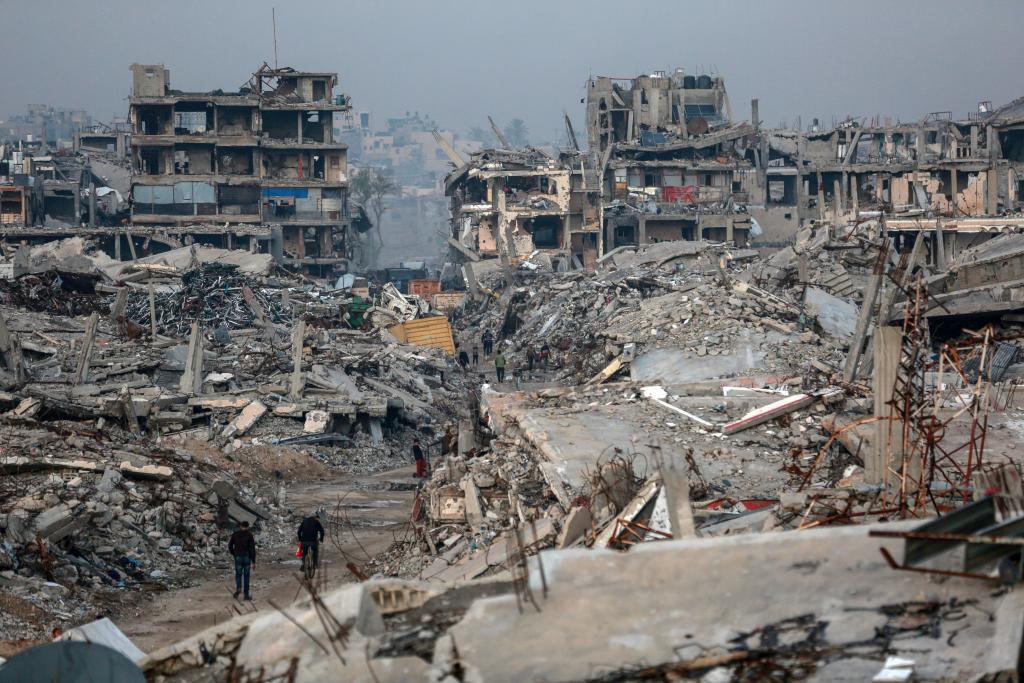
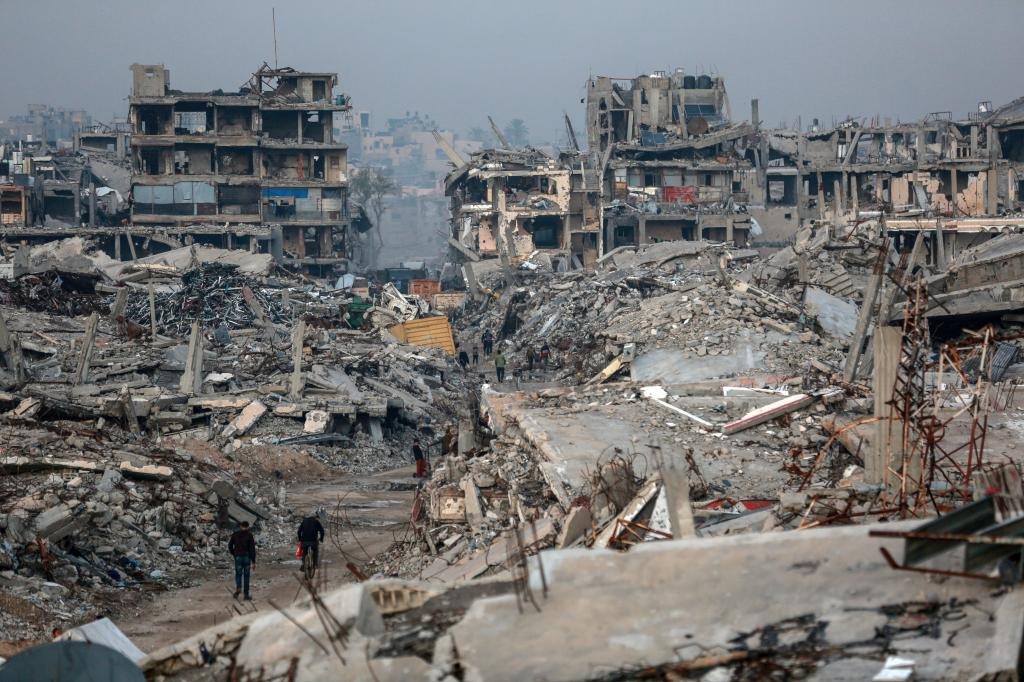
GAZA - By the end of 2025, the ceasefire in the Gaza Strip appeared to be holding, a development many credited to the United States. Yet a closer look at the whole year and the two-year war reveals a different reality.
From unsettling remarks about taking over Gaza to widely criticized arms supplies to Israel, observers say, Washington was complicit in prolonging the war and deepening the humanitarian catastrophe in Gaza.
While possessing significant leverage to influence the course of the war, Washington did not exercise that power, analysts have pointed out, noting that through bias and indulgence, it instead allowed the fighting to drag on.
"Throughout 2024 and 2025, the USA has continued to support Israel militarily through arms supplies and deployments of its own forces. Arms deliveries in 2024 included missiles, bombs and armoured personnel carriers," shows a study published by Stockholm International Peace Research Institute in October.
US President Donald Trump's administration accelerated this support. US Secretary of State Marco Rubio said in March that "Since taking office, the Trump Administration has approved nearly 12 billion US dollars in major FMS (foreign military sales) sales to Israel."
Gazans bore the cost. Yahya Abu Harbeid, a 37-year-old from the town of Beit Hanoun in northern Gaza, lost his brother and his sister's husband during a bombing. "The United States supplied Israel with weapons during the war," and this support "translated into direct fire on civilians," he told Xinhua.
The United States also repeatedly vetoed UN Security Council draft resolutions demanding a Gaza ceasefire, and sanctioned International Criminal Court staff members investigating Israel. As the war faced a global backlash, these moves exposed Washington's isolation on the world stage.
In interviews with Xinhua, Palestinian analysts said that US support for Israel during the war went beyond the traditional framework of a political alliance, enabling Israel to prolong the conflict and inflict massive losses on Palestinians.
"Washington provides Israel with political, diplomatic, and military support, along with grants, technical assistance, and logistical support," said Mustafa Ibrahim, a Gaza-based political analyst. "American weapons sales have directly fueled the conflict, enabling large-scale destruction and civilian casualties."
To Eyal Zisser, vice rector at Tel Aviv University, Israel's dependence on the United States has only deepened. "Israel's strategic freedom of action, diplomatic backing, and military operations are closely tied to American support, more so than at any previous point," said the Middle Eastern affairs expert.
During the Gaza war, Gazans were forced to flee their homes en masse, many repeatedly. Before the latest ceasefire, the displacement crisis had reached catastrophic levels.
When Trump said in February that the United States would take over the Gaza Strip and repeated that claim in May, not just the Gazans were startled. Countries in and outside the Middle East strongly rejected this forced displacement plan.
"Such statements, though framed as planning or reconstruction proposals, amount to propaganda and further threaten Palestinians. (Israeli Prime Minister Benjamin) Netanyahu exploited these suggestions to justify displacement, while Palestinians face limited options for resettlement," Ibrahim said.
"This underscores how US-endorsed initiatives can inadvertently -- or deliberately -- facilitate dispossession and undermine Palestinian rights," Ibrahim added.
The humanitarian damage did not stop there. Since May, despite widespread opposition, a US-backed mechanism to distribute humanitarian aid in the Gaza Strip came into operation, sidelining the long-standing UN aid distribution network.
Soon Gazans found the so-called Gaza Humanitarian Foundation (GHF) to be a "death trap." Thousands were killed or injured while seeking aid this year, many near GHF sites. This drew sustained criticism from the international community.
"The flawed distribution system (GHF) is not designed to address the humanitarian crisis. It's serving military and political objectives. It's cruel as it takes more lives than it saves lives," Philippe Lazzarini, Commissioner-General of the United Nations Relief and Works Agency for Palestine Refugees in the Near East, said on social media in July.
Akram Atallah, a Gaza-based political analyst, told Xinhua that Washington's alignment of humanitarian efforts with Israeli political interests suggested "that US intentions are less about impartial aid and more about advancing strategic objectives that support Israel."
Gaza's story, analysts say, reflects the broader US pattern in the Middle East: alliance over justice, and self-interest over other countries' sovereignty and legitimate rights.
In the West Bank, Israeli policy continues with US backing. "The ceasefire agreement applies exclusively to Gaza and does not alter Israel's long-standing approach in the West Bank, which it maintains despite international criticism. For Israel, American political and diplomatic support remains the decisive factor overriding external opposition," Zisser said.
Iran offers another stark example. In June, US forces bombed three Iranian nuclear facilities, joining Israeli strikes that triggered a 12-day conflict, even as Washington and Tehran had been conducting indirect talks on Iran's nuclear program.
"US pressure on Iran over its nuclear program, combined with unwavering support for Israeli military actions, demonstrates a broader pattern of coercion and hegemony," noted Ibrahim. "This includes threats, sanctions, and strategic maneuvering that prioritize American and Israeli interests while disregarding regional sovereignty or civilian safety."
In fact, the Middle East is no stranger to and has long been a victim of such US schemes. "US policies, including sanctions and military interventions, have historically caused widespread suffering in the Middle East," Atallah said.
"Washington's pursuit of strategic interests -- supporting allies, maintaining regional dominance, and controlling resources -- has often prioritized political objectives over human welfare," Atallah added. "Across the region, these policies have deepened economic crises, human suffering, and political instability."