Crisis looms
Overpumping depleting groundwater reserves, springs drying up across Nepal: Report










Editor's note: In this weekly feature China Daily gives voice to Asia and its people. The stories presented come mainly from the Asia News Network (ANN), of which China Daily is among its 20 leading titles.
Nepal's springs and groundwater reserves are steadily declining, putting the country's water security at risk, according to a new assessment by the Asian Development Bank, or ADB.
The Asian Water Development Outlook 2025, released in December, finds that overpumping in the Kathmandu Valley has severely depleted aquifers and dried up traditional springs. Across the hills and mountains, numerous springs have either diminished or vanished entirely.
Shallow aquifers are overstressed, triggering seasonal shortages, while naturally occurring arsenic in alluvial sediments has contaminated groundwater in several areas, posing significant public health risks.
Despite Nepal's abundant water resources, only about 25 percent of the population has access to fully functional drinking water systems, the study notes.
The country continues to face a paradox of abundance and scarcity: plentiful natural water, yet persistent shortages, contamination, and destructive floods.
According to the report, infrastructure gaps, fragmented governance, and climate impacts are preventing reliable and equitable distribution. While water and sanitation services have improved overall — particularly in rural regions -seasonal variability, poor water quality, and disaster risks remain unresolved challenges.
Communities that rely on springs and groundwater face growing hardship, with some households forced to migrate because local sources have dried up. The report warns these losses threaten livelihoods, cultural heritage, and social stability. It calls for integrated watershed management, reforestation, and protection of recharge zones to halt the decline.
Rural household water security has improved much in a decade. More than 91 percent of rural households now use piped or protected water sources. Yet nearly half still face contamination risks.
Infrastructure often fails, sanitation remains poor, and waste frequently pollutes groundwater and rivers. Most systems rely on flat fees rather than volumetric tariffs, and maintenance funds are scarce.
Progress in sanitation and hygiene — bolstered by post-pandemic awareness — has helped lift rural water security scores, the report adds.
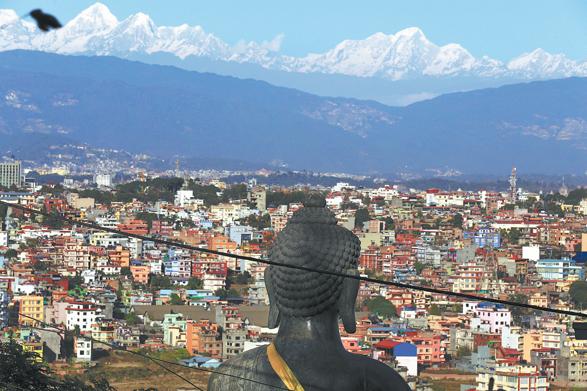
Urban areas are under growing strain, with populations rising at over 4.5 percent annually. In cities like Kathmandu, water is supplied intermittently — typically for just 3 to 4 hours every alternate day.
Flood-related shutdowns of the Melamchi system, which is designed to bring fresh water from the Melamchi River to the water-scarce Kathmandu Valley, can slash supply to 30 percent of normal levels, forcing households to rely on expensive storage, filtration, or bottled water.
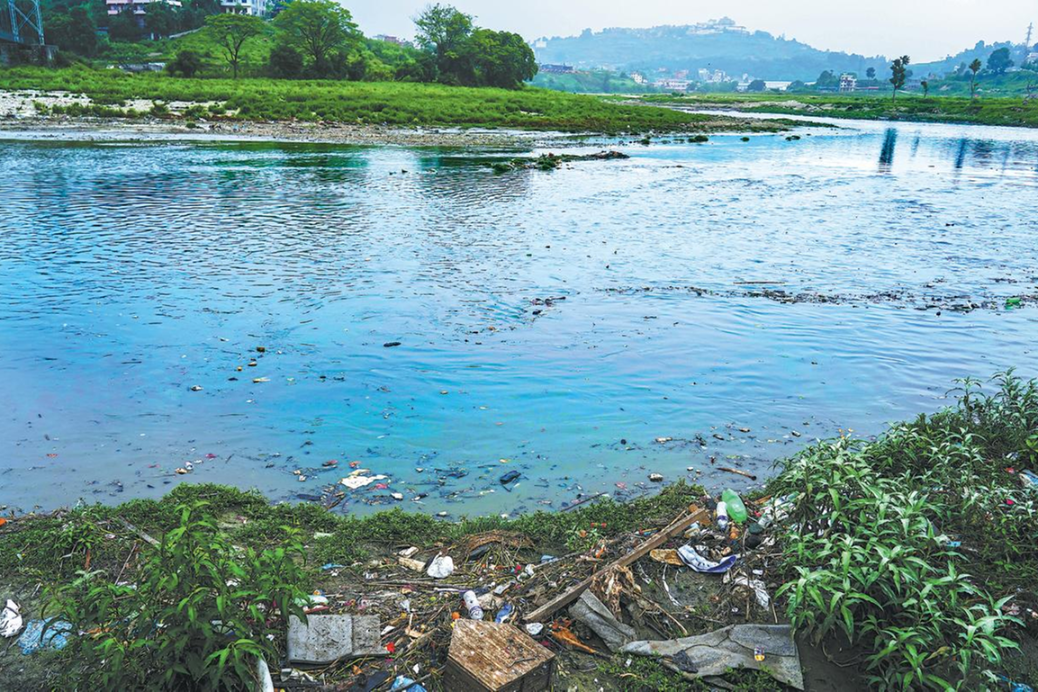
Drainage systems in Nepal's cities remain inadequate, leading to frequent flooding. Wastewater treatment is almost nonexistent: only 2.1 percent of wastewater and less than 1 percent of fecal sludge is treated. Open drains, clogged sewer networks, and poor waste management continue to pose serious health hazards.
The report notes improvements in utility operations, particularly through Kathmandu Upatyaka Khanepani Limited, and growing regulatory oversight from the Water Tariff Fixation Commission.
But environmental water security remains fragile. It has improved only slightly — from 12.9 in 2013 to 13.7 in 2025 — while hydropower development, river diversions, and weak governance have reduced environmental flows and degraded catchments.
Urban pollution, land-use change, and riverbed mining are damaging aquatic ecosystems.
Although the catchment and aquatic system condition remains broadly stable, localized degradation is severe in areas like the Roshi River catchment in Kavre district, which suffered major damage during floods in 2024.
Governance scores are comparatively stronger due to wide terrestrial protection in rural regions, but wastewater treatment remains extremely limited.
Nepal's water-related disaster security has made modest gains thanks to expanded early-warning systems.
However, zoning enforcement is weak, and coordination between water and disaster-management institutions is inadequate. The report recommends stronger integrated planning under the integrated water resource management, or IWRM, framework.
Nepal's progress on IWRM remains slow. The country scored 37 out of 100 on SDG indicator in 2023, far below the Central and South Asia average of 55 and well short of the 2030 global target of 91.
The report says Nepal's federal structure — seven provinces and 753 local governments sharing overlapping water mandates — has created confusion, duplication, and gaps. Water governance remains siloed and coordination weak, with limited stakeholder participation.