Further reforms to test China's new leadership
(Xinhua)
Updated: 2012-11-14 21:43
 Comments()
  Print
Print  Mail
Mail  Large Medium Small
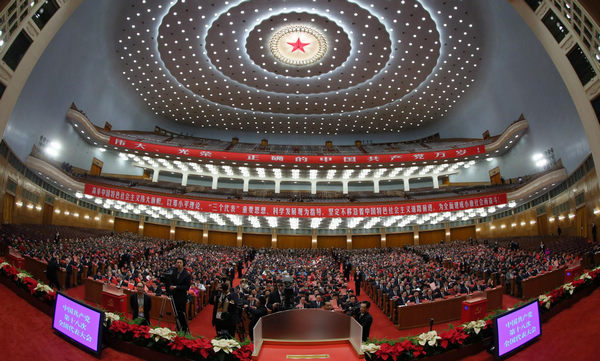
BEIJING - The Communist Party of China (CPC) has enhanced consensus on future reforms at the just-concluded national congress, which analysts say will pave the way for the new leadership to tackle public concerns essential to China's sustainable development.
According to the newly amended CPC Constitution endorsed by the 18th National Congress on Wednesday, reform and opening up have been highlighted as "the path to a stronger China" and the "salient feature" of the new period in China.
The inclusion of this statement into the Constitution will help the whole Party acquire a deeper understanding of the importance to carry on reform and opening up, and thus pursue this endeavor more consciously and with greater determination, said a resolution of the congress on an amendment to the Constitution.
"Only reform and opening up can enable China, socialism and Marxism to develop themselves," it said.
Xin Ming, professor with the Party School of the CPC Central Committee, took the amendment as "the right move at the right time."
A fundamental law of the Party, the Constitution holds the highest authority within the organization and has binding power over all CPC members.
Consensus
"China's reforms are not impeccable. Some people turn nostalgic or even wish for a stop to reforms. But at this moment, refusing to reforms will only put China on the path to a dead end. Stagnation and going backwards in reforms are no way out," Xin said.
Many people have been upset or perplexed by the country's social ills, such as inferior food, yawning wealth gap, environmental woes, corruption, and inequitable access to education, health care and social security.
Egalitarianism, previously lambasted as the culprit that stifled China's national vitality under the planned economy, no longer seems good-for-nothing.
"Apart from the bewilderment, another major hindrance relates to the disparity of opinions on the urgency of deepening reforms," said Liu Jingbei, research department director of the China Executive Leadership Academy-Pudong in Shanghai.
To those who vacillate, the Party has clarified in a keynote report to the Party congress that the upcoming reforms will emphasize comprehensive and coordinated economic, political, social, cultural and ecological development.
China watcher Robert Kuhn said that five key issues are faced by China's new leaders: economic restructuring, improvement of people's livelihoods and social security, innovation, political participation, beliefs and value systems.
All these challenges require the Party to take action, he said.
Relay race
In the eyes of Chinese Communist leaders, the reform and opening up process masterminded by Deng Xiaoping in the late 1970s is more like a relay race that must be advanced from one generation to another.
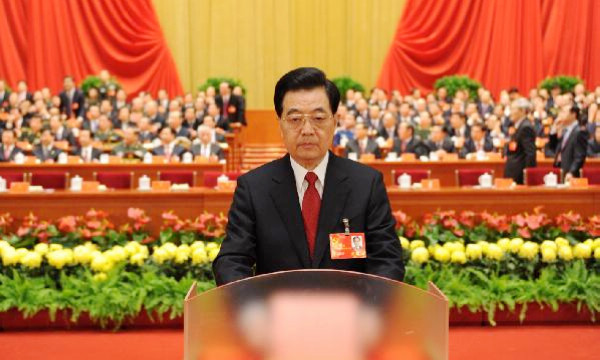
Inspiring motivation and enhancing consensus should be the essential starting point of future reforms, while the spirit of reform and innovation must be integrated into all respects of national governance, according to President Hu Jintao.
The primary impetus of the reforms, analysts say, is the people, while it is democracy that inspires people to pool their wisdom.
Dr. Zheng Changzhong, an expert on Party-building at Fudan University, said, "The Party's new leaders must figure out Chinese people's diversified requests, make a priority list, and advance reforms at proper time and with proper intensity."
Yu Pei, a world history researcher with the Chinese Academy of Social Sciences, believes China can no longer feel its way through future reforms.
"Top-level policy design must be combined with grassroots innovation, while the linchpin of sound top-level policy design is to maintain people's interests, and to respect and inspire the people's driving role in history," said Yu.
During the congress, delegate Chen Derong, Party secretary of Wenzhou City in east China's Zhejiang Province, was crowded by domestic media demanding a timetable for the city's pilot financial reform scheme.
After some 100 private entrepreneurs in Wenzhou were reported to have disappeared, committed suicide or declared bankruptcy after failing to repay an aggregate underground debt worth 10 billion yuan (about 1.59 billion U.S. dollars), the State Council authorized the city, the cradle of China's private business, to spearhead financial reform for private lending this year.
A number of ministries have also mapped out plans to facilitate private companies' access to sectors formerly confined to state-owned enterprises, in the sectors involving railway, energy and finance.
Taking the Wenzhou financial initiative as an example of reform consensus, analysts say support from citizens and the political courage of leaders are both required to tackle in-depth problems.
As Chinese officials are thrown to the front line of "deepwater-area" reforms, Hu Jintao more than once stressed the need to take the rule of law as the prerequisite to advance reform, iron out conflicts and maintain stability.
"If the Party hopes to sustain its governance along the socialist path, it must always bear in mind the strategic choice of reforming for the good of the people," agreed Fudan University's Zheng.
Related Stories
CPC Constitution takes reform as China's 'salient feature' 2012-11-14 12:54
Moving ahead with reform 2012-11-14 09:17
China never to copy Western political system 2012-11-12 18:44
What path will economy take 2012-11-12 11:08
Progress of cultural reform 2012-11-12 09:40
Reform test for the new leadership 2012-11-12 08:00
What to watch in China's political reform? 2012-11-11 14:01
Top News
Xi emphasizes adherence to CPC Congress spirit
Top legislator urges implementation of congress spirit
Moderately prosperous China brings chances to world
Video