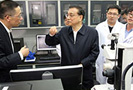
Hospitals to reform for better care
Premier says changes will be good for public well-being and the economy
China will carry out reforms at public hospitals to optimize medical care resources, according to a decision made at a State Council executive meeting chaired by Premier Li Keqiang on Monday.
Reforms in the pricing of medical services will continue to move toward dynamic price adjustments to better reflect the expertise of medical workers, the panel determined.
One or two cities in provincial areas where the comprehensive medical reforms are being piloted will be chosen for medical insurance payment reform, covering all medical care institutions and services. The government will also designate more than 100 disease categories for an insurance payment-by-category reform.
"The medical care reform is not only a major project to improve public well-being but also a major economic measure," Li said.
He said the public hospital reforms should be pushed forward across the board, and the reforms of medical care partnerships should be piloted in multiple forms to better serve "healthy China" with better and more convenient healthcare services.

?
China's medical care reforms should adhere to the principle of guaranteeing basic healthcare, building up working mechanisms and strengthening community health services, he said.
China began its latest round of healthcare reform in 2009, with a core objective of offering healthcare services to all people.
As of September, all public hospitals in China had joined the comprehensive reform program, which ends the 60-year-old practice of drug price markups and enables rationalization of medical costs. As reforms have proceeded, drug sales as a share of total revenue for hospitals dropped from 46.3 percent in 2010 to 38.1 percent in 2016.
Public hospitals (12,708 of them as of 2016) provided 2.85 billion diagnoses and treatments last year, accounting for 87.2 percent of cases provided by all hospitals in China, according to the National Health and Family Planning Commission.
Reforming how medicines are acquired for patients will also be deepened, and public hospitals will be encouraged to practice category-based pharmaceutical procurement.
Hospitals across different regions, along with specialized hospitals, will be encouraged to team up for drug procurement.
The public hospital oversight mechanism will be reformed to better supervise the quality and safety of medical care, medical services and medical expenses. The number of hospital beds, construction standards and procurement of large medical equipment will undergo greater scrutiny.
"Medical care reform is still an ongoing reform, and the progress needs to be consolidated," Li said. "The government should provide appropriate financial support."
The executive panel on Monday decided to speed up efforts to establish medical treatment partnerships to promote effective cooperation and coordination between different types of medical institutions, including major hospitals and grassroots clinics.
All major public hospitals must join in the development of such partnerships before the end of October. The operating mechanism of medical partnerships will be further improved to ensure better coordination in technical support, staffing, staff salary arrangements and resource sharing among different medical institutes.
Private medical care facilities, eldercare facilities and rehabilitation centers will also be encouraged to join the partnerships to provide integrated services to the public.
More efforts will be made to expand the availability of family doctors, and to enable the doctors to offer more services based on demand and improve fee collection and payment mechanisms.
"A lot can be done to advance China's medical equipment and pharmaceutical industry, not least traditional Chinese medicine, and including Internet-Plus medical care that can help better consolidate our resources," Li said.