In the Name of the People casts light on China for expats









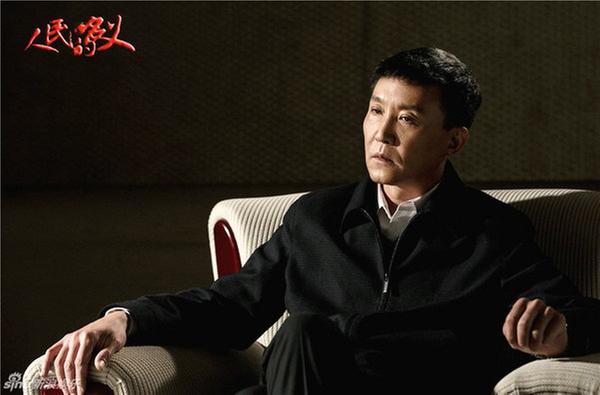 |
| Actor Wu Gang plays the role of Li Dakang in the TV adaptation of In the Name of People. [Photo/Mtime] |
It might be evidence of the globalization of Chinese culture that I finished watching In the Name of the People before seeing a single episode of House of Cards. As with all Chinese series, I started with the good and reasonable intention of improving my language skills but ended up binge watching.
To foreigners, especially those with knowledge of Chinese history, politics and culture, watching In the Name of the People can be quite entertaining. Like most Chinese series, it highlights inclusiveness, combining action, romance, education and comedy in one plot with diverse characters, including the monkey (Hou Liangping), the snake (Gao Xiaoqin), tigers and flies.
When it comes to language, besides useful phrases in the sphere of politics, the show’s dialogue is filled with idioms and historical references. When Zhao Donglai persuades Lu Yike, the object of his desire, to join a poetry club with him, he describes this opportunity as jinshui loutai, xian deyue. This expression reveals the beauty and profoundness of the Chinese language. Literally translated as “the pavilion closest to the water enjoys the moonlight first”, it means that a person in a favorable position gains special advantages, adding another facet to the leitmotif of the series: corruption is human.
In the Name of the People provides a clear solution to this dilemma: zhidu, the system and moral conduct. Its concept of moral conduct is a mixture of communist and Confucian values, interpreted in a way perfectly matching China’s modern society. It introduces the frugal official, the loyal student and the obedient housewife. The characters are clearly defined, and throughout the series, their moral standards are challenged. Those who decide to act morally right are eventually rewarded.
I once heard somebody say: it is easy to be moral, if you are rich enough to afford it. This sounds similar to Victor Hugo’s great novel Les Miserables, where common people with good intentions constantly fall short of their moral standards and are severely punished by a cruel system.
The circumstances of their lives do not allow them to be good. This narrative is being reversed by the creators of In the Name of the People, with ordinary people depicted as being most capable of leading a moral life and blaming misconduct on the corruptive effect of power and wealth.
However, the fate of the common people remains in the hands of the powerful, as they depend on having their voices heard by someone influential. The primary message is people need to be led.
The role of linking the common people to the good side of the force is designated to Lao Chen, who dies at the end of the series. Who will follow in his footsteps and speak out in the name of the people?
Another important point, the portrayal of women is upsetting. Whether it’s the reckless businesswoman, the obedient housewife or other female characters, they are all depicted as supplements to their husbands.
But is it really the shortcoming of the series to lack figures of independent women, which could serve as a source of inspiration for female viewers, or is it simply a reflection of Chinese reality?
The show also critiques China’s present state as being too pragmatic and calculating. The underlying message – that China needs ideals, dreams and true feelings – apparently hit a nerve with Chinese viewers, explaining why the character of Li Dakang is so popular among the Chinese audience.
For a story that stresses the importance of the system, the plot heavily relies on the moral standards of influential individuals. Still, it seems bold to reveal these weak points of China’s political system, whether overly simplified or well-coordinated. China as well as other countries can without a doubt benefit from a vibrant debate on the topic of corruption.