|
|
Russia's President Vladimir Putin (R) and China's President Xi Jinping attend a documents signing ceremony during their meeting at the Kremlin in Moscow, Russia, May 8, 2015. [Photo/Agencies] |
At the invitation of Russian President Vladimir Putin, Chinese President Xi Jinping paid a visit to Moscow last week and attended the military parade in Moscow on Saturday to mark the 70th anniversary of Russia's victory in the Great Patriotic War (1941-45).
For the first time, the Chinese People's Liberation Army participated in a military review in Russia, with a 102-member honor guard marching through Red Square in commemoration of the victory against the Nazis 70 years ago.
Xi's presence on the reviewing stand signaled that a higher-level China-Russia relationship is being formed. The bilateral ties, which have been constantly improved over the past two decades, are at an all-time high today. In other words, Beijing and Moscow see each other as their most important partner, and share many consensuses on how to preserve the fruits of the victory against fascism.
The signing of 32 documents for bilateral cooperation in financing, aerospace and railways during the meeting between Putin and Xi on Friday, is a case in point. In particular, the two leaders agreed to integrate China's Silk Road Economic Belt initiative with Russia's trans-Eurasia strategy, aiming to further consolidate the economic and political bonds between the two countries.
Some Western media outlets seem determined to interpret this comprehensive strategic partnership as a semi-alliance targeted against the US-led Western hegemony. But as Xi stressed while meeting Russian Prime Minister Dmitry Medvedev after the parade, the China-Russia comprehensive strategic partnership of coordination is based on "staunch political common understanding between the two countries and profound amity between the two peoples". It is not a military alliance targeted at a third country.
Prior to his trip to Moscow, Xi wrote in an article published in Rossiiskaya Gazeta, an influential newspaper in Russia, that win-win cooperation should be the core in today's international relations because "unity makes one strong, while isolation makes one weak".
It is indeed a pity that leaders of major Western powers, including the United States, failed to see Xi's point and declined to attend the Moscow parade. In contrast, some of their predecessors did show up at the 60th anniversary parade 10 years ago. The absence of Western leaders at the parade on Saturday indicates the estrangement between Russia and the West in the aftermath of the ongoing Ukraine Crisis.
In the past year and more, Washington and its European allies have imposed a host of economic sanctions on Moscow for its involvement in the unrest in Eastern Ukraine. But there was no need for them to vent their frustration by not attending Russia's victory parade, which could have served as a golden opportunity for diffusing the tensions by commemorating their joint fight against fascism.
Looking at the broader picture, in Xi's latest Eurasia trip, he also visited Kazakhstan and Belarus, as well as Russia, which will not only strengthen China's cooperative partnership with the three countries, but also inject new vitality into the Beijing-proposed Silk Road Economic Belt that will cover large swathes of Europe and Asia.
Kazakhstan reiterated its willingness to dovetail new economic policies with the new overland Silk Road; while Belarus aims to make more breakthroughs in major cooperation projects with China, such as a high-tech industrial park near Minsk.
Therefore, Western countries should reflect on their own absence from this important event rather than speculate on Xi's trip, which once again demonstrated Beijing's commitment to regional integration and stability.
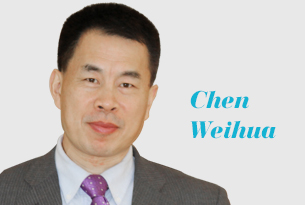
The author is director of the Department for European-Central Asian Studies at the China Institute of International Studies.



I’ve lived in China for quite a considerable time including my graduate school years, travelled and worked in a few cities and still choose my destination taking into consideration the density of smog or PM2.5 particulate matter in the region.
Copyright 1995 - . All rights reserved. The content (including but not limited to text, photo, multimedia information, etc) published in this site belongs to China Daily Information Co (CDIC). Without written authorization from CDIC, such content shall not be republished or used in any form. Note: Browsers with 1024*768 or higher resolution are suggested for this site.
License for publishing multimedia online 0108263 Registration Number: 130349