|
|
Chinese President Xi Jinping and Indian Prime Minister Narendra Modi sit on a swing during Xi’s visit in Modi’s hometown Gujarat state, on September 17, 2014. [Photo/Xinhua] |
Indian Prime Minister Narendra Modi's three-day visit to China from Thursday is expected to strengthen ties between the two neighbors and deepen bilateral economic and trade cooperation.
Modi has launched several initiatives to expedite India's economic growth since being elected prime minister in May 2014. His focus is on boosting the manufacturing sector, which has relatively low efficiency and technology levels, and is wanting in global competitiveness.
In comparison, China has achieved remarkable breakthroughs in various industries since the launching of reform and opening-up, and its manufacturing sector has prospered. In fact, China's manufacturing sector faces the problem of overcapacity in some areas. A World Bank survey shows manufacturing accounted for 12.9 percent of India's GDP in 2013, compared with 31.8 percent of China's. This means there is huge potential for deepening bilateral cooperation in trade and economic fields, especially in the manufacturing sector.
The bilateral trade volume has grown 11 percent over the past five years, and China is now India's largest trading partner. Although China enjoys a growing surplus - from $20.08 billion in 2010 to $37.85 billion in 2014 - it does not favor such kind of trade imbalance. In fact, it has increased imports from India.
Modi's visit to China, during which he will hold talks with Chinese leaders on a wide range of issues, is expected to facilitate the further opening up of India's market to Chinese enterprises and investments. Increased investments by Chinese enterprises in India and the sales of their India-made products back to China will help narrow the trade imbalance and strengthen bilateral trade and economic ties.
Realizing the importance of increasing the flow of foreign capital into India in order to boost manufacturing, Modi has lowered the corporate tax. This, along with his efforts to revise Indian labor laws to remove the obstacles for foreign investment, will lay a solid foundation for cooperation with China.
Modi attaches importance to the study of the "China's model", especially China's experience in inward foreign investment. As chief minister of Gujarat from 2001 to 2014, Modi visited China four times to study its development model. For the purpose, he visited not only developed Guangdong province and Shanghai, but also relatively less-developed Sichuan province. After his visit to Sichuan in 2011, he even built an industrial park in Gujarat where enterprises from the Chinese province channeled an investment of nearly $2 billion.
Also, there is huge potential for Sino-Indian cooperation in infrastructure development and power generation. As big energy consumers, the two countries should deepen their cooperation in new energy, such as wind power and solar power, while exploring ways to work together in the traditional energy sector. Besides, deeper cooperation in environmental protection will improve the health and living conditions of peoples in both countries.
China's advanced and competitive high-speed rail technologies are another area of cooperation with India. There is huge scope for bilateral cooperation in the service sector, too - from banking, securities and insurance to telecommunications and postal services. Education and medical care are other areas in which the two sides can work together for mutual benefit.
The Silk Road Economic Belt and the 21st Century Maritime Silk Road initiatives put forward by President Xi Jinping, aimed at promoting regional and global economic development, too are apt for cooperation with India, especially after it adopted an "eastward-looking" strategy.
The China-proposed Asian Infrastructure Investment Bank, which already has India as a founding member, is likely to deepen cooperation in infrastructure construction. And the two countries' enterprises can always cooperate in investment, poverty reduction, agriculture, and education projects in Africa, Latin America and the Middle East in order to boost overall world economic growth.
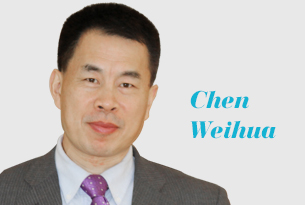
The author is a researcher at the Chinese Academy of International Trade and Economic Cooperation, affiliated to the Ministry of Commerce.



I’ve lived in China for quite a considerable time including my graduate school years, travelled and worked in a few cities and still choose my destination taking into consideration the density of smog or PM2.5 particulate matter in the region.
Copyright 1995 - . All rights reserved. The content (including but not limited to text, photo, multimedia information, etc) published in this site belongs to China Daily Information Co (CDIC). Without written authorization from CDIC, such content shall not be republished or used in any form. Note: Browsers with 1024*768 or higher resolution are suggested for this site.
License for publishing multimedia online 0108263 Registration Number: 130349