|
|
US Democratic presidential candidate Hillary Clinton delivers her "official launch speech" at a campaign kick off rally in Franklin D. Roosevelt Four Freedoms Park on Roosevelt Island in New York City, June 13, 2015.[Photo/Agencies] |
Former US secretary of state Hillary Clinton and former Florida governor Jeb Bush seem to lead the presidential race as Democrat and Republican candidates, and being the wife and brother of former presidents Bill Clinton and George W. Bush, they are drawing special attention.
Since domestic politics have always influenced its foreign policy, the US has been blaming emerging economies, especially China, for its waning international influence instead of accepting globalization and freer flow of capital and technologies across borders as the real reasons. And to meet the domestic demand of strengthening the manufacturing sector and creating more jobs by altering the rules of global trade, US President Barack Obama is betting on his Trans-Pacific Partnership Agreement initiative.
But Obama's political agenda has raised tensions in global trade, undermining China-US trade ties. In fact, Obama has left even House of Representatives members worrying that his plan could unwittingly harm the American workforce.
Washington is focusing on the military component of Obama's "pivot to Asia" policy, too, hoping to relocate about two-thirds of US naval and air force resources to the Asia Pacific region. With China in mind, the Pentagon is particularly keen on relocating a large part of those resources to the East China and South China seas. The US has reassured Japan of support in its maritime dispute with China in the East China Sea and interfered in the South China Sea disputes on the pretext of safeguarding freedom of navigation. By flexing its muscles, the US is essentially catering to domestic demand of maintaining its regional dominance.
The economic as well as military components of the US "pivot to Asia" policy are affecting Sino-US ties. Despite being ill-conceived, many of Obama's foreign policy moves have gained acceptance at home because of the presidential race. As seen in previous US election campaigns, candidates have to mobilize voters by promising to create more jobs for average Americans and making the US a stronger power. No wonder, China, as the world's second-largest economy, has become a convenient target for them.
Hilary Clinton has already promised to change Americans' lives for the better and could play the "China card" to pressure fellow Democrat Obama to toughen his stance vis-a-vis China on trade disputes, currency rules, intellectual property rights and the environment. Even though Clinton is likely to take a rational view of China-US ties if she is elected, she has to convince voters during the campaign that she can act tough against Beijing. And this is how US-style democracy unnecessarily makes its foreign relations unstable.
Republicans probably need votes more badly. Jeb Bush has been telling voters how great his governorship was in terms of generating growth in Florida. He knows that only by assuring people that, once elected, he would create the Florida economic miracle in the whole of the United States should he win the election. In this regard, his policy is more likely to resonate with China. Still, Bush would be equally ready to take any measure to maintain the US' global dominance, and one good area to target in his campaign speeches is China-US relations.
Campaign politics may be a temporary phenomenon in the US, and its policy toward China is likely to return to normal within a year of a new president taking office. But the twist the election campaign gives to Sino-US ties causes real harm to the bilateral partnership.
At a time when more and more regional and global players are calling on Beijing and Washington to work together to resolve the burning issues - from climate change and epidemics to the global financial system to terrorism - there is no reason why the US should not capitalize on the four decades' of cooperation with China. And it can start the process in earnest at the June 23-24 China-US Strategic and Economic Dialogue.
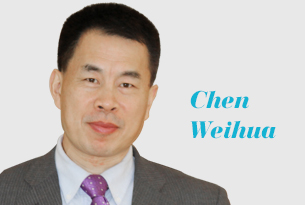
The author is a professor at and associate dean of the Institute of International Studies, Fudan University, Shanghai.



I’ve lived in China for quite a considerable time including my graduate school years, travelled and worked in a few cities and still choose my destination taking into consideration the density of smog or PM2.5 particulate matter in the region.
Copyright 1995 - . All rights reserved. The content (including but not limited to text, photo, multimedia information, etc) published in this site belongs to China Daily Information Co (CDIC). Without written authorization from CDIC, such content shall not be republished or used in any form. Note: Browsers with 1024*768 or higher resolution are suggested for this site.
License for publishing multimedia online 0108263 Registration Number: 130349