|
|
Iran's President Hassan Rouhani (C) meets French foreign minister Laurent Fabius (5th L) in Tehran July 29, 2015. On the first visit to Iran for 12 years by a French foreign minister, Fabius conveyed an invitation from President Francois Hollande to Iran's President Hassan Rouhani to visit France in November, Iranian news agency ISNA said. [Photo/Agencies] |
After the 12-year-long talks, a landmark agreement was reached between Iran and the P5+1 (the five permanent UN Security Council members - China, France, Russia, the United States and the United Kingdom - plus Germany), in Vienna on July 14. Six days later, the 15-member Security Council unanimously endorsed the Joint Comprehensive Plan of Action, and said it will lift its sanctions on Iran after receiving a report from the International Atomic Energy Agency verifying Teheran will indeed implement the commitments it has made in the JCPOA.
Although the agreement is a milestone in international relations, it remains an arduous task to ensure the success of the deal, which is based on compromises including sanctions and power-oriented restrictions, not mutual trust.
The origin of the Iranian nuclear issue can be traced to the deep-seated ideological differences between Iran and the West, which are unlikely to be resolved even after Teheran fulfills its promise of removing centrifuges and shutting down uranium-enrichment facilities. Still, as a new paradigm of win-win cooperation and political negotiation in the post-Cold War era, the JCPOA has defused tensions in the Middle East and proved that diplomacy and dialogue can tackle thorny regional and global issues.
For US President Barack Obama, the Vienna agreement is like a dream come true, because it essentially meets Washington's demand that Iran stop "developing nuclear weapons". More importantly, it will allow the US to focus on implementing its "pivot to Asia" strategy in the Asia-Pacific region.
But the fact is, neither the Iranian nuclear issue nor the power struggle in the Middle East has been a major problem for the US. Instead, they have been part of Washington's Middle East strategy, designed as it is to control the region. What the US really wants from the JCPOA is for Iran to increase its oil production to offset the drying supply from Russia because of the Western sanctions. Also, as the UN and West lift the sanctions on Teheran, the Iranian market, which has been isolated for nearly a decade, will open up for more economic and business opportunities.
Although Iran survived the decade-long economic sanctions without surrendering to the Western powers, it did suffer huge financial losses and couldn't meet the demands for social development. Once all sanctions on Iran, which was first imposed in 2006, are lifted, the country's overseas frozen assets worth more than $100 billion will thaw, giving fresh momentum to its economy.
Moreover, Iran's economic pillars - oil exports and production - are expected to generate considerable foreign exchange earnings, and boost infrastructure construction, which has almost come to a halt. And the increase in imports of industrial products and household goods will enrich many Iranians' life.
However, the Vienna agreement might only ease, not end, the tensions in the Middle East, because they are the result of multiple factors, including major powers' military intervention and bloody sectarian conflicts. Hopefully, a more influential Teheran in the post-sanction era will play an active role in stabilizing conflict-torn Afghanistan and Iraq, apart from combating cross-border terrorism.
As one of the P5 nations, China will face severer challenges when the US turns its attention to the East and doubles its efforts to contain China. Troubles aside, a sanction-free Iran is indeed good news for China, because the two countries' cooperation and trade exchanges are expected to thrive again, facilitating the implementation of the Beijing-proposed "Belt and Road Initiative".
For one, Iran, one of the world's major oil exporters and a key point on the Silk Road Economic Belt, can meet China's increasing energy needs - China's total crude oil import in 2014 was 308 million tons. As for Chinese enterprises in Iran, with decades of experience and a diversified domestic market they can expect benign and fair competition after the possible influx of their Western counterparts.
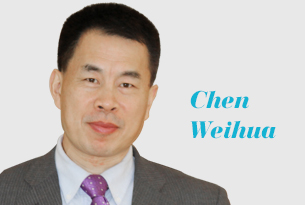
The author is a professor in Middle East Studies at the Chinese Academy of Social Sciences and a council member of a think tank affiliated to the Institute of Middle East Studies, Shanghai International Studies University.



I’ve lived in China for quite a considerable time including my graduate school years, travelled and worked in a few cities and still choose my destination taking into consideration the density of smog or PM2.5 particulate matter in the region.
Copyright 1995 - . All rights reserved. The content (including but not limited to text, photo, multimedia information, etc) published in this site belongs to China Daily Information Co (CDIC). Without written authorization from CDIC, such content shall not be republished or used in any form. Note: Browsers with 1024*768 or higher resolution are suggested for this site.
License for publishing multimedia online 0108263 Registration Number: 130349