|
|
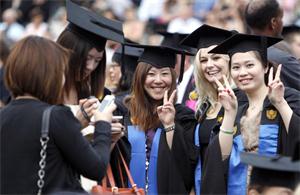
A still image captured from the website of BBC. [Photo/bbc.co.uk] |
A recent BBC documentary, Are Our Kids Tough Enough? Chinese School which filmed an experiment in which five Chinese teachers taught 50 students according to Chinese-style education norms at a school in the United Kingdom, has sparked a heated online debate on whether Chinese or Western methods are better. But such a debate is not new, notwithstanding the talk of a cultural clash.
The West has for long promoted small classes which focus on students' individuality and differences, emphasize student-teacher interactions and attach great importance to cultivating students' independence, creativity and ability to communicate. In contrast, classes in China are big (that is, they have many students), in which teachers are the center, and emphasize uniformity, discipline and teachers' authority. Chinese teaching methods focus on students' diligence, obedience and (for want of a better term) ability to imitate.
The latest online debate has again raised the question: Which teaching method is better, the Chinese or the Western? For long, most Chinese people and foreigners have taken it for granted that the Western education model is superior to the Chinese.
But with the rise of China, especially after Shanghai students' excellent performance in the Program for International Student Assessment over the past years, Western governments and educators have become less certain about the efficacy of their teaching methods. The fact that students nurtured under the Chinese education model can be equal to or better than their Western peers has highlighted the advantages of the China's education model. In particular, the British secretary of education's visit to China to review the Chinese teaching methods and some Chinese teachers' visits to the UK to provide "educational aid" seem to be a shot in the arm for the Chinese education model.
Many Chinese now believe China's basic education system lays a more solid foundation for students compared with its Western counterparts. The main reason for that is most of the Chinese students who go to Western countries for higher education perform excellently despite having to follow Western curricula, while Western students usually find it difficult to cope with China's teaching methods.
Media reports say the BBC will use a third party to assess how competent students traveling either way are in mathematic, science, English and Chinese before determining which education model is more useful for students, the Chinese or the Western. But such comparison and assessment are unscientific.
A country uses a teaching method only as a tool used to realize a specific social purpose, and thus comparisons between the Chinese and Western education models are uncalled for. Before comparing one education model with another, researchers and analysts should consider the different functions different teaching methods are supposed to perform in their respective social context.
China's education model is more suited to its social demands; the same applies to the Western model. Despite the Chinese government advocating the cultivation of creative talents, many Chinese still want people to be obedient to their parents, teachers and senior officials. As a result, China's education model continues to focus on the sanctity of texts and rules.
In China, students are expected to be observant but obedient. But the Western model focuses on cultivating students' creativity, and encourages them to criticize established views and defend their stance. As such, both the Chinese and Western education models have succeeded in developing the qualities in students that suit their social demands.
Therefore, the aim of a comparative study of Chinese and Western education models should be to promote mutual reference and combine the two into an organic whole that would benefit both teaching methods.
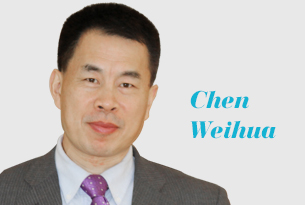
The author is an associate professor with the Beijing Normal University.



I’ve lived in China for quite a considerable time including my graduate school years, travelled and worked in a few cities and still choose my destination taking into consideration the density of smog or PM2.5 particulate matter in the region.
Copyright 1995 - . All rights reserved. The content (including but not limited to text, photo, multimedia information, etc) published in this site belongs to China Daily Information Co (CDIC). Without written authorization from CDIC, such content shall not be republished or used in any form. Note: Browsers with 1024*768 or higher resolution are suggested for this site.
License for publishing multimedia online 0108263 Registration Number: 130349