IV.
Improving Standards of Living for All
Since the founding of the autonomous region, and especially since the launch of the reform and opening-up drive, Xinjiang has enjoyed overall economic and social development, and people of the various ethnic groups in the autonomous region have all benefited from the fruits of the reform and development. Since 2010, Xinjiang has stepped up efforts and input in improving the people's living standards, undertaking over 500 key projects in this regard over the past six consecutive "people's livelihood years," with the expenditure on improving the people's livelihood accounting for over 70 percent of the region's yearly total public spending. This has made these six years a period in which the people are benefitted the most and see the greatest improvement in their material well-being and cultural life.
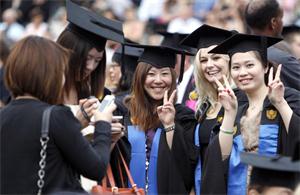
Employment channels are constantly expanding. In 2014, the registered urban unemployment rate of Xinjiang was 3.2 percent. From 2010 to 2014, 2.5 million new urban jobs were created, averaging a yearly growth of 500,000. In 2010, Xinjiang established a registration system for people with difficulties in finding work and for families of which no member was gainfully employed. By 2014, under this system Xinjiang had helped 29,000 members of these "zero-employment" families find jobs, cutting the number of zero-employment families by 26,000. From 2010 to 2014, Xinjiang provided jobs to 303,000 university graduates, with the employment rates of university graduates and university graduates of ethnic minority origins reaching 88.6 and 82.7percent, respectively. By May 2011, it had virtually resolved the employment problems of 75,000 unemployed graduates of junior colleges and technical secondary schools who had registered before the end of 2009, of whom 84.6 percent came from ethnic minority groups. Some 1.66million job opportunities were created for rural surplus labor in 2009. This figure increased to 2.85million in 2014. During this five-year period, the relevant wage bill totaled RMB56.6 billion.
The life of the people has kept improving. In 2014, the per-capita disposable income of urban residents averaged RMB21,881, an increase of 51.2 fold over that of 1980, representing an average annual growth of 12.3 percent. This also represented an increase of more than RMB9,624 over that of 2009. The per-capita net income of rural residents was RMB8,114, increasing by 41.4 fold as compared with that of 1980, averaging an annual growth of 11.5 percent. This was an increase of more than RMB4,231 as compared with 2009. The Engel coefficient of urban and rural residents continued to decline, from 36.3 percent and 41.5 percent respectively in 2009 to 31.3 percent and 34.5 percent in 2014.
Living conditions of both urban and rural residents have continued to improve. In 2004, Xinjiang started an earthquake-resistant and comfortable housing project; and since 2010, it has launched projects of offering comfortable housing and enriching the people, settlement of herdsmen for developing animal husbandry, and urban affordable housing. By 2014, more than 4.8 million farmers and herdsmen and 2.07 million middle- and low-income urban residents had moved into new homes. The average flood space for an urban household was 85 sq m, and that of a rural household was 105 sq m. All urban households and 72 percent of rural households have been provided with facilities for heating. In urban areas, the water supply covered 96.3 percent of the population, and the centralized sewage treatment rate reached 78.6 percent. Sixty-three percent of domestic garbage underwent hazard-free treatment. In built-up urban areas, the green coverage rate was 34.9 percent, and per-capita green park area was 10.7 sq m. Projects to improve the communal environment in rural areas and demonstration projects of comprehensive improvement of rural environment were launched, gradually bringing about a clean and neat village environment for more than 2 million farmers and herdsmen.
Continuous development has been seen in education. Since 2010, education in the region has ushered in a new period of rapid development. Over the past five years, education expenditure has exceeded RMB250 billion. In 2014, the proportion of education expenditure in the GDP increased to 6.47 percent. Xinjiang has 9,230 schools of various types and at all levels, with 4,734,800 students and 338,200 full-time teachers. From 2010 to 2014, the three-year kindergarten enrollment rate grew from 51 percent to 72.4 percent; the proportion of junior high school graduates getting enrolled into high schools increased from74 percent to 91 percent, while the gross high school enrollment increased from 67 percent to 84 percent. The university and college admission rate grew from 64 percent to 79 percent, and the gross enrollment rate of higher education increased from 22 percent to 31 percent. This brought Xinjiang to a level of higher education take-up similar to the rest of the country. A full system of vocational education was in place, with 176 secondary vocational and technical schools providing for 219,500 students.



I’ve lived in China for quite a considerable time including my graduate school years, travelled and worked in a few cities and still choose my destination taking into consideration the density of smog or PM2.5 particulate matter in the region.
Copyright 1995 - . All rights reserved. The content (including but not limited to text, photo, multimedia information, etc) published in this site belongs to China Daily Information Co (CDIC). Without written authorization from CDIC, such content shall not be republished or used in any form. Note: Browsers with 1024*768 or higher resolution are suggested for this site.
License for publishing multimedia online 0108263 Registration Number: 130349