Here in China, preparations are underway for Mid-Autumn Festival. At the same time, the United Nations is preparing for another major event. On Sept 25, just before the 70th Session of the UN General Assembly, member states will adopt a new set of Sustainable Development Goals, now being publicized on social media under Global Goals and Action2015. President Xi Jinping will join more than 150 leaders from other countries at the UN Headquarters in New York to participate in this historic moment.
For readers not familiar with the SDGs, they will include 17 goals to measure progress on a range of economic, social and environmental issues. This is an evolution of the previous Millennium Development Goals which included eight goals. The SDGs represent an ambitious new development agenda that includes objectives such as eradicating poverty, protecting the planet, and ensuring that people live in a peaceful and secure world. It is about giving everybody, wherever you are born, equal opportunity to live in dignity.
The SDGs also reflect the fact that development challenges are not unique to developing countries, but apply universally, including to rich countries. Issues of equality and inclusiveness are present in most countries, and some development challenges, such as climate change, don’t recognize borders. As such, the SDGs are a truly global endeavor.
These changes from the MDGs to the SDGs are welcome, and they have been extensively discussed and agreed upon by UN member states. But the comprehensive nature of the new set of goals and the interconnections between them will make their implementation much more complex. This will require sustained political commitment and linking the SDGs to national priorities.
In the past 15 years, China was very successful in achieving the MDGs not only domestically but also with its widely acknowledged contribution to attaining the goals at the global level. With this positive MDG experience, China is well positioned to contribute greatly to the successful achievement of the SDGs.
The key to a successful implementation would be for the SDGs to be adapted to national priorities and be prioritized according to each development context.
Commencing in the same year as China’s 13th Five-Year Plan (2016-2020), the SDGs have the potential to reinforce both national and provincial level development strategies. According to President Xi’s speech in May 2015 during a field visit to Zhejiang province, the 13th Five-Year Plan will emphasize both a stable economic growth, and an overall human development agenda, including priority areas such as education, employment, social welfare and health. President Xi also solicited ideas and inputs from provincial leaders, and identified 10 priority areas, including environmental issues (like eco-civilization), people’s livelihoods and well-being and poverty eradication?-all of which are well in line with the objectives envisaged under the new SDGs.
This process of engagement with, and inputs from provincial leaders, can also serve as a basis for China’s prioritization of the SDGs and the collection of baseline data to monitor national progress from 2016 onwards. Such prioritization will also support the progress of the SDG agenda to the provincial level, which will be essential, as local governments are responsible for ensuring their plans correspond with the central government strategy.
Taking ownership of, and prioritizing and localizing the SDGs will offer a unique opportunity for China to take action on a global development agenda while making timely and useful links to achieve domestic priorities.
Many developing countries see China as an inspiration for achieving development results. In addition, with its leadership position related to the upcoming G20 presidency, and key role in development cooperation platforms such as the Forum of China Africa Cooperation, China can further enhance its impact on the overall global implementation of the SDGs.
The adoption of the SDGs is a breakthrough moment in our pursuit of a development that is shared by all and that is kind on our environment. China has contributed greatly to the achievement of this milestone agreement and has a key role to play going forward. The UN system in China stands ready to assist and work with the people of China in this process.
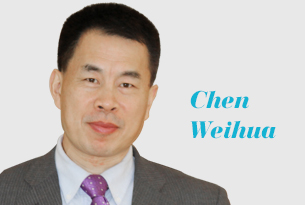
The Author is the United Nations Resident Coordinator in China.



I’ve lived in China for quite a considerable time including my graduate school years, travelled and worked in a few cities and still choose my destination taking into consideration the density of smog or PM2.5 particulate matter in the region.
Copyright 1995 - . All rights reserved. The content (including but not limited to text, photo, multimedia information, etc) published in this site belongs to China Daily Information Co (CDIC). Without written authorization from CDIC, such content shall not be republished or used in any form. Note: Browsers with 1024*768 or higher resolution are suggested for this site.
License for publishing multimedia online 0108263 Registration Number: 130349