|
|
Li Feng/China Daily |
President Xi Jinping's visit to Singapore comes at a time when far-reaching developments are taking place in the Asia-Pacific region. One of the most significant developments is the slowdown in the Chinese economy.
With China's GDP growth now below 7 percent and with growth projections remaining in the range of 6 to 7 percent for the next few years, the Asia-Pacific is adjusting to a slowing Chinese economy. For several years, Southeast Asia and other parts of the Asia-Pacific have relied on China's rapid growth for their own economic expansion. Singapore is a particularly important example in this respect.
After Shanghai, Singapore has the second-busiest port in the world. It occupies a strategically important position on the maritime route between China and Europe, as also between China and Australia and New Zealand. It is the most important port in Southeast Asia, too. China's rapid economic growth and trade and investment links with Europe, Oceania and Southeast Asia had reflected positively on Singapore's economy by making it one of the focal points on China's maritime trade routes.
Apart from shipping, Singapore is also one of the busiest financial centers in the region. Over time, it has emerged as a major center of intermediating banking transactions between Chinese companies and businesses across the world. The presence of all major global banks and financial institutions in Singapore, and its position as a center of transactions in major global currencies have made it a very important financial intermediary for Chinese businesses.
Growth in volumes both of shipping and financial intermediation transactions has been reducing because of China's economic slowdown. Singapore is conscious of the long-term effects of China's lower growth and would be keen on identifying new sources of economic growth. Discussions between Singapore's top leadership and Xi are significant in this regard. The economic cooperation subjects that may feature in these discussions include expanding the scope of the Free Trade Agreement between China and Singapore and the possibility of Singapore's involvement in another signature infrastructure project in China on the lines of the Suzhou Industrial Park and the Tianjin eco-city. Singapore is keen on increasing investments in China, particularly in the services sector, and would aim to use the FTA more expansively in this regard.
Xi's visit to Singapore is also taking place at a time when the regional trade landscape is about to change significantly. Negotiations have concluded on the Trans-Pacific Partnership Agreement. Though there are still legislative hurdles, particularly in the US Congress, the TPP should be implemented by the end of next year. China is not a part of the TPP, but Singapore is, along with 11 other Asia-Pacific Economic Cooperation members. The TPP has been accompanied by negotiations on the Regional Comprehensive Economic Partnership that includes the 10 members of the Association of Southeast Asian Nations, and Australia, China, India, Japan, the Republic of Korea and New Zealand. Singapore is part of the RCEP, too.
Being a member of ASEAN, TPP as well as the RCEP, Singapore is part of all major regional architectures in the Asia-Pacific. At a time when China has proposed the Free Trade Area for the Asia-Pacific, which could see the convergence of the TPP and RCEP, Singapore's role as one of the region's most open economies remains critical in setting standards for implementing modern trade rules.
Besides, Xi's visit to Singapore and Southeast Asia also comes at a time when tensions are rising in Southeast Asia over the South China Sea issues. Till now, tensions have not led to a conflict. But concerns remain. China and Singapore both are keen on maintaining stability in Southeast Asia by coordinating a strong and consolidated regional architecture.
The rise in political tensions in the neighborhood is not good news for a region that is already experiencing low growth and can deter potential investors.
Regional stability, therefore, is expected to figure prominently in the discussions that Xi will have in Singapore.
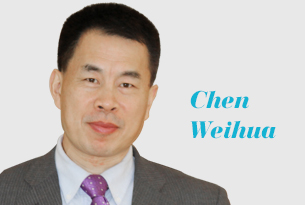
The author is a senior research fellow and research lead (Trade and Economic Policy) in the Institute of South Asian Studies at the National University of Singapore.



I’ve lived in China for quite a considerable time including my graduate school years, travelled and worked in a few cities and still choose my destination taking into consideration the density of smog or PM2.5 particulate matter in the region.
Copyright 1995 - . All rights reserved. The content (including but not limited to text, photo, multimedia information, etc) published in this site belongs to China Daily Information Co (CDIC). Without written authorization from CDIC, such content shall not be republished or used in any form. Note: Browsers with 1024*768 or higher resolution are suggested for this site.
License for publishing multimedia online 0108263 Registration Number: 130349