|
|
Masses of vehicles move slowly on a highway during a traffic jam in Beijing, China, on January 18, 2014. [Photo/IC] |
The Beijing Municipal Commission of Transport is considering a trial of congestion charges on vehicles from 2016 to mitigate traffic congestion in the city. The government's priority, as proposed in the 13th Five-Year Plan (2016-20) and the Traffic Congestion Mitigation Master Plan, is to reduce traffic in Beijing, one of the most congested cities in China.
With what it calls "planning, constructing, managing and restricting" measures, Beijing plans to equip the transport infrastructure and management with advanced technology so as to modernize the transportation system and build a smart city.
One of the main causes of traffic congestion is uncontrolled urban development. Beijing's monocentric urban development has led to the one-directional flow of traffic during peak hours. The urban sprawl, coupled with ever-increasing vehicle ownership and increasing number of commuters, has outpaced the development of the public transportation system. All these have accumulatively contributed to the severe traffic jams we face every day.
The proposed measures are aimed at improving the transportation system through multicenter urban planning, construction of more public transport facilities, efficient traffic management, and stricter restrictions on vehicle numbers and usage. Among the measures, the congestion charge, which is unprecedented in China, will arguably play the most important role in reducing traffic.
The basic idea is to impose a fee on cars driving on certain roads, a fee that would vary according to the time of day, with the highest fee charged during peak hours.
Beijing already has more than 5.59 million vehicles, the most in any Chinese city. According to the Beijing Transport Research Center, on average, the city's drivers were stuck in traffic for about 115 minutes on any weekday in 2014. Based on the estimates from AutoNavi Software Co, on average Beijing commuters lose 808 yuan ($127) in time-cost every month because of traffic jams.
Traffic congestion does not only exact a huge cost on drivers, but also forces people who don't drive to lose time and suffer from air pollution. Just like the tiered tariffs on electricity, or peak and off-peak season air fares, a congestion charge is an economic measure to balance the demands for road space at different times. In this sense, congestion charges are imposed on car drivers because of the problems they create for society as a whole. Such charges also help better allocate public resources.
The success of the congestion charge, however, will depend on whether the public supports the policy. Many urban residents are wary of the idea because they believe the congestion charge will be of advantage to the rich because they can afford to pay peak-hour tolls. In some ways it will, or at least the rich will be at an advantage. So public support will to an extent depend on how the congestion charge money is used to benefit people who travel during off-peak hours, or choose to use greener modes of transport such as mass transport or bicycles, or just walk.
The revenue from the congestion charge can be used for many new transport initiatives, such as expanding bus routes and subway lines, making the public transportation system more reliable and providing fare subsidies for low-income people. The revenue can also be used to develop better cycling and walking infrastructure, and build parks.
Across the world, the congestion charge has become a good funding source for subsidizing and developing better transportation systems. From 2003 to 2014, London raised more than £1 billion ($1.5 billion) in congestion charges and used the money to develop sustainable modes of transport. In Milan, the net revenue from congestion charges last year was €13 million ($14.11 million), which will be used to improve the public transportation system and cycling facilities.
Therefore, if the congestion charge is used for the right purposes in China, it can help usher in a new era of investment in mass transport, facilitate equitable mobility and help build safer communities.
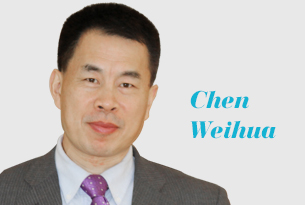
The author is a sustainable transport research associate at World Resources Institute China Office.



I’ve lived in China for quite a considerable time including my graduate school years, travelled and worked in a few cities and still choose my destination taking into consideration the density of smog or PM2.5 particulate matter in the region.
Copyright 1995 - . All rights reserved. The content (including but not limited to text, photo, multimedia information, etc) published in this site belongs to China Daily Information Co (CDIC). Without written authorization from CDIC, such content shall not be republished or used in any form. Note: Browsers with 1024*768 or higher resolution are suggested for this site.
License for publishing multimedia online 0108263 Registration Number: 130349