Why Belt and Road is more than the sum of its parts
Announced by President Xi Jinping at Davos in January, the inaugural Belt and Road Forum this May comes at an historic inflection point in the course of economic evolution. China will showcase major infrastructure projects to advance this ambitious initiative, but the tone world leaders adopt in their dialogue on trade could prove just as significant.
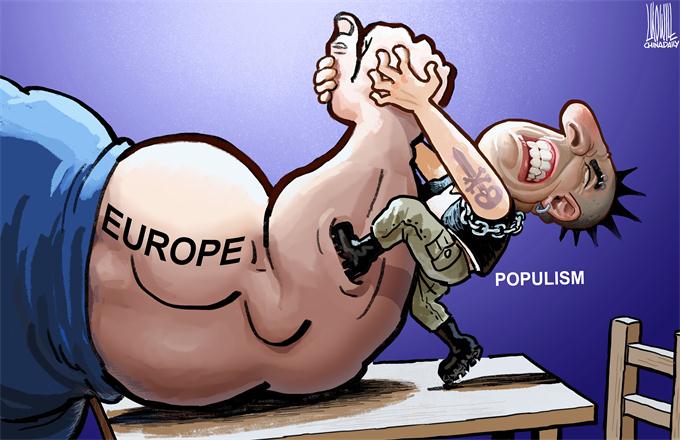
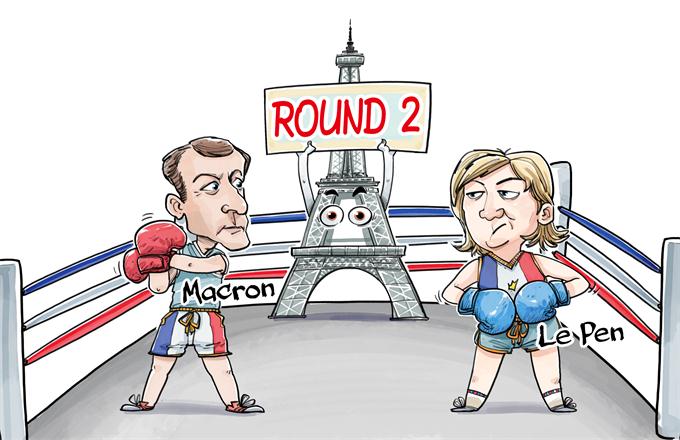
The backdrop to the forum is one of global uncertainty. The new US administration is reversing past policies that were designed to increase global economic integration. The UK is trying to negotiate a new relationship with its continental partners in the EU. Recent elections in several countries have marked a political shift from the old order of left versus right to a new order of nationalist versus internationalist.
And as policymakers and negotiators wrestle with their new terms of engagement, trade is evolving too. Digital innovations, plus advances in logistics, are creating opportunities by opening new markets for businesses and challenging deeply-entrenched operating models.
Whilst rapid increases in the complexity of global supply chains may have peaked, what we're now seeing is growing interest in inter and intra-regional trade. China's role in driving these flows is increasingly important, and nowhere is this role more visible than through the Belt and Road initiative (B&R).
By investing in rail, ports and power plants along centuries-old silk routes, China is seeking to stimulate cross-border trade. This isn't just trade with China's neighbours, but with regions as far afield as Europe, Africa and the Middle East.
The commercial benefits of this initiative are already becoming apparent. In 2016, Chinese companies signed over 8,000 engineering contracts under the B&R, with a combined value of over $120 billion, according to the Ministry of Commerce of the People's Republic of China.
Today, these projects require construction materials, heavy machinery and engineering services. Tomorrow, the completion of new infrastructure will simplify supply chains, accelerate physical trade and push down the cost of doing business. Companies will adapt their manufacturing and distribution strategies to capitalize on these new opportunities, with the net result being the volume of trade will grow.
Indeed, China anticipates its trade with countries along the land ‘belt' and marine ‘road' will surpass $2.5 trillion annually in the next decade. One example of a project contributing to this growth is the China-Europe freight rail service, which has run over 3,500 trains linking 27 Chinese cities to 11 European countries since it launched in 2011.
The B&R initiative will also redefine trade from being primarily about the movement of goods to include the provision of services, from consulting to e-retailing. This March, Malaysian Prime Minister Najib Razak joined Alibaba founder, Jack Ma, to unveil details about a Digital Free Trade Zone in Malaysia. The initiative comprises both physical e-fulfillment and satellite service hubs as well as a virtual e-services platform, aiming to boost small and medium-sized enterprises (SME) innovation and the trade of tangible and intangible products.
These are early steps in what will be a multi-decade journey to realise B&R's potential. China undoubtedly stands to benefit from this journey, but so do its Asian neighbors and trading partners further afield.
As emerging markets continue to develop and become consumer-driven economies, their expanding middle classes will demand a greater choice of goods as well as services like healthcare, education and travel. We forecast that about three billion people in today's emerging markets will join the middle classes by 2030, a social change that will pull the centre of gravity of human consumption towards Asia.
Preparing for this growth, China has pledged to help Laos build a $6 billion railway linking Vientiane to China's southern Yunnan province by 2020. Meanwhile, a Singapore-Kunming Rail Link is already taking shape, and Beijing has won the contract to build Indonesia's first high-speed rail link – a $5.1 billion, 150- kilometre project connecting Jakarta to Bandung.
As well as promising to make the movement of people faster and cheaper, this infrastructure will help businesses too. Perishable foods, from New Zealand and Australian lamb to Filipino fruit, will be able to reach markets in Central Asia, Europe and the Middle East by land through China, potentially shaving precious time off their journey. Once China Electric Power Equipment and Technology completes a new grid in Egypt, 16 million Egyptian homes will have access to the reliable power they need to be part of the digital economy.
In promoting the Belt and Road Forum, the Chinese government has stated that it "will facilitate a number of major projects and cooperation agreements" but that "China does not intend to monopolize all the benefits, or even take the lion's share". The goal is to "work with partner countries to make the pie bigger and divide it equitably".
As a statement of intent, the B&R initiative is positive. It says that by boosting investment we can boost trade, because this in turn will boost GDP. Given the global uncertainties we face today, we should celebrate that world leaders are gathering in Beijing and exhort them to use the initiative as a catalyst for even greater international cooperation tomorrow.
The author is Global Head of Trade and Receivables Finance, HSBC.