|
Workers at a construction site of China Civil Engineering Construction Corporation Nigeria in Africa. Provided to China Daily |
One of China's biggest names in engineering has more than 100 projects in Nigeria
Shi Hongbing is very clear about the role of his company in Nigeria.
The managing director of China Civil Engineering Construction Corporation Nigeria Ltd says his ambition can easily be boiled down to two key goals: "We want to be a respected contractor, but also a competitive investor."
"So we have to transform and upgrade our company through investment by optimizing our industrial structure, as well as diversifying our business."
CCECC is considered one of the true pioneers of bringing Chinese engineering expertise to Africa, and elsewhere in the world.
Since its building of the Tanzania-Zambia Railway - the biggest economic-aid project undertaken by China in the 1960s - it has been involved in a constant stream of development around the globe.
Its business activities now cover project contracting, civil engineering design and consultancy, real estate development, and import and export trading. It has spread to 60 countries in Asia, Africa, America, Europe and Oceania, with overseas offices or subsidiaries established in more than 40 countries, employing 14,000 foreign employees.

With 112 projects in Nigeria, worth a total contract value of $12 billion, since its established as a local subsidiary in the 1980s, CCECC has completed more than 500 kilometers of roads there, 28 bridges, 4,000 kilometers of railway and more than 400 million square meters of building construction.
The company regards itself as the biggest Chinese firm operating in Western Africa, Shi says.
He insists building railways still represents a great opportunity to export the very best in Chinese technical know how, and it acts as a counterbalance to the monopolies of traditional powers in some other sectors.
"China has played a leading role in the global construction industry, but it has been hampered to an extent by some barriers in terms of industrial standards.
"But in our case, the funds, investment, technology, materials, employees and the construction of a project all belong to us.
"Our expertise is at the level of any Western company, so we do not need to pay anyone expensive fees to adopt Western standards.
"This is a clear shift from the colonial ways of thinking of the past.
"We represent the chance to promote the very best in Chinese standards in construction planning, implementation and operation, which is suitable and beneficial to local conditions and future development."
CCECC Nigeria opened for business in Lagos in 1981, and then moved its headquarters to Abuja in the early 1990s.
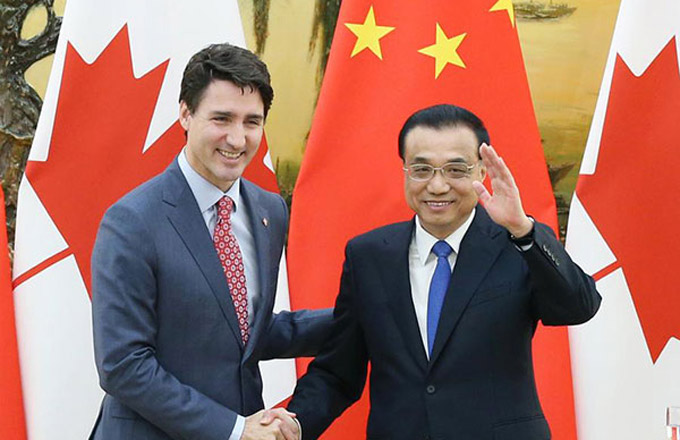
In May, to coincide with a visit to the country by Chinese Premier Li Keqiang, it signed a coastal railway contract with the Nigerian government worth $13.12 billion, which will account for 13.77 percent of its total income last year.
The proposed route will cross 10 states and cover 1,385 kilometers.
"The railway is designed for trains with an average speed of 120 kilometers an hour. Twenty-two stations will be built along the route, which will be a real boost to economic communication across Nigeria's coastal regions, and others across western Africa," Shi says.
The company's philosophy is to bid for any type of civil engineering project, but its focus is rail, given that its parent company is now China Railway Construction Corporation Limited, he says.

It has five rail projects in Nigeria: the Abuja to Kaduna modern railway project; the Abuja light railway project; a light railway project in Lagos; the Lagos to Ibadan modern railway project and a series of maintenance and upgrade programs on various parts of the Nigerian railway network.
The 187 km, Abuja-Kaduna project, connecting the nation's capital to its northern business center, Kaduna city, will be the first overseas railway modernization contract completed under Chinese technical standards.
Idris Umar, the minister of transport, says that in less than a year, more than 100 km of track has been laid, and now the job is expected to be finished in three months.
"All the materials required are on the ground, ready for completion," he says.
Last year, the Vice-President, Namadi Sambo said these five rail projects signaled the reactivation and revitalization of his country's railway system.
But Shi says that CCECC Nigeria is more than just a rail contractor; more importantly, it is now an investor in local talent and social responsibility, right across the Nigerian economy.
"Take the Abuja-Kaduna railway project as an example. We have employed more than 5,000 Nigerians during its construction who are now fully trained, not only on this project, but also for other projects."
The company has more than 20,000 local staff in total and just 1,000 Chinese staff, which clearly underlines its commitment to fostering local talent, he says.
Regular assistance is also being given to local schools, hospitals and community services.
"In the past our help and reaction to natural disasters, for instance, has also been praised by local leaders, as the moves of a 'most trusted friend'.
"Several of our senior managers have been awarded the honor of 'local chief', which is extremely rare for foreigners.
"Those show very strong evidence of our commitment to the local community."
But Shi still has ambitions to expand the firm's presence further.
Being an infrastructure contractor is far from enough, he says, and CCECC has plans to transform itself from being just a builder into being an investor, and that is far from limited to infrastructure.
"We have to fully utilize our advantage as a competitive infrastructure contractor, and so our activities must go much further than just our main business."
He highlights commercial real estate as one area in which the company has expanded.
That expansion means CCECC now has six subsidiaries in Nigeria, all linked to its core construction business. They control, for example, a stake in a free trade zone, a consulting and design firm, and a customs clearance company.
The free trade zone in the Lekki area of Lagos, the busiest port of western Africa, is designed to be a new city that offers services in many sectors including industrial manufacturing, logistics, bonded warehousing and residential accommodations.
"We have several other partners in the Lekki Free Trade Zone, such as the China-Africa Development Fund and the Nigeria and Lagos governments," Shi says.
"More than 24 companies have moved in, and their investment is worth $97 million. Their combined production value is worth $58 million.
"We are confident about its future as more than 58 companies, including Chinese and other nationalities, have signed investment proposals.
"We expect total investment there to be worth $700 million."
lilianxing@chinadaily.com.cn
(China Daily Africa Weekly?07/04/2014 page20)

Copyright 1995 - . All rights reserved. The content (including but not limited to text, photo, multimedia information, etc) published in this site belongs to China Daily Information Co (CDIC). Without written authorization from CDIC, such content shall not be republished or used in any form. Note: Browsers with 1024*768 or higher resolution are suggested for this site.
License for publishing multimedia online 0108263 Registration Number: 130349