Nation beefs up wildlife protection










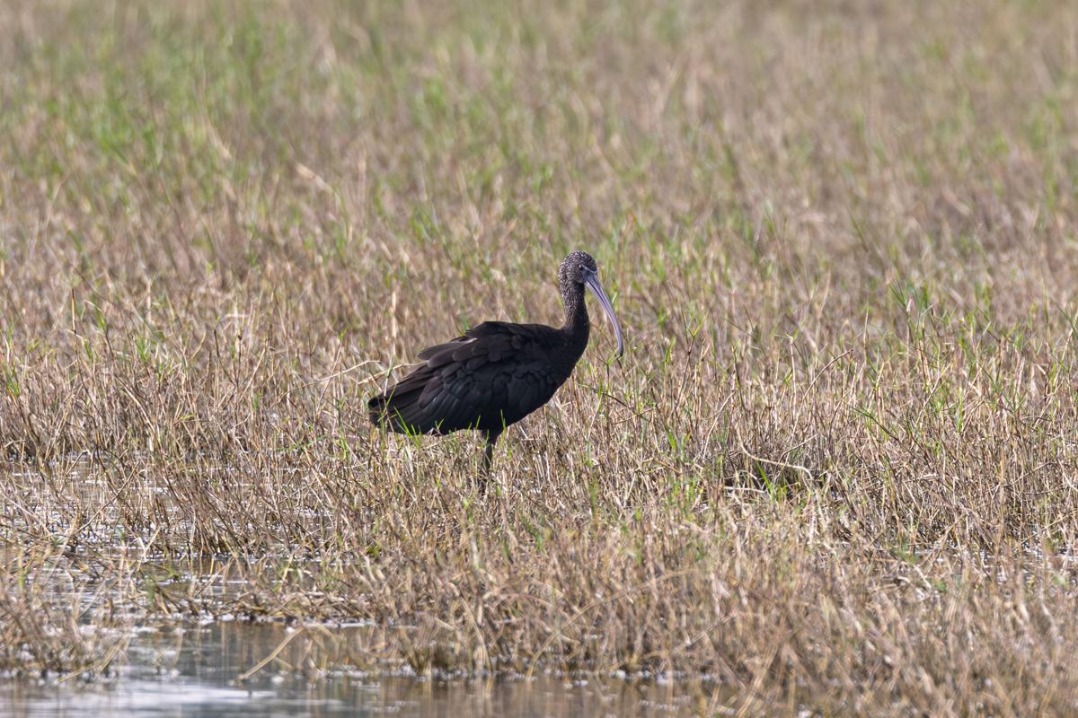
Another 517 types of wild animals, including birds that are kept as pets by some people for their beautiful songs, will no longer be hunted or traded after the first major change in 32 years to the List of Wild Animals under State Priority Conservation.
The list, jointly released on Friday by the National Forestry and Grassland Administration and the Ministry of Agriculture and Rural Affairs, now protects a total of 980 wild animals in China.
On the list, 234 wild animals are under level-one protection, the highest level, while the other 746 are protected as level-two species.
The first version of the list was published in 1989, and it has played a crucial role in the protection of wild animals in China.
The list has only witnessed two changes in the past 32 years-musk deer being upgraded to level-one protection in 2003 and a similar upgrading for Chinese pangolins last year.
Of the animals on the list, some are familiar ones such as the hwamei-a type of thrush-and the horsfield's bush lark, both of which can be seen in many pet markets, as well as seven subspecies of woodpeckers that used to be a common sight in many regions.
"Those birds have seen a sharp population decline in the past decades due to illegal hunting and climate change that resulted in the environmental degradation of their habitats," said Yang Xiaojun, a researcher from Kunming Institute of Zoology under the Chinese Academy of Sciences.
Although there has been no nationwide survey on the change in the population of those birds, Yang said sightings in the wild of the hwamei or the horsfield's bush lark had been much rarer during his field investigations in recent years.
"The new list came just in time and will help to save those valuable and endangered wild animals. It will also benefit China's biological diversity and the ecological balance," Yang said.
While all of the animals on the old list remain on the new one, 65 species-some of which are critically endangered and globally known, such as Yangtze finless porpoise-have had their protection status upgraded to the highest level.
The Yangtze finless porpoise, a member of the cetacea family and one of only two mammals in the Yangtze River, was listed as "critically endangered" on the red list of the International Union for Conservation of Nature in 2013.
It suffered a sharp population decline due to the loss of its habitat and the impact of human activities, such as illegal hunting, fishing and more rapid urbanization, according to Liu Wenbin, a professor from the College of Animal Science and Technology at Nanjing Agricultural University.
Currently, China has fewer than 1,200 Yangtze finless porpoise living in the wild, according to the Ministry of Agriculture and Rural Affairs.
China has made resolute efforts in recent years to protect its wildlife and has achieved significant results.
For example, the Assam macaque, the Capra sibirica and the Burmese python have seen stable population growth thanks to conservation efforts in the past years.
According to the notice released by National Forestry and Grassland Administration and the Ministry of Agriculture and Rural Affairs on Friday, the administration will be in charge of work related to the protection of the 686 territorial animals on the list while the ministry will be responsible for the 294 aquatic animals.
The two departments will provide detailed guidance to governments at all levels to help them better protect the wild animals as well as their habitats, and crack down on illegal hunting and trading of the species.
The notice said public education on the protection of wild animals will also be promoted nationwide, and called for more involvement from the whole of society in this effort.
"The new list will be a crucial step in protecting China's wild animals and its biodiversity. I hope the list can be upgraded regularly, such as once every five or 10 years and can provide more protection to other species that need it," said Jiang Zhigang, a researcher from the Institute of Zoology of the Chinese Academy of Sciences.